
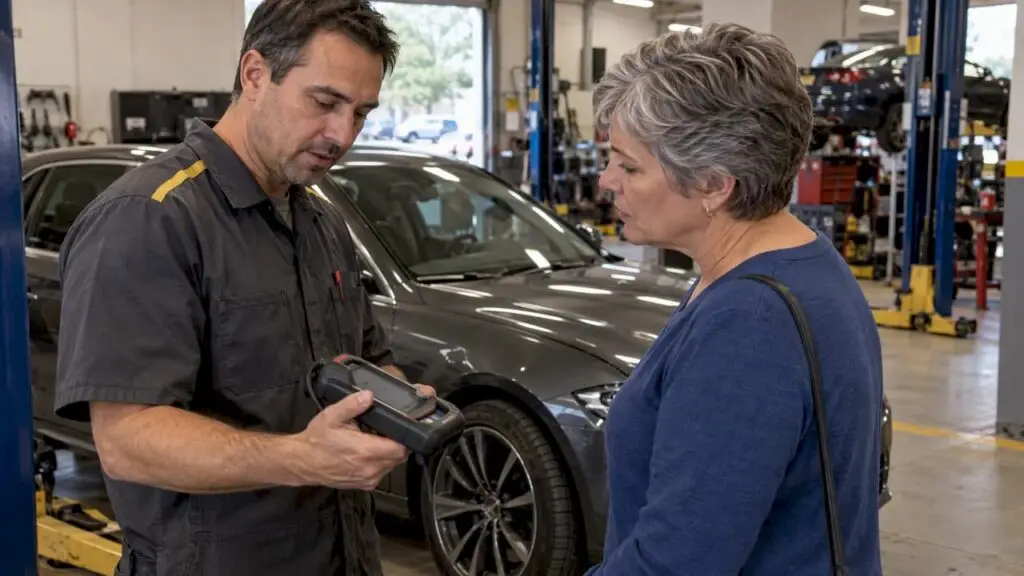
Before handing over your keys, ask about the shop’s experience with your make and model, their ASE certifications, exactly what the diagnostic process involves, whether the diagnostic fee gets waived if you approve repairs, for a written estimate with an authorization cap, and what parts and warranty terms apply. These questions matter because they protect you from surprise charges and unnecessary work before a wrench ever touches your car.
TL;DR:
- Ask whether diagnosis includes a lift inspection, road test, full scan, and live data checks; request scan results and confirmation testing after repair.
- Before authorizing work, confirm the diagnostic fee, whether it is waived when repairs proceed, and whether written findings are provided if you decline.
- Get an itemized written estimate for parts and labor, then set a written dollar or time limit requiring approval before extra work begins.
- For a used car, require findings grouped by safety, immediate repairs, and upcoming maintenance, and confirm whether inspection includes a lift, road test, and full scan.
- At pickup, ask for receipts, replaced parts when available, test records from after repairs, written warranty terms, and a contact if the fault returns.
Table of Contents
- Questions to ask before you drop the car off
- Questions to ask during diagnosis and when repairs get recommended
- Questions to ask about estimates, pricing, and authorization
- Questions to ask for a pre-purchase or used-car inspection
- Questions to ask at pick-up and for follow-up
- How dealer-level diagnostics and clear documentation work in practice
- Why we encourage every customer to ask these questions
- What to expect when you schedule service with us
- FAQ
- Sources
Questions to ask before you drop the car off
The intake conversation sets the tone for everything that follows. A shop that answers clearly here usually documents clearly later too.
Start by asking whether the technician has worked on your specific make and model, and ask for an example of a similar repair they’ve handled. European and performance vehicles often need specialized tools and software that not every general shop stocks.
Next, ask what the diagnostic process will actually include. A thorough diagnosis typically involves a lift inspection, a road test, and a full scan, not just a code read from a handheld scanner, according to the FTC’s auto repair guidance.
Then cover the money questions directly:
- What is the diagnostic fee, and is it waived if you authorize the repair?
- Will you receive written diagnostic results, even if you decide not to move forward?
- What is the expected turnaround time for diagnosis and for the repair itself?
- Do you offer a loaner vehicle or a ride back, and what’s the drop-off and pickup process?
Getting these answers before the car leaves your hands gives you a baseline to compare against what actually happens once work begins. Our diagnostic fee guide breaks down what shops typically charge and why that fee exists in the first place.
Questions to ask during diagnosis and when repairs get recommended
Once the technician has your car, the goal shifts from logistics to verification. You want to know the diagnosis was done right, not guessed at.
- Ask the technician to walk through what they actually did: did they pull a fault code and stop there, or run broader tests to confirm the root cause?
- Ask to see the fault codes, scan report, or photos and short video clips if the shop can provide them.
- Ask which parts they recommend, OEM or aftermarket, and why that choice fits your situation, including part numbers if you want to verify pricing elsewhere.
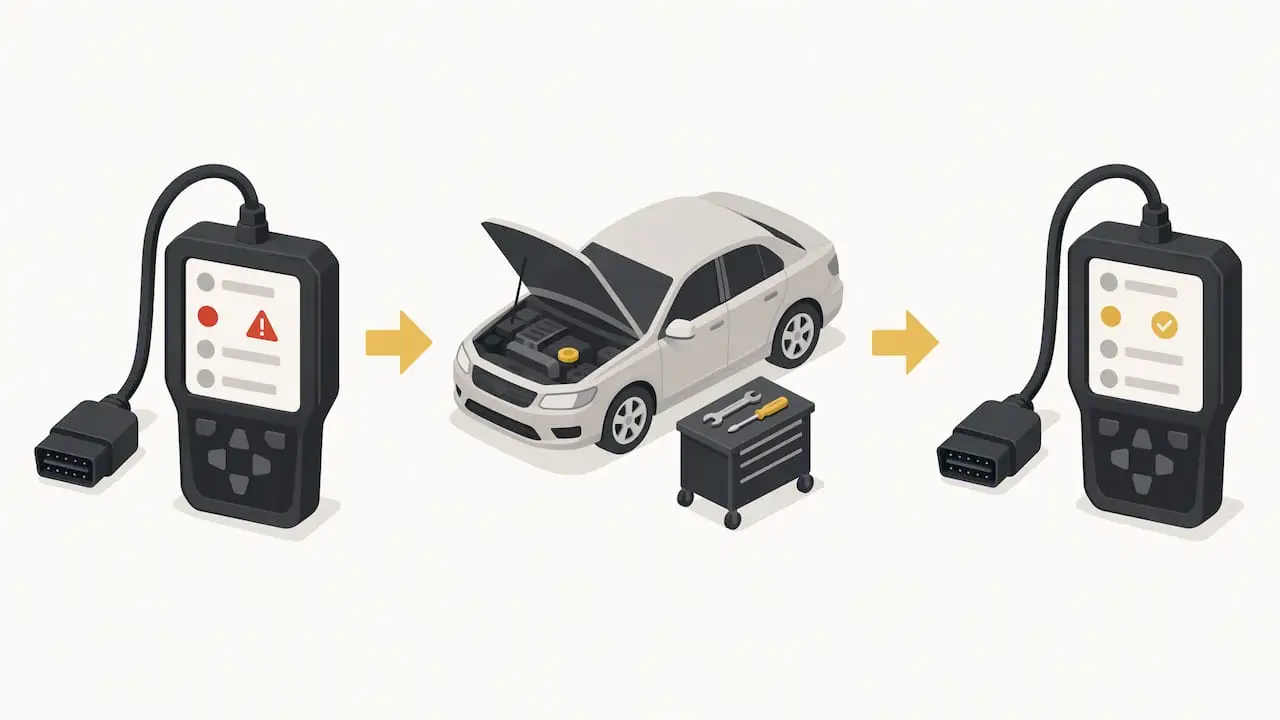
- Ask what test confirms the repair worked. A code clearing on its own doesn’t mean the underlying issue is fixed.
A description of symptoms that’s specific, when the noise happens, what triggers the warning light, helps a technician judge whether the diagnostic steps taken were thorough enough, a point the FTC also stresses for consumers trying to evaluate a shop’s work. For electrical gremlins especially, ask whether live-data checks were part of the process rather than a single scan pass; our breakdown of advanced electrical diagnostics shows what that deeper testing looks like.
Pro Tip: Ask the shop to save the before-and-after scan data. It’s the clearest proof a repair actually resolved the fault, not just silenced the warning light.
Questions to ask about estimates, pricing, and authorization
Cost surprises are the most common complaint in auto repair, and most of them are preventable with a few direct questions up front.
Ask for a written estimate that names the condition being repaired, the parts required, and the anticipated labor charge. This is standard guidance from the FTC, and a shop that resists giving you one in writing is worth a second look.
Beyond the estimate itself, ask:
- Will you call before any work that exceeds the estimate by a set dollar amount or time, and can that commitment be in writing?
- Is labor billed at a flat rate or by the hour, and how is that time documented?
- Is there a markup on parts, and how is it calculated?
- What’s covered under warranty on both parts and labor, and how do you handle a warranty claim if something fails?
A reputable shop should answer every one of these without hesitation. Vague answers, or pressure to skip the written estimate, are signals to ask more questions before authorizing anything.
Questions to ask for a pre-purchase or used-car inspection
A pre-purchase inspection is only as useful as the categories it sorts problems into. A vague “it’s in decent shape” tells you nothing actionable.
- Ask the inspector to separate findings into three buckets: safety-critical repairs, immediate mechanical needs, and scheduled maintenance coming due.
- Ask exactly which tests are included: a lift inspection, a road test, a full OBD-II scan, and whether compression or leak-down testing is available for engines with a history of issues.
- Ask for an itemized estimate range for likely repairs, along with a written report you can take to another shop for a second opinion.
- Ask whether the inspection covers signs of prior collision or structural repair, a title and recall check, or flood damage, since these often require separate add-on services.
Inspection depth varies by shop, and fees commonly fall into a moderate range depending on how thorough the testing is, according to the FTC. A “basic” inspection package doesn’t always include a lift, road test, and full scan, so confirm those specific steps are part of what you’re paying for before you commit.
Questions to ask at pick-up and for follow-up
The job isn’t finished when the invoice prints. A few closing questions confirm the work holds up and give you recourse if it doesn’t.
- Ask exactly what was repaired and why, and request receipts along with any replaced parts the shop can return to you.
- Ask what post-repair verification was done, a road test, a rescan, and how those results were recorded.
- Ask who to contact if the issue returns and how long the warranty on parts and labor runs.
- Ask whether the diagnostic fee you paid earlier was credited toward the repair, as agreed at intake.
Keeping this paperwork matters beyond peace of mind. If a problem resurfaces, documented scan reports and itemized receipts make it far easier to resolve a dispute or seek a second opinion without starting from scratch.
How dealer-level diagnostics and clear documentation work in practice
Dealer-level diagnostics means using the same depth of scan tools and electrical testing that factory service centers rely on, not just a basic code reader. That typically includes a lift inspection to check the undercarriage, a road test to reproduce the symptom, and a full scan to capture live data rather than a single stored code.
Good documentation follows naturally from that process:
- A printed or digital scan report showing the fault codes and live data at the time of testing.
- Photos of the failed part or affected area when the issue is visible.
- An itemized written estimate listing the condition, parts, and labor before any work starts.
A transparent shop also sets clear policy up front: the diagnostic fee is waived when you authorize the repair, written authorization is required before costs exceed an agreed cap, and you’re given a direct contact for follow-up questions. These practices turn a repair visit into a record you can trust and refer back to later.
Why we encourage every customer to ask these questions
Asking these questions upfront isn’t about distrust, it’s about setting a shared standard before work begins. We’ve found that intake conversations built on clear documentation, scan data, written estimates, defined authorization limits, lead to fewer callbacks and fewer disputes down the road. Clarity at the start protects the relationship as much as the vehicle.
What to expect when you schedule service with us
When you bring your vehicle to us, you get the same questions answered before we touch anything: a written estimate, documented diagnostic steps, and a clear authorization policy if the scope changes. We handle the full range of work these questions tend to lead to:
- Maintenance Service and Oil Change & Engine Lubrication
- Engine Repair and Transmission Repair & Service
- Brake Pad Replacement & Brake Service
- Auto A/C Repair & Service and Collision Repair

Every job starts with dealer-level diagnostics, a written estimate, and a straight answer to whatever you ask. Schedule an appointment and bring your list of questions. We’re ready for them.
FAQ
What are the main duties of an automotive mechanic?
A mechanic diagnoses vehicle problems using scan tools, road tests, and lift inspections, then performs repairs or maintenance on engines, brakes, electrical systems, and other components. Many technicians also document findings in writing and advise owners on part selection and repair priority.
Can I call a mechanic and ask for a quote?
Yes, most shops can give you a general price range over the phone for common services, but an accurate quote usually requires an in-person diagnostic since many issues need a scan, road test, or lift inspection to confirm. Ask whether a phone estimate is firm or subject to change after inspection.
What are questions to ask about a car you’re considering buying?
Ask whether the inspection separates findings into safety-critical repairs, immediate mechanical needs, and scheduled maintenance, and whether it includes a lift inspection, road test, and full scan. Also ask for a written report and whether title, recall, or prior collision history were checked.
What questions are asked in an automotive technician interview?
Hiring interviews for automotive technicians typically focus on diagnostic experience, familiarity with specific makes or systems, and relevant ASE certifications, which require passing technical exams and documented work experience. Employers also commonly ask candidates to describe how they approach a diagnostic problem from symptom to confirmed fix.
Do I have to pay a diagnostic fee even if I don’t get the repair done?
Policies vary by shop, so ask upfront whether the fee is waived if you authorize the repair and whether you’ll receive written results either way. A shop acting in good faith will provide written diagnostic findings even if you decide to decline the work.
Sources
- Auto repair basics | Consumer Advice — FTC
- The diagnostic-fee trap — Ethical Mechanic
- ASE Certification: Need to know — ASE