
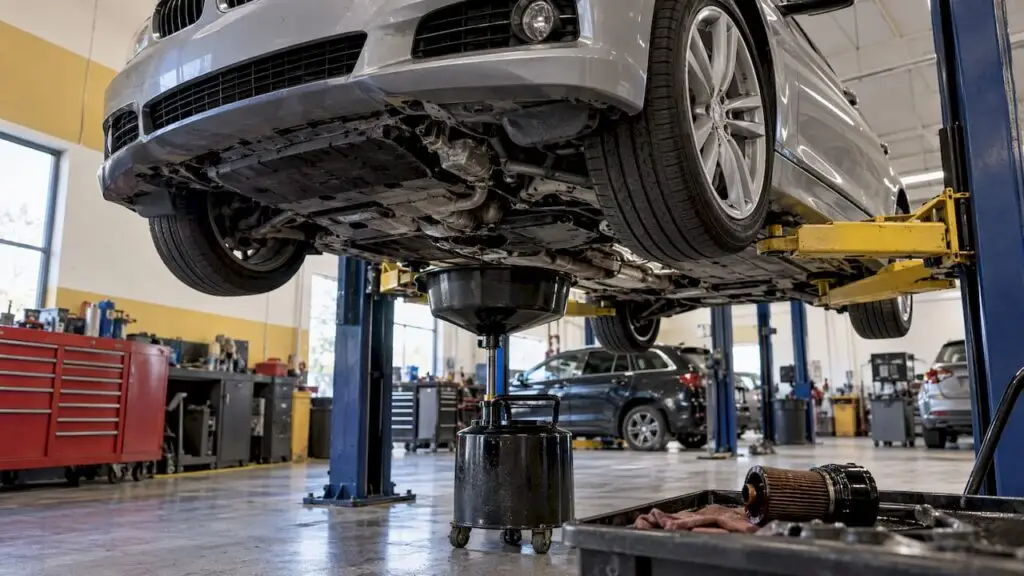
Severe duty maintenance is the shorter service schedule that automakers publish for vehicles driven under demanding conditions: mostly short trips, extreme heat or cold, dust, heavy stop-and-go traffic, towing or heavy loads. AAA lists these conditions and notes that the exact definition varies by automaker. If your driving fits, you follow the severe schedule in your owner’s manual, not the normal one. Many Dallas commuters fit more often than they expect.
TL;DR
- Severe duty (also called severe service or special operating conditions) means shorter intervals for oil, filters, fluids and inspections.
- It applies when you drive under those conditions most of the time, not occasionally.
- Your owner’s manual defines the conditions and the intervals for your exact vehicle. When it is unclear, the shorter interval is the safer choice.
- Skipping it is deferred maintenance, and it can lead to costly wear.
- We can review your driving pattern and set a schedule that fits your car. Schedule an appointment with Alternative European & Domestic.
Table of Contents
- What severe duty maintenance actually means
- Which driving conditions qualify
- Why short trips and heat wear out oil
- What changes on a severe schedule
- Does it apply differently to European and high-performance cars?
- What happens if you stay on the normal schedule
- How to find your schedule and follow it
- When not to drive and when to tow
- Severe duty service at Alternative European & Domestic
- Cost factors to expect
- FAQ
- Sources
What severe duty maintenance actually means
Every automaker publishes at least one maintenance schedule. Many publish two: a normal schedule and a severe one. The severe schedule uses significantly shorter time and mileage intervals for services such as oil changes, fluid replacement and filter changes. The reason is mechanical. Demanding driving wears out oil additives and other components faster than steady highway miles do.
The word “severe” is misleading. It does not mean abuse, racing or off-roading. A car that runs short trips around town can qualify. An industry bulletin from the Filter Manufacturers Council, part of the Auto Care Association, says about 80% of motorists drive under less-than-ideal conditions and suggests the labels “ideal” and “average” would be more honest than “normal” and “severe.”
Which driving conditions qualify
The list differs by manufacturer, but the same themes repeat. Ford’s owner documentation names towing, extensive idling or long-distance low-speed driving, extended hot or cold climate operation, and off-road, unpaved, sandy, dusty or mountainous driving as special operating conditions. Toyota and Lexus guides add repeated trips under 5 miles in freezing temperatures. Commercial use, such as patrol cars, taxis and delivery trucks, is also treated as severe service.
| Condition | Why it is hard on the car | Common in Dallas driving? |
|---|---|---|
| Short trips (about 5 miles or less) | Engine never fully warms up, so moisture and fuel stay in the oil | Yes, errands and short hops between neighborhoods |
| Stop-and-go traffic or long idling | Heat builds with little airflow; engine hours pile up without miles | Yes, rush hour on the major freeways |
| Extended hot climate | Fluids, coolant additives, belts and batteries age faster | Yes, every summer |
| Towing or heavy loads | Extra heat and load on engine, transmission and brakes | Depends on the owner |
| Dusty or unpaved roads | Air filters clog, abrasive grit reaches chassis parts | Construction zones, gravel lots |
Occasional versus primary use
One detail gets overlooked. Ford states that extra maintenance is not necessary when the vehicle is used occasionally under those conditions, but is needed when it is used primarily under them. One trip towing a boat does not put your car on the severe schedule. A daily 3-mile commute might.
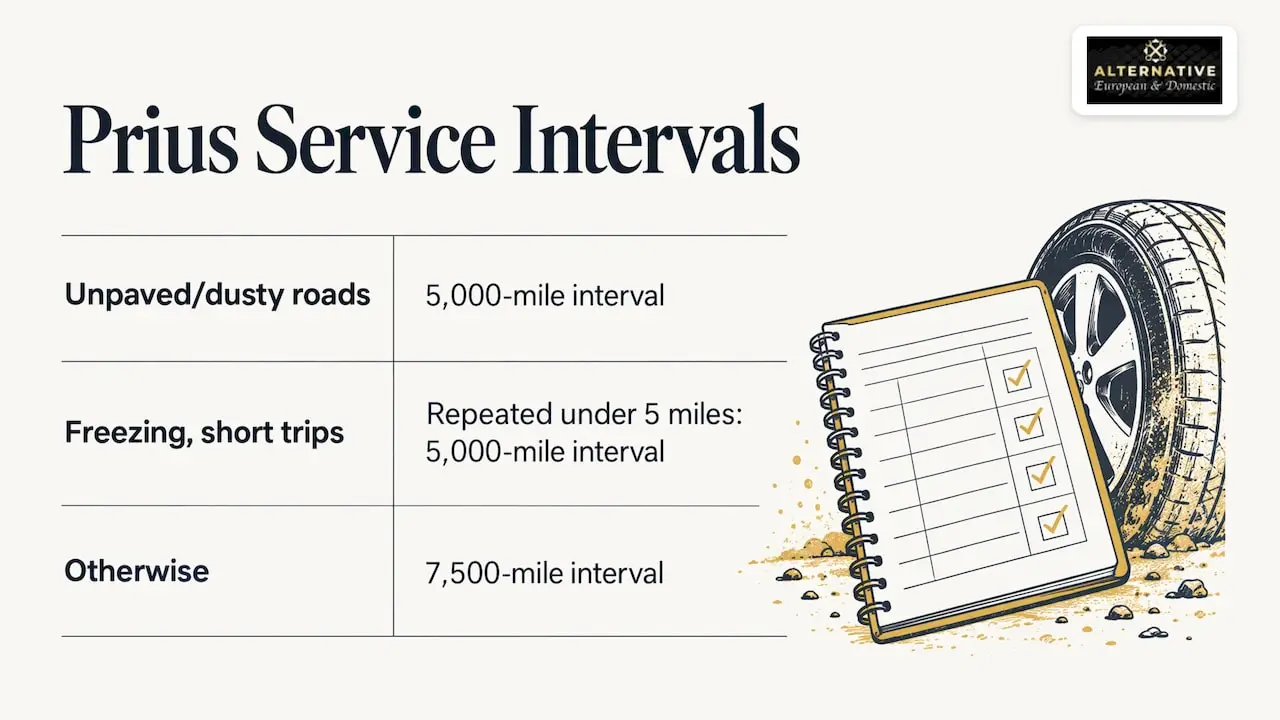
The thresholds also differ by vehicle. A Toyota Prius guide, for example, calls for the 5,000-mile interval on unpaved or dusty roads or repeated sub-5-mile trips in freezing weather, and 7,500 miles otherwise. Do not assume one brand’s rule applies to another.
Why short trips and heat wear out oil
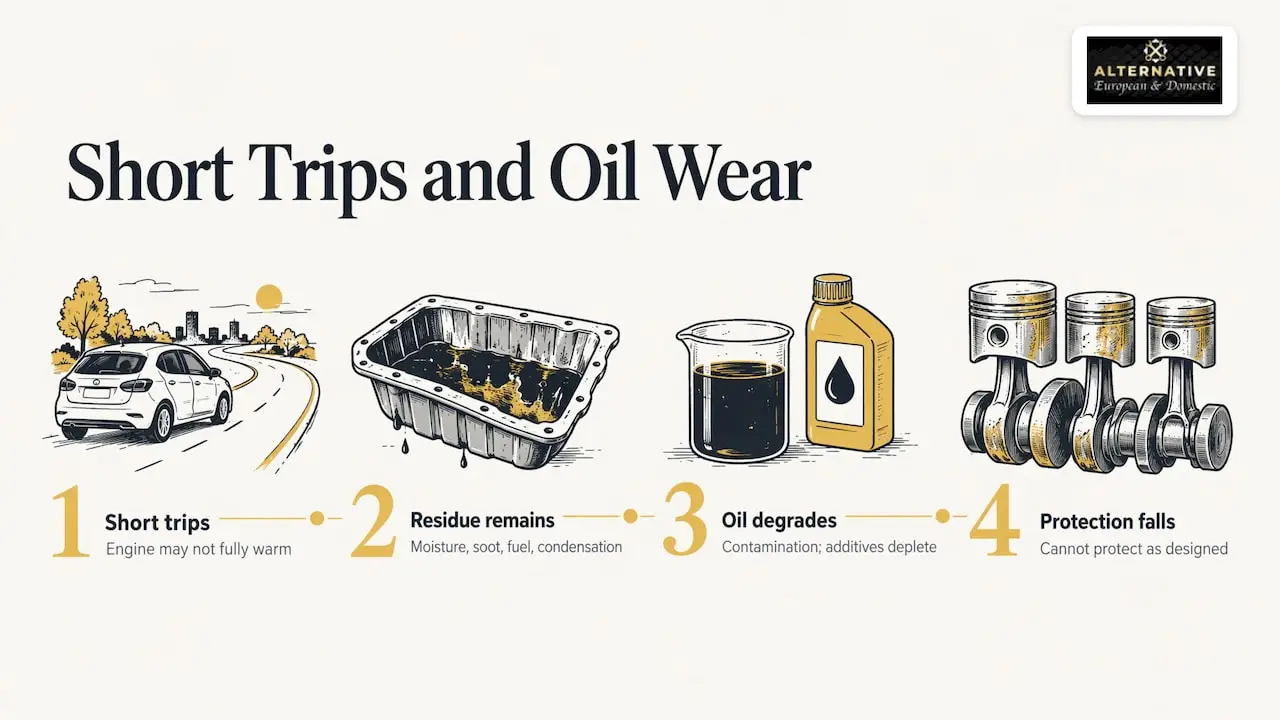
The Filter Manufacturers Council bulletin explains the mechanism. Short trips may prevent the engine from fully warming up, which lets moisture, soot, raw fuel and condensation remain in the crankcase. The oil becomes contaminated while its additives are depleted, and it can no longer protect the engine as designed. Idling, towing, dust, sub-zero operation and mountain driving can also call for more frequent oil and filter service.
Heat is the enemy in a different way. In extreme climates, coolant additives can deplete faster, and those additives protect against corrosion and cavitation. For a practical look at how Texas summers affect a vehicle, see our guide to hot weather car maintenance for Dallas drivers.
What changes on a severe schedule
The items vary by vehicle, but these are the usual ones.
- Engine oil and filter. The most common change. Severe-service oil intervals are often listed as 3,000 to 5,000 miles, or half the normal interval, depending on the vehicle. One current Lexus guide specifies oil and filter replacement every 6 months or 5,000 miles for vehicles used primarily under special conditions, even if the oil reminder has not appeared.
- Transmission fluid. Ford specifies automatic transmission fluid changes every 30,000 miles for towing, extensive idling or low-speed driving, and off-road or mountainous use. Our transmission service covers this work.
- Differential fluid. Honda’s documentation calls for more frequent rear differential fluid changes under low-speed mountain driving or towing. Our differential fluid interval guide explains how this applies to European and domestic cars.
- Air filter. The same Honda document specifies air cleaner replacement every 15,000 miles in dusty conditions.
- Brake and chassis inspections. Lexus and Toyota guidance says severe-use drivers should have brake inspections, chassis nut and bolt tightening and driveshaft boot checks done more often.
- Coolant, belts and hoses. AAA notes severe schedules typically call for more frequent fluid, filter, belt and hose changes and component inspections.
Does it apply differently to European and high-performance cars?
The principle is the same: the manufacturer’s own schedule decides. What differs is how much those schedules lean on conditions, and how that plays out in the shop. We can say this from the way these vehicles are built and serviced, not from a study:
- Adaptive service systems. Many European cars calculate service needs from driving data instead of a fixed mileage. That is useful, but a reminder that has not yet appeared does not always mean the oil is in good shape for your pattern. The Lexus guidance above, which specifies service even if the oil reminder has not appeared, shows the same idea in another brand.
- Heat-sensitive hardware. Turbocharged engines, dual-clutch and performance automatic transmissions, differentials and transfer cases run hot under load. Fluids in these components are worth reviewing sooner when the car sits in traffic or sees spirited driving. Our guide to the dual-clutch service interval covers one example.
- Brakes and tires. Performance cars wear pads, rotors and tires faster under hard use. See our notes on timing brake pad replacement on European luxury and performance cars and AWD tire rotation.
For a specific model, the owner’s manual and the manufacturer’s service documentation are the reference. We use them as the starting point, then adjust for how the car is actually driven.
What happens if you stay on the normal schedule
Running normal intervals under severe conditions is deferred maintenance and can lead to costly wear and mechanical problems. AAA has said that not following the severe driving schedule may result in reduced fuel economy, premature tire wear, and wear to batteries and other components, including the timing belt.
The early signs are easy to miss:
- Darker, thicker oil at a normal-interval change
- Slightly rougher shifts or delayed engagement
- A battery that struggles after a hot summer
- Brake pads or tires wearing sooner than expected
- A service or warning light that comes on earlier than you expected
None of these confirms a problem by itself. They are reasons to have the car checked. Our guide to service light meanings explains which lights mean schedule a visit and which mean stop.
How to find your schedule and follow it
- Open the maintenance section of your owner’s manual. Severe-service guidelines are listed there, with the conditions that trigger them.
- Be honest about your driving. Count your typical week: trip length, idling, traffic, towing, climate and road surface.
- Choose the shorter interval when in doubt. If the manual is unclear and you drive primarily under demanding conditions, experts advise the shorter interval.
- Set your reminders manually if needed. Mazda, for example, says drivers following the severe schedule should set the vehicle status monitor manually.
- Keep records. Dated invoices showing each service make it easier to plan the next one and to document the car’s history.
When not to drive and when to tow
Severe duty schedules are about prevention. Some symptoms mean the car should stop now:
- Oil pressure warning light or red temperature warning: pull over safely and shut the engine off. Driving on can destroy an engine, so call for a tow.
- Brake pedal that sinks, grinds or feels unusually soft: do not drive. Have the vehicle towed.
- Burning smell, smoke or visible fluid leaking: stop in a safe place and arrange a tow.
- Transmission that will not engage, or slips badly: towing protects the drivetrain from further damage.
- Steering or suspension noises with a loose feel: see our control arm bushing guide on when to drive or tow.
Do not attempt these repairs in a driveway. Modern European and performance cars have electronic fluid-level and service-reset procedures, and brakes and suspension are safety systems. Professional diagnostics identify the cause before parts are replaced.
Severe duty service at Alternative European & Domestic
Alternative European & Domestic is a Dallas-area shop for European, domestic and high-performance vehicles, from Oak Lawn and Uptown to neighboring communities. Our ASE-certified technicians use dealer-level diagnostics, quality parts and a plain explanation of what each recommendation is for. We build customized maintenance plans around how you really drive, so a short-trip commuter and a weekend track-day car do not get the same plan.
Start with maintenance service, or book an oil change and engine lubrication service. Repairs that qualify may be covered by our 24-month/24,000-mile warranty, subject to applicable terms. We do not publish prices for these services, so contact us for an estimate for your vehicle.

Browse all services or schedule an appointment.
Cost factors to expect
A severe schedule means more frequent visits, but each is mostly routine work. What affects the cost:
- Vehicle and fluid specification. European and performance cars often require specific oil approvals and fluids.
- Capacity and filter type. Larger engines and cartridge filters change the price of an oil service.
- Which items come due together. Combining a fluid service with an inspection can save a second visit.
- Condition found at inspection. Worn brakes, aging belts or a weak battery add to the visit, and we explain each before work is done.
FAQ
Is severe duty maintenance the same as severe service?
Yes. Manufacturers use several names for it, including severe service, severe driving and special operating conditions. All of them refer to the shorter schedule for demanding use. Check your owner’s manual for the wording and intervals that apply to your car.
Does stop-and-go Dallas traffic count as severe?
It can. Extensive idling and long-distance low-speed driving appear on Ford’s list of special operating conditions, and hot-climate operation is listed too. If most of your driving is like that, follow the severe schedule.
How much sooner should I change oil on a severe schedule?
It depends on the vehicle. Severe-service oil changes are commonly listed as 3,000 to 5,000 miles or half the normal interval. Your manual gives the exact number, and a technician can help you choose when it is unclear.
Can I follow the normal schedule if my car’s reminder has not come on?
Not always. Some manufacturers specify service for severe use even if the oil reminder has not appeared, as the Lexus guide above does. If your driving is primarily severe, ask us to review your schedule.
Is severe duty maintenance necessary for a car that is mostly on the highway?
Usually not. Occasional demanding use does not move you to the severe schedule. It applies when you drive primarily under those conditions.
Sources
- Car Care Basics, AAA Exchange
- Scheduled Maintenance: Special Operating Conditions, Ford
- What Counts as Severe Duty Service for a Car?, Capital One
- Severe Duty Maintenance: When Normal Intervals Aren’t Enough, Bumper
- Prius maintenance guide, Toyota
- Automotive Oil Change Intervals: Severe vs. Normal Driving, Auto Care Association
- Same bulletin, crankcase contamination section
- Lexus ES 350 maintenance guide
- Lexus RX 350 maintenance guide
- Honda Passport Maintenance Minder
- AAA study on severe driving conditions
- Scheduled Maintenance, Mazda