
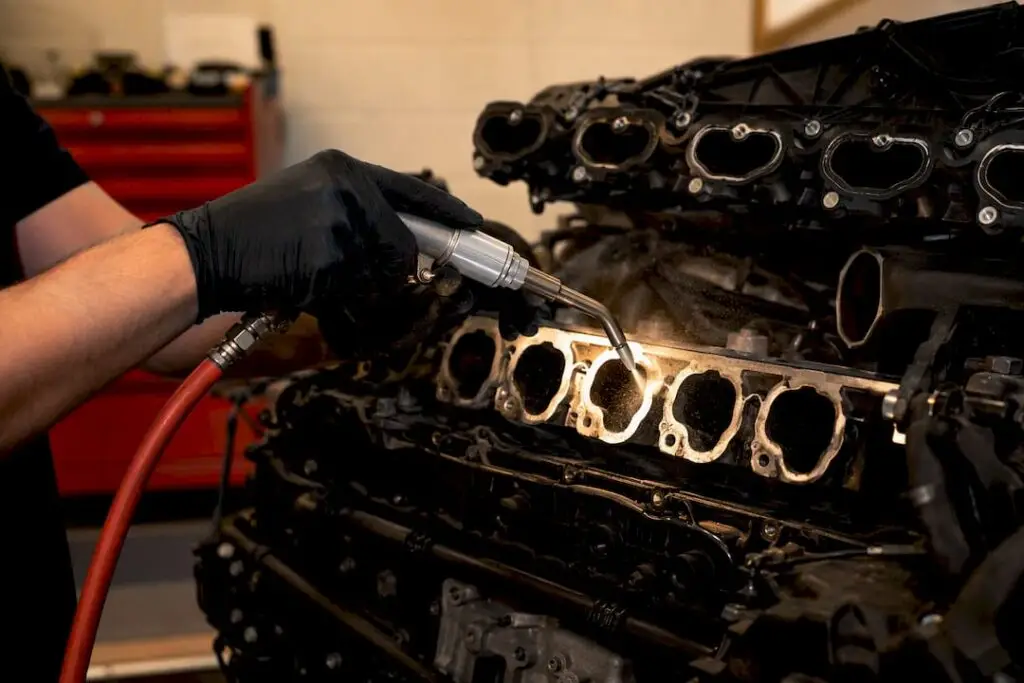
Walnut blasting is the mechanical fix for baked-on carbon fouling BMW intake valves, and it’s the only real solution once that buildup hardens. It matters most for N54, N55, and S55 direct-injection engines, especially high-mileage or tuned cars showing misfires or sluggish throttle response. If you don’t own shop-grade blasting and vacuum equipment, book a shop that specializes in it rather than attempting this in a driveway.
TL;DR:
- Walnut blasting is essential for high-mileage or tuned BMW direct-injection engines, especially when misfires, rough idle, or throttle lag occur after 60,000 miles.
- Proper procedure requires removing the intake manifold, rotating the engine to TDC for each cylinder, and using a vacuum system to prevent debris from entering the combustion chamber.
- The recommended media size of 20/30 SAE is critical; incorrect media can lead to incomplete cleaning or engine damage, and labor typically costs between $300 and $1,000.
- Regular use of oil catch cans and longer drives help slow carbon buildup, but walnut blasting remains a necessary maintenance interval every 50,000 to 80,000 miles depending on driving habits.
- DIY blasting risks valve or cylinder damage if not performed with precise valve positioning and proper vacuum capture, making professional service the safest choice for most owners.
Table of Contents
- What Is Walnut Blasting for a BMW?
- What Symptoms Mean Your BMW Needs Walnut Blasting?
- Why Direct Injection BMWs Are Prone to Carbon Buildup
- What Happens During a Professional Walnut Blast
- Can You Walnut Blast a BMW Yourself?
- How Much Does Walnut Blasting Cost and How Often Is It Needed?
- How to Slow Carbon Buildup After a Walnut Blast
- What to Ask a Shop Before Booking Walnut Blasting Service
- How Alternative European & Domestic Handle Walnut Blasting
- Alternativecarcare Handles Your BMW’s Carbon Buildup Right
- Sources
- FAQ
- Why Most Owners Wait Too Long for This Service
What Is Walnut Blasting for a BMW?
Walnut blasting uses finely crushed walnut shells fired at low pressure to strip carbon deposits off the back of intake valves. It’s the accepted repair for direct-injection BMW engines, and there’s genuinely no shortcut around it once carbon has baked on.
Here’s the mechanical problem nobody explains well: on a port-injected engine, fuel sprays directly onto the intake valves and washes them clean every time you drive. Direct injection engines like the N54 and N55 don’t do that. Fuel goes straight into the combustion chamber, which is great for efficiency and power, but it means the valve never gets a fuel bath. Instead, oil vapor from the PCV (positive crankcase ventilation) system gets pulled through the intake tract and lands on valves that are running at several hundred degrees. That vapor cooks onto the metal, layer after layer, until it turns into a crusty, carbon-like coating.
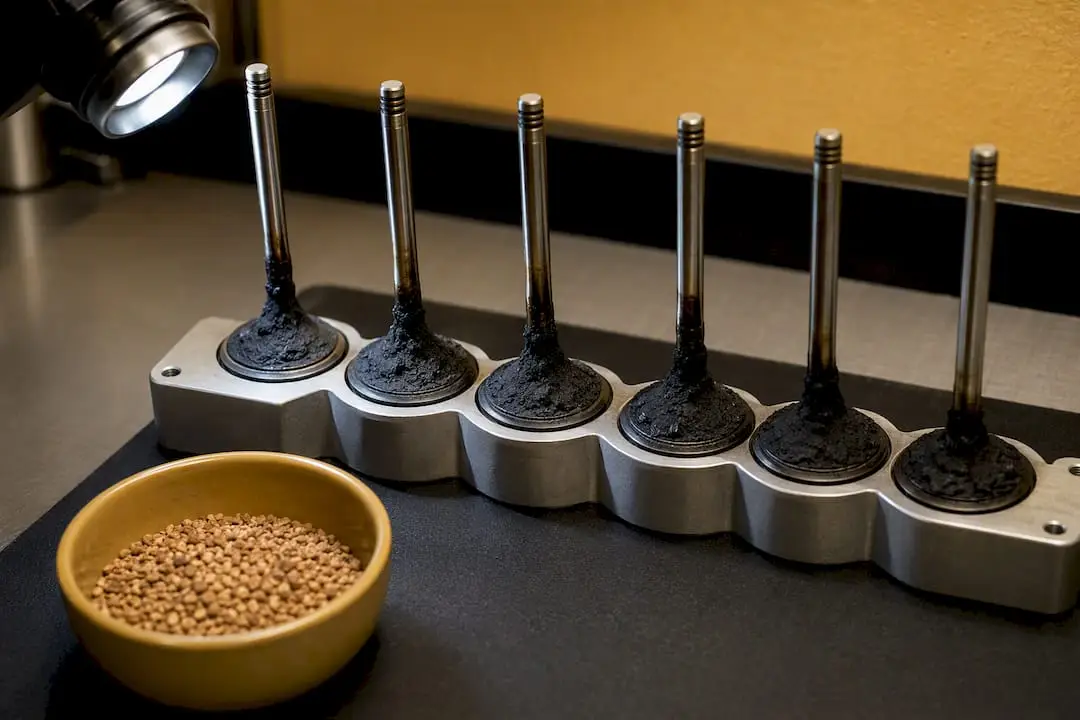
Consumer Reports notes that chemical intake cleaners simply can’t touch this kind of deposit on GDI engines, because there’s no fuel wash cycle for the chemical to ride along with. Walnut shells work because they’re hard enough to knock the carbon loose but soft enough that they won’t gouge the valve seat or scratch the cylinder wall the way sand or glass bead media would.
BMW backs this up directly. The company’s own technical service information covers the intake valve cleaning procedure using walnut shell media, and it specifies a media size range of 20/30 SAE or 0.45 to 0.80 millimeters for the Carbon Blaster tool and procedure. That bulletin also lays out labor operation codes for intake removal and manual valve cleaning, which tells you this isn’t some aftermarket workaround. It’s a documented, factory-recognized repair.
The bulletin doesn’t leave media selection to guesswork. It specifies shell grain size because too coarse a media can leave incomplete cleaning, and too fine a media loses the abrasive bite needed to break up hardened deposits.
Shops sourcing bulk walnut shells for the job typically buy from industrial abrasive distributors carrying that same 20/30 SAE grade, which keeps the process consistent with what BMW engineered the procedure around.
What Symptoms Mean Your BMW Needs Walnut Blasting?
Carbon buildup doesn’t announce itself with a warning light most of the time. It creeps in gradually, and by the time you notice, the valves have likely been accumulating deposits for tens of thousands of miles.
Watch for these signs, especially on N54 and N55 engines past 60,000 to 80,000 miles:
- Rough or uneven idle, particularly noticeable when the engine is cold
- Random or cylinder-specific misfires, sometimes throwing P0300-series codes
- Noticeable loss of throttle response or a flat spot under light acceleration
- A gradual drop in fuel economy with no other obvious cause
- Hesitation or stumble when accelerating from low RPM
Driving habits accelerate the problem more than mileage alone. Short trips where the engine barely reaches full operating temperature are the worst offenders, because the PCV system is dumping oil vapor into the intake constantly, but the engine never runs hot or long enough to burn any of it off. Heavy idling, stop-and-go city commutes, and cars running aggressive tunes with elevated boost all pile carbon on faster than a typical daily driver doing highway miles.
Tuned cars deserve a specific callout here. If you’re planning to raise boost or push more power through an N54 or N55, tuner shops commonly require a walnut blast beforehand, because restricted airflow past carboned valves undermines the reliability of any tune. Dyno numbers on a dirty intake are numbers you can’t trust to hold up.
The immediate trigger to book service isn’t a single symptom. It’s persistence. One rough cold start doesn’t mean much. A misfire code that keeps coming back after a clear, combined with a throttle that feels noticeably lazier than it did a year ago, means the valves need attention now rather than on your next oil change.
Why Direct Injection BMWs Are Prone to Carbon Buildup
The short version: BMW’s direct injection design trades valve-washing fuel spray for better fuel atomization and efficiency, and carbon buildup is the tradeoff nobody puts on the window sticker.
Every N54, N55, and S55 engine injects fuel directly into the cylinder rather than into the intake port ahead of the valve. That’s the same architecture used across most modern turbocharged engines chasing better fuel economy and emissions numbers, but it removes the one mechanism that used to keep valves naturally clean. Combine that with a PCV system routing oil mist back through the intake tract, and you’ve got a slow, steady bake of hydrocarbons onto hot metal that never gets rinsed away.
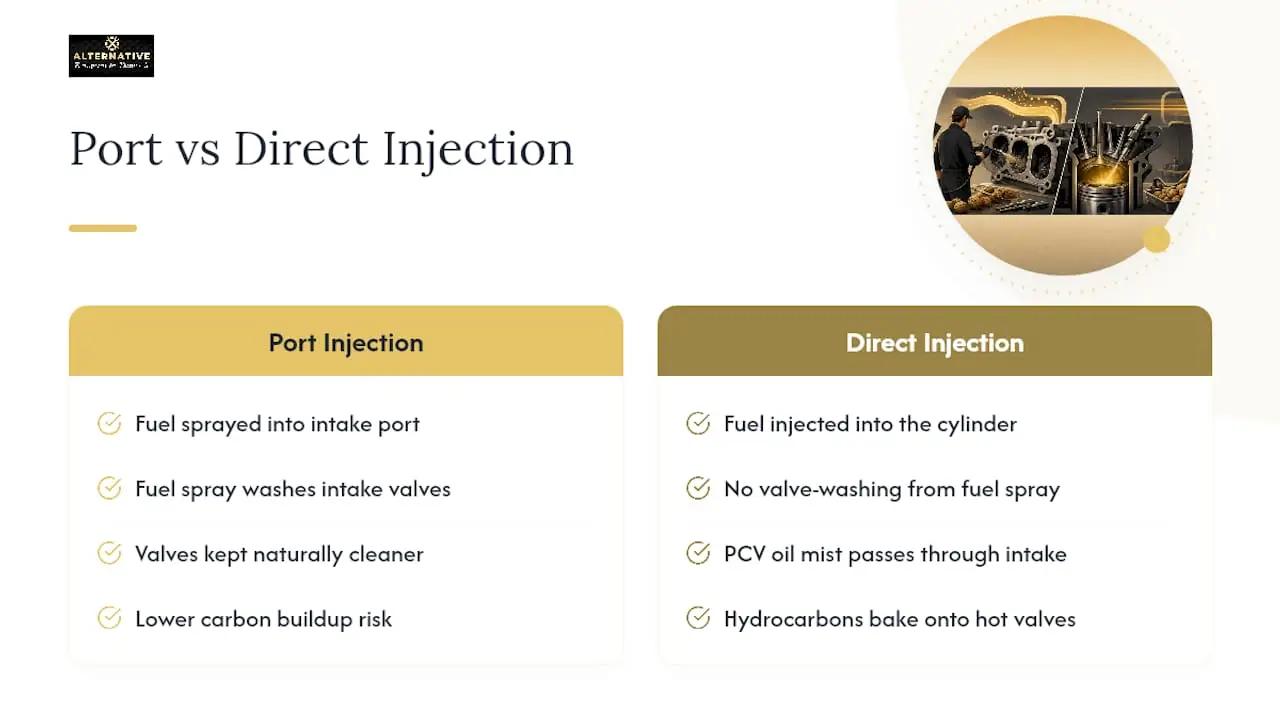
This is not a BMW-specific design flaw. It’s a known characteristic of direct injection generally, which is exactly why BMW published formal service guidance for it rather than treating it as a rare complaint.
What Happens During a Professional Walnut Blast
A proper walnut-blast job is a multi-step teardown, not a quick spray-and-go service, and the sequence matters as much as the media itself.
1. Diagnose before you blast anything. A competent shop pulls codes, checks for vacuum leaks, inspects the PCV system, and confirms the symptoms actually point to valve coking rather than a coil pack, injector, or vacuum issue. Blasting a car with a bad ignition coil wastes labor and doesn’t fix the misfire.
2. Remove the intake manifold. On N54 and N55 engines, this means pulling the intake plenum to expose the valve ports directly. There’s no way to reach the backside of the valves with the intake in place.
3. Position each cylinder’s valves closed. This is the single most critical step in the entire process. The technician rotates the engine so the valves being blasted sit at or near top dead center for that cylinder, keeping them shut. If a valve is open during blasting, shell fragments can drop straight into the combustion chamber.
4. Seal off neighboring cylinders and rig vacuum capture. Shops tape or plug adjacent intake ports and run a shop vacuum directly at the blasting nozzle so shell debris gets pulled out as fast as it’s dislodged, rather than settling into the intake runners or cylinder head.
5. Blast each valve individually. Using a pneumatic gun loaded with walnut shell media, the technician works each valve face until visible carbon is gone, checking progress with a borescope or flashlight along the way.
6. Inspect and reassemble. Once every valve on a cylinder bank is clean, the shop checks intake gaskets, injector O-rings, and vacuum lines before reinstalling the manifold, since these components are often disturbed during the teardown.
7. Retest. A scan for stored codes, a vacuum leak check, and a test drive confirm the fix actually resolved the drivability complaint rather than just cleaning the valves cosmetically.
Labor time typically runs three to five hours depending on the engine layout and whether other components need attention while the intake is already off. That labor estimate lines up with the FRU and operation codes BMW’s own bulletin references for the procedure, which is part of why dealers and independent shops quote in a similar range.
Pro Tip: Ask your shop whether they document valve condition with before-and-after photos. Shops that do this consistently tend to be the ones running the procedure correctly, because they’re confident enough in their technique to show you the results.
Forum threads and shop case notes consistently describe a noticeably crisper throttle and fewer misfires once the job is done right, particularly on cars that were well past their recommended interval or getting cleaned ahead of a tune.
Can You Walnut Blast a BMW Yourself?
DIY walnut blasting is technically possible, but the margin for error is thin enough that most attempts either don’t fully fix the problem or create a new one.
The three mistakes that show up again and again in DIY writeups:
- Blasting with a valve open. Without carefully confirming TDC position for each cylinder, shell fragments fall straight into the combustion chamber, where they can score the cylinder wall or get lodged around the piston rings.
- Weak or improvised vacuum capture. A shop vacuum duct-taped near the port isn’t the same as a proper capture nozzle. Loose shell fragments settle in intake runners and get pulled into the engine gradually over the following weeks.
- Incomplete sealing of neighboring ports. Skipping the tape-and-plug step lets media migrate into cylinders you weren’t even working on.
Professional how-to guides are blunt about the consequence of getting this wrong: media left in a cylinder can score the bore, damage rings, or in worse cases require a top-end rebuild. That’s a repair bill that dwarfs anything you’d have paid a shop to do it correctly the first time.
If you don’t have a dedicated media blaster, a reliable vacuum setup, and real experience pulling a BMW intake manifold, the safer move is booking a shop that does this regularly. If your symptoms are mild and you’re not ready for a full blast, a top-end intake cleaner run through the throttle body can knock down some surface deposits, but it won’t touch hardened valve-back carbon. Treat it as a stopgap, not a substitute.
How Much Does Walnut Blasting Cost and How Often Is It Needed?
Expect to pay a few hundred to around one thousand dollars for a walnut blast, with the exact cost depending on the shop, engine, and additional parts or labor involved. Industry cost breakdowns put most jobs in that range, with dealers typically landing at the higher end due to labor rates.
The labor time itself, three to five hours on a straight-six N54 or N55, is close to what BMW’s own service bulletin implies through its listed operation codes, which is part of why quotes cluster fairly tightly across shops that follow the OEM procedure rather than a shortcut version.
On frequency, independent shop guidance generally points to a window of roughly 50,000 to 80,000 miles between cleanings, though that range shifts a lot based on driving habits. A car doing mostly highway miles at operating temperature can stretch toward the longer end. A car running frequent short trips, heavy idling, or an aggressive tune tends to need attention sooner, sometimes well under 50,000 miles.
How to Slow Carbon Buildup After a Walnut Blast
A walnut blast resets the valves, but nothing about the underlying direct-injection design changes, so carbon starts accumulating again the moment you drive off the lift. The goal after service isn’t preventing buildup entirely. It’s stretching the interval before you need to do this again.
The single most effective step is installing a baffled oil catch can in the PCV line. Shop guidance on BMW carbon buildup consistently recommends this because a catch can traps oil mist before it reaches the intake tract, cutting down significantly on the vapor that would otherwise bake onto the valves. Plan to empty and inspect the catch can roughly every 3,000 to 5,000 miles, more often if you’re doing a lot of short-trip driving.
A few habits help beyond the catch can:
- Take longer drives periodically to get the engine fully up to temperature, which helps burn off some accumulating deposits before they harden.
- Stay current on oil changes with a quality synthetic, since degraded oil produces more vapor and particulate that ends up in the PCV system.
- Have your PCV valve and hoses inspected during regular maintenance, since a failing PCV system can dump more oil into the intake than a healthy one.
Fuel system and top-end cleaners have a role here, but keep expectations realistic. They can help keep injectors and combustion chambers cleaner and support overall fuel system health, but Consumer Reports is clear that no chemical additive reaches hardened valve-back carbon on a direct-injection engine. Use them as routine maintenance, not as a substitute for the mechanical fix.
Pro Tip: If you’re installing a catch can yourself, mount it somewhere accessible. A catch can buried behind other components is one you’ll forget to empty, and a full catch can stops working the moment it overflows.
What to Ask a Shop Before Booking Walnut Blasting Service
Not every shop that advertises walnut blasting does it the same way, and the difference between a correct job and a rushed one usually comes down to a handful of specific practices.
- Ask how they confirm valve position during blasting. A shop that can explain rotating the engine to TDC for each cylinder, rather than giving a vague answer, understands the procedure.
- Ask about vacuum capture equipment. You want a dedicated vacuum-and-blast setup, not a shop vac taped near the port.
- Ask whether they document the job with photos. Before-and-after valve photos are a strong sign the shop is confident in its work and willing to prove it.
- Ask what happens if media ends up somewhere it shouldn’t. A shop with a clear answer about inspection and correction procedures has likely dealt with this before and knows how to catch it.
- Ask about warranty on the labor. A shop standing behind the job for a defined period signals they trust their own technique.
Red flags include a shop that quotes a price without ever asking about your symptoms or mileage, or one that can’t describe sealing off neighboring cylinders when you ask directly. At dropoff, request that they scan and log any diagnostic codes present before starting. At pickup, ask for a summary of what they found, any photos taken during the teardown, and notes from the post-service test drive confirming the misfire or rough idle is actually resolved.
How Alternative European & Domestic Handle Walnut Blasting
We treat walnut blasting the way BMW’s own service documentation frames it: a precision procedure, not a quick shop service squeezed between oil changes. Every job starts with dealer-level diagnostics to confirm the symptoms actually trace back to valve carbon rather than an ignition or injector issue, because blasting a car that doesn’t need it just wastes your money.
Once we’re in the intake, our technicians follow the same valve-position and vacuum-capture discipline outlined in professional service procedures: valves confirmed closed at TDC, neighboring cylinders sealed, and continuous vacuum running at the blasting nozzle throughout. We document valve condition with photos before and after, log the diagnostic codes present at intake and at pickup, and finish with a test drive to confirm the throttle response and idle quality actually improved.
Turnaround on a straight-six N54 or N55 typically runs within a single day, and you’ll leave with a clear record of what we found and what we did, not just a receipt. If you’re weighing whether your BMW needs this service or you’re prepping for a tune, you can schedule a diagnostic appointment and get a straight answer before any work begins.
Alternativecarcare Handles Your BMW’s Carbon Buildup Right
Chemical additives and DIY blasting kits promise a cheaper fix, but neither one reaches hardened valve-back carbon safely on a direct-injection BMW, and a botched DIY attempt can turn a $500 service into a $5,000 repair. Alternativecarcare takes the guesswork out of that decision with dealer-level diagnostics that confirm carbon buildup before any intake comes apart, then performs the blast using the same valve-position and vacuum-capture discipline BMW’s own service procedures call for.

You get documented before-and-after photos, logged diagnostic codes, and a post-service test drive, not just a verbal “it’s done.” That transparency matters most on a job where the difference between correct technique and a rushed one shows up in your engine bay years later, not on the invoice. Whether you’re chasing a persistent misfire, prepping your N54 or N55 for a tune, or just past the recommended interval, book a diagnostic visit with Alternativecarcare and get a clear read on what your BMW actually needs before committing to the full service.
Sources
- BMW Group technical service information: Carbon blaster / intake valve cleaning (TSB)
- What is walnut blasting for cars? – Consumer Reports
- BMW carbon buildup: symptoms, fix, prevention – OneFastShop
- How to carbon-clean/walnut blast intake valves – FCP Euro blog
FAQ
How Much Does It Cost to Walnut Blast a BMW Engine?
Most walnut-blast jobs on BMW engines run between $300 and $1,000, with the total depending on whether you go to an independent shop or a dealer, plus any additional components replaced during the intake teardown.
How Much Does a Walnut Blaster Tool Cost?
A dedicated walnut-blasting setup for shop use, including the media gun and vacuum capture equipment, is a significant equipment investment, which is one reason most owners have this done by a shop rather than buying the tools for a single job.
Will Walnut Blasting Damage My Engine?
Done correctly with valves closed at TDC and proper vacuum capture, walnut blasting doesn’t damage the engine, but improper technique that leaves valves open or lacks vacuum control can let media reach the cylinder and cause real damage.
Is Walnut Blasting Worth It on a BMW?
For direct-injection engines like the N54 and N55 showing misfires, rough idle, or reduced throttle response, walnut blasting is worth it, since it’s the only method that actually removes baked-on valve carbon that chemical cleaners can’t touch.
Why Most Owners Wait Too Long for This Service
Here’s the thing about carbon buildup that most owners get backward: they wait for a dramatic symptom before they act, when the smart move is treating walnut blasting as scheduled maintenance rather than emergency surgery.
The DIY temptation makes sense on paper. You can buy a blasting kit online for a fraction of what a shop charges, and plenty of forum posts walk through the process step by step. What those posts underplay is how unforgiving the margin for error actually is. There’s no partial credit for getting valve position almost right. Either the valve is closed and the media stays out of the cylinder, or it isn’t and you’re looking at a scored bore. That binary outcome is why I’d push back on the common framing of walnut blasting as a “beginner DIY project with the right tools.” The tools aren’t the hard part. The technique is.
The other misconception worth challenging is that walnut blasting is a one-time fix. It isn’t. Direct injection engines will always accumulate carbon because the design inherently lacks a valve-washing mechanism. Owners who treat one blast as a permanent solution end up right back where they started in 40,000 miles, confused about why the misfire returned. The owners who actually solve this long-term are the ones who pair the service with a baffled catch can and then genuinely change their driving pattern, not just their maintenance schedule.
If there’s one thing worth taking away from BMW’s own service bulletin, it’s that this procedure exists in factory documentation for a reason. It’s not an aftermarket workaround dreamed up by tuner shops. That should change how you think about scheduling it: less like a repair you’re forced into, more like a maintenance interval you plan for.
— Hassan