
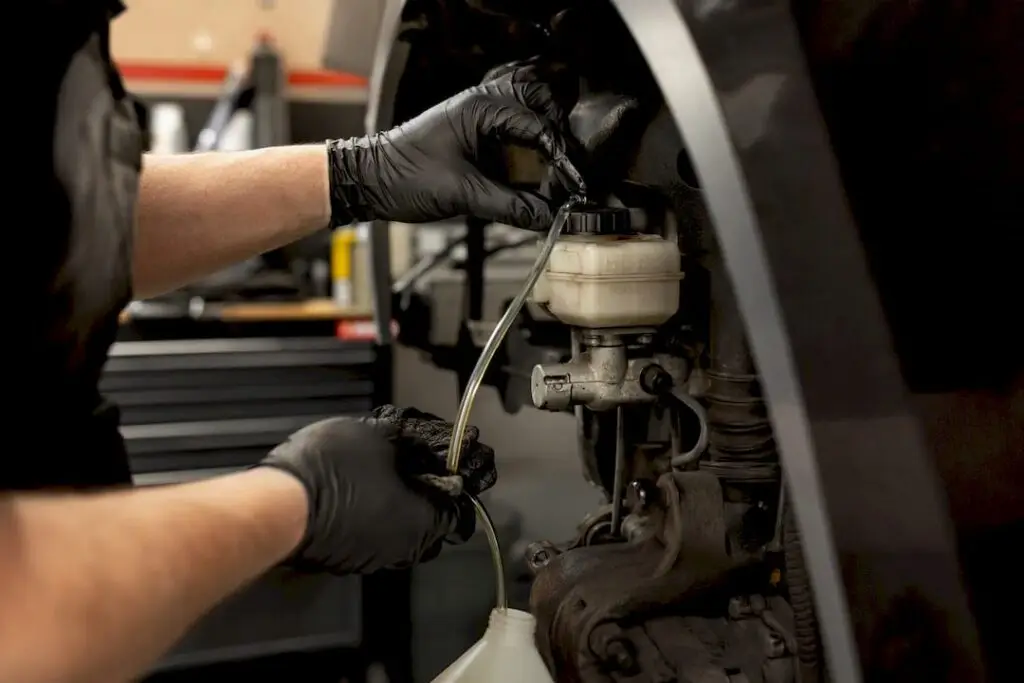
A soft or spongy brake pedal is a safety risk, not a quirk to ignore. Stop driving if the pedal sinks toward the floor or you see fresh fluid near a wheel or under the car; get it towed instead. If the pedal is just a little softer than usual but still stops the car firmly, drive gently and directly to a shop. The usual suspects are air in the lines, an internal master cylinder leak, moisture-cooked fluid, or a hydraulic leak somewhere in the system.
TL;DR:
- Trapped air in the brake lines is the most common cause of a soft pedal and is typically easy and inexpensive to fix with a full bleeding and fluid flush.
- External hydraulic leaks at calipers, hoses, or wheel cylinders cause fluid loss and are visible through wetness or low reservoir levels.
- Internal master cylinder leaks result in a soft pedal that does not improve with pumping and require replacing the cylinder and bleeding the system.
- Moisture in brake fluid lowers its boiling point, and aggressive driving or mountain descents can cause vapor lock, leading to a soft pedal during heavy braking.
- Visual checks of fluid levels, leaks, and pedal firmness can help diagnose the issue before involving a professional, but complex ABS-related problems may need specialized scan tools.
Table of Contents
- Why a Soft Brake Pedal Happens: The Hydraulics Behind It
- Matching the Feeling to the Fault
- How to Check It Yourself Before Calling a Shop
- What Repairs Typically Cost
- How Worn Pads and Rotors Change the Way the Pedal Feels
- Can a Failing Brake Booster Cause a Soft Pedal?
- Does Weather or Altitude Affect Pedal Feel?
- Preventing a Soft Pedal Before It Starts
- When a Soft Pedal Is the First Sign of Something Worse
- How Alternative European & Domestic Diagnoses a Soft Pedal Without Guessing
- Get Your Brake Pedal Diagnosed the Right Way
- Sources
- FAQ
Why a Soft Brake Pedal Happens: The Hydraulics Behind It
Brake fluid works because it doesn’t compress. Push the pedal, and that force travels through sealed lines to push pads against rotors, almost instantly, almost without loss. Introduce anything compressible into that system, air, water vapor, or a worn seal that lets fluid slip past instead of pushing forward, and part of your pedal travel gets wasted squeezing that compressible stuff instead of clamping the brakes.
That’s the entire story behind a spongy brake pedal. The feeling in your foot is a direct readout of how much of your pedal push is actually reaching the calipers.
Brake fluid is hygroscopic, meaning it absorbs moisture from the air over time, and that moisture drops the fluid’s boiling point. Ride the brakes down a long grade or drive aggressively in traffic, and that contaminated fluid can flash into vapor pockets at the calipers. Vapor compresses just like air does, which is why some drivers only notice a soft pedal after a hard mountain descent or a track day.
The symptom pattern usually tells you which mechanism is at work:
- Pedal firms up after a few pumps, then goes soft again over time: points to air in the system.
- Pedal slowly sinks to the floor while you hold steady pressure: points to an internal master cylinder leak (fluid bypassing the piston seals instead of building pressure).
- Pedal goes soft specifically after hard downhill braking or track use: points to moisture-related vapor lock.
An external hydraulic leak behaves differently. Fluid escapes the system entirely rather than getting trapped inside, so the reservoir level drops and you often spot wetness at a wheel or along a line.
Matching the Feeling to the Fault
Technicians rely on the exact character of the softness to shortcut the guesswork, and you can use the same logic before you ever pop the hood.
The most common causes of a soft brake pedal, roughly in order of frequency:
- Trapped air in the brake lines, usually introduced during a fluid top off, a caliper service, or a slow leak nobody noticed
- External leaks at brake lines, calipers, or wheel cylinders
- Internal master cylinder leak, where worn piston seals let fluid bypass instead of building pressure
- Contaminated or boiling fluid from moisture absorption over years of use
- Expanding or collapsed rubber brake hoses, which balloon under pressure and steal pedal firmness
- Sticking calipers or slide pins, which change how evenly pressure gets applied
- Pad knockback, where the pad retracts slightly from the rotor and the first pedal press feels long and soft before it catches
- Trapped air in the ABS module, which a standard bleed often can’t reach
Symptom signatures worth remembering: softness only on the very first press of the day usually means pad knockback or slight rotor runout, not a hydraulic fault. A pedal that’s soft every single time, with no improvement, points toward air or an internal leak. A pedal that was fine yesterday and mushy today after nothing changed mechanically suggests a leak that’s actively getting worse.
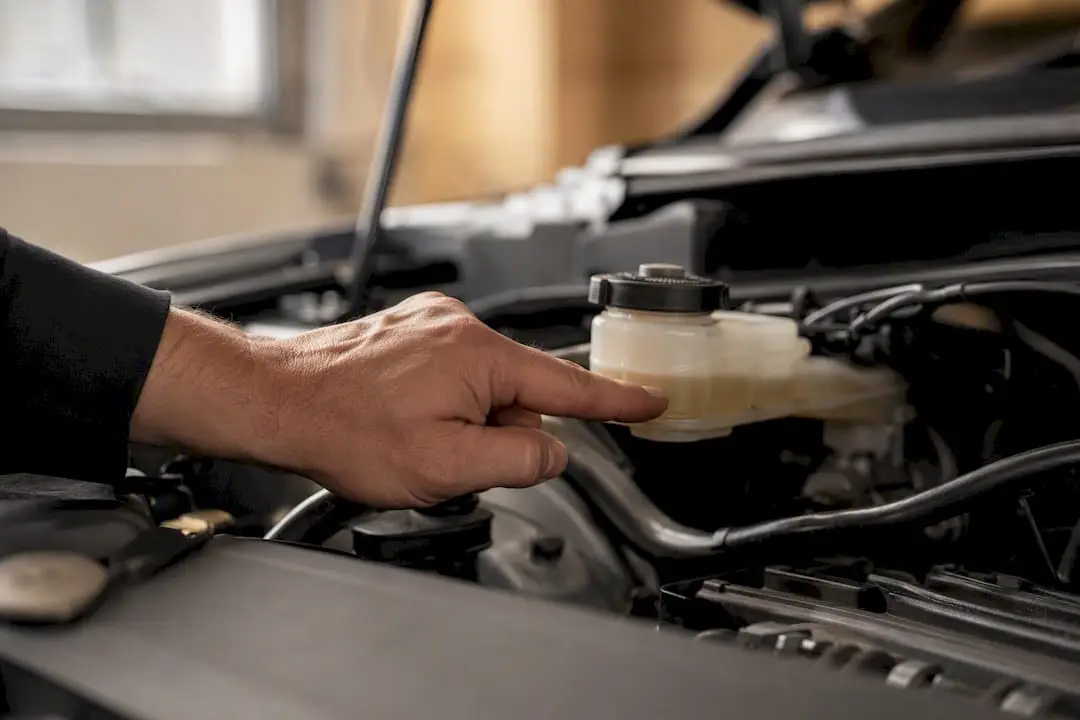
Before assuming the worst, run three quick visual checks: reservoir fluid level, wet spots or grime buildup at each wheel and along visible lines, and whether your brake warning light is on. Wagner’s technical team notes that air in the brake lines is the most common cause of a spongy pedal, which is good news, since it’s also the easiest to fix.
How to Check It Yourself Before Calling a Shop
Do these checks with the car parked safely, engine off unless noted, and never crawl under a vehicle that isn’t properly supported.
- Pump test. With the engine off, press the pedal slowly several times. If it firms up noticeably after two or three pumps, air is the likely culprit; pumping temporarily pushes trapped air toward the top of the system.
- Static pressure hold, 60 seconds. Press the pedal firmly and hold that exact pressure for a full minute, engine off. A pedal that stays put points to a sealed hydraulic system. A pedal that creeps slowly toward the floor with no visible leak anywhere is the classic signature of an internal master cylinder bypass.
- Visual sweep. Check reservoir level against the fill line, look for wetness at each wheel and along the lines running under the car, and check for a bulging or cracked rubber hose.
Pro Tip: If your car has ABS and a basic bleed doesn’t fix the softness, don’t keep bleeding by hand. Air can hide inside the ABS module itself, and clearing it usually requires a bidirectional scan tool cycling each valve, a shop-only procedure.
What Repairs Typically Cost
The fix depends entirely on what the tests point to, and the price range is wide for good reason.
- Fluid flush and bleed: If air or old, moisture-laden fluid is the culprit, a full flush and bleed often resolves it completely. This is the cheapest fix and the first thing most shops try.
- Master cylinder replacement: Confirmed by a failed static hold test with no external leak, this involves replacing the cylinder, bleeding the entire system, and verifying pedal feel afterward. It’s a mid-range repair, more involved than a flush but far less than suspension or ABS work.
- Hose or caliper replacement: A bulging hose or a seized caliper piston gets swapped rather than repaired. Signs include uneven braking, a pedal that’s soft only under load, or visible fluid seepage at the caliper boot.
- Rotor and pad service: Pad knockback resolves itself after a firm pedal press or two once you’re aware of it, but if it’s paired with rotor runout, resurfacing or replacing the rotor restores consistent pad contact.
- ABS/HCU service: The most complex and priciest category, since it requires specialized scan-tool bleeding and sometimes hydraulic control unit diagnosis rather than a simple parts swap.
When you get an estimate, ask three things: what specific test confirmed the diagnosis, what parts brand and warranty come with the repair, and whether the quote includes a full bleed and pedal-feel verification afterward. A shop that can answer all three without hesitation is doing this correctly.
How Worn Pads and Rotors Change the Way the Pedal Feels
Pad and rotor wear rarely causes a truly spongy pedal on their own, but they change pedal feel in ways drivers often mistake for a hydraulic problem. Thin pads increase the distance the caliper piston has to travel before it contacts the rotor, which lengthens pedal travel even though the hydraulics are fine.
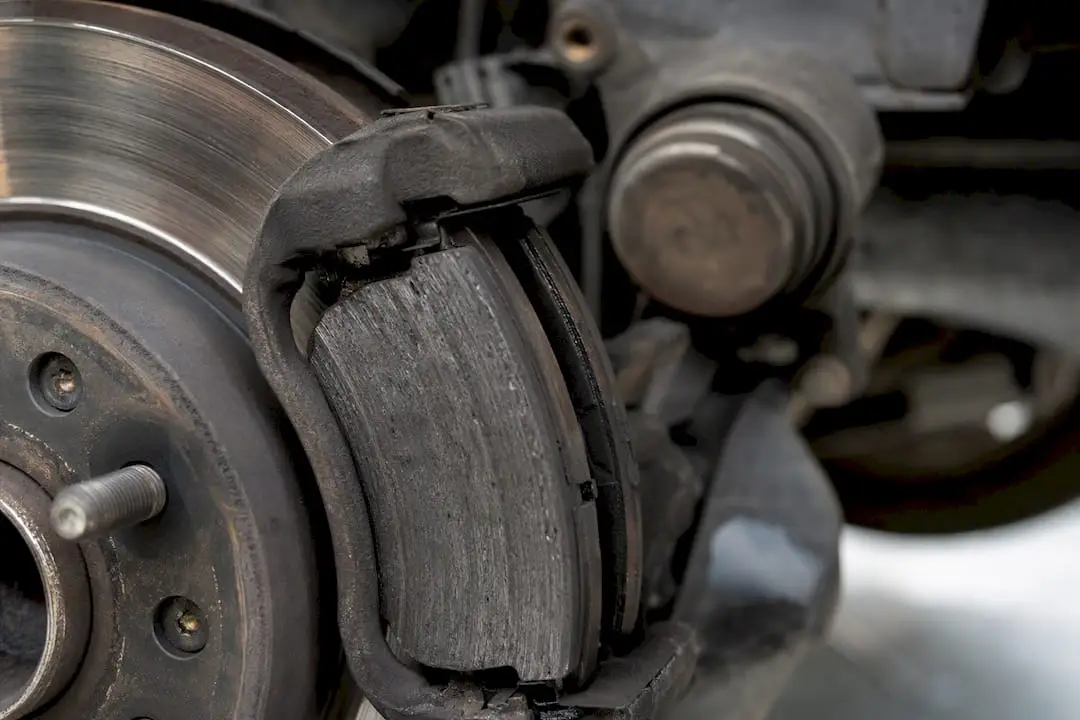
Rotor runout, where the rotor surface isn’t perfectly flat or true, pushes the pad back slightly with every rotation. Combine that with pad knockback and the first press of the day can feel long and soft before the second press catches hard, a pattern that’s often mistaken for air in the lines when it’s actually mechanical clearance. Warped rotors add pulsation on top of that softness, which is a separate symptom worth mentioning to whoever inspects the car. None of this shows up on a static pressure hold test, since that test isolates the hydraulic circuit, not pad-to-rotor clearance, which is exactly why a visual wheel-off inspection still matters even when the hydraulics check out clean.
Can a Failing Brake Booster Cause a Soft Pedal?
A failing brake booster changes how much effort the pedal takes, not usually how far it travels, but the two symptoms get confused constantly. The booster amplifies your leg force using engine vacuum, so a vacuum leak, a cracked booster diaphragm, or a bad check valve makes the pedal feel hard and require heavy pressure to stop the car, the opposite of the soft, sinking feel most drivers describe as spongy.
Where booster problems overlap with a soft pedal report is inconsistency: some drivers describe a pedal that feels normal at first press but then goes soft and low on a second or third press in quick succession, which can be a vacuum leak affecting booster assist rather than a hydraulic fault at all. If your pedal effort changes dramatically between the first stop after startup and subsequent stops, or if you hear a hissing sound near the firewall when pressing the brake, mention that specifically to whoever diagnoses the car. It changes which system gets tested first and can save you from paying for a master cylinder replacement that wouldn’t have fixed the actual problem.
Does Weather or Altitude Affect Pedal Feel?
Temperature and elevation both influence brake feel, and it’s worth knowing which changes are normal and which are warning signs. Cold weather thickens brake fluid slightly, which can make the pedal feel marginally firmer or slower to respond in the first few minutes of driving, an effect that disappears once the fluid warms to operating temperature.
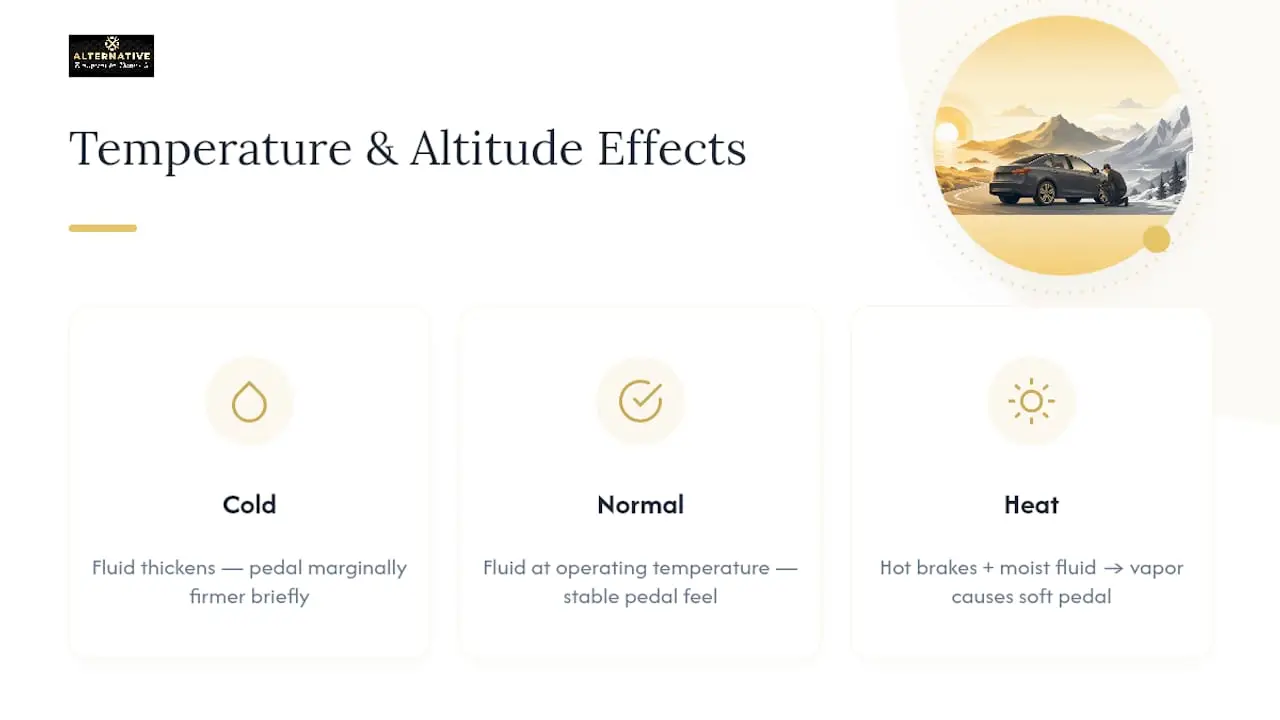
Heat is the more dangerous direction. Prolonged hard braking on a long mountain descent, in stop and go traffic during a heat wave, or during aggressive driving raises fluid temperature at the calipers dramatically. Since moisture in brake fluid lowers its boiling point, fluid that’s a few years old and has absorbed ambient humidity can flash to vapor under that heat, producing a pedal that goes soft specifically during or right after a demanding drive and then feels normal again once things cool down. That pattern is a strong signal your fluid is overdue for a flush, not that something is mechanically broken. Altitude itself has a smaller direct effect on pedal feel, but it often correlates with the mountain driving that triggers heat-related vapor lock in the first place, so the two get blamed on each other more than they should.
Preventing a Soft Pedal Before It Starts
Most soft-pedal complaints trace back to maintenance that got skipped, not a sudden failure. Brake fluid degrades on a schedule whether you notice it or not, and staying ahead of that schedule is the single best thing you can do.
Technicians generally recommend a brake fluid flush every two to three years under normal driving conditions, sooner if you tow, track your car, or drive frequently in mountains where sustained braking runs the fluid hotter than average. Beyond the flush interval, a few habits catch problems early: check your reservoir fluid level whenever you check your oil, since a slow drop between fills usually means a slow leak somewhere in the system. Glance at your wheels occasionally for dark residue or wetness near the caliper. And pay attention to pedal feel itself, since you’re the only sensor that notices a gradual change from firm to soft over weeks, long before a dashboard light ever comes on.
When a Soft Pedal Is the First Sign of Something Worse
A soft brake pedal is often the earliest symptom in a chain of warning signs that get more serious if ignored. Left unaddressed, a slow master cylinder leak or a small external leak tends to progress: the pedal gets softer week by week, the reservoir level drops faster each time you check it, and eventually you’ll notice the pedal sinking further toward the floor even under normal city driving, not just under sustained pressure.
Watch for these escalating signs alongside pedal softness: a brake warning light that turns on and stays on, a burning smell after driving (which can indicate an overheating caliper or dragging pad), grinding or metal-on-metal noise (worn-through pads), and the car pulling to one side under braking (uneven caliper function). Any one of these paired with a soft pedal moves the situation from “get it checked soon” to “get it checked now.” The NHTSA treats hydraulic brake performance as a core safety system for exactly this reason: small hydraulic problems compound quickly, and a soft pedal rarely stays mild for long once it starts.
How Alternative European & Domestic Diagnoses a Soft Pedal Without Guessing
Guessing at brake repairs wastes money and delays the real fix. Our technicians run a static pressure hold and a blocking test to isolate exactly which circuit or seal is losing pressure before replacing anything, then use a pressure bleeder and, on ABS-equipped cars, a bidirectional scan tool to clear air the traditional way can’t reach. That sequence, test first, replace second, is why our estimates come with a specific diagnosis attached instead of a parts list and a shrug, and it’s usually why the repair costs less over time than swapping components one at a time hoping something sticks.
— Hassan
Get Your Brake Pedal Diagnosed the Right Way
A soft pedal deserves an actual diagnosis, not a guess at parts. Alternative European & Domestic runs the same static hold and blocking tests described above before recommending a repair, whether that turns out to be a simple fluid flush, a master cylinder replacement, or a full ABS bleed with a scan tool. You get dealer-level diagnostics without dealer-level guesswork, and every estimate spells out exactly what test led to that recommendation.
If your pedal has been feeling soft, mushy, or slow to catch, don’t wait for it to sink further. Book a diagnostic inspection with Alternative European & Domestic and get a clear answer on what’s actually happening in your brake system, along with a transparent estimate before any work begins.
Sources
For deeper technical background on brake pedal diagnosis, see Power Stop’s guide to soft and spongy pedal symptoms, Brake & Front End’s technician diagnostic walkthrough, and Tomorrow’s Technician’s guide to blocking tests.
- Tech Tip: Diagnosing a sinking, low or spongy brake pedal — Brake & Front End
- Why Is My Brake Pedal Soft? (And Is It Safe to Drive?) — Wisco Automotive
- Why are my brakes spongy? — Wagner Brake Technical Tips
FAQ
How Do You Fix a Soft Brake Pedal?
Most cases resolve with a full brake fluid flush and bleed to remove trapped air or degraded fluid; if the pedal still sinks after that, the next step is usually master cylinder testing or replacement.
What Does It Mean if the Brake Pedal Is Soft?
It means part of your pedal’s force is being absorbed by something other than the brakes, usually air, vapor from overheated fluid, or fluid bypassing worn seals inside the master cylinder instead of building pressure.
Is It Safe to Drive With a Soft Brake Pedal?
Not if the pedal sinks toward the floor or you see fresh fluid on the ground or wheels; that combination means you should stop driving and arrange a tow rather than risk it.
How Much Does It Cost to Fix a Soft Brake Pedal?
Costs range from a modest fluid flush on the low end to a mid-range master cylinder replacement, up to a more expensive ABS module bleed or hydraulic control unit service on the high end, depending entirely on the root cause a proper diagnosis identifies.