
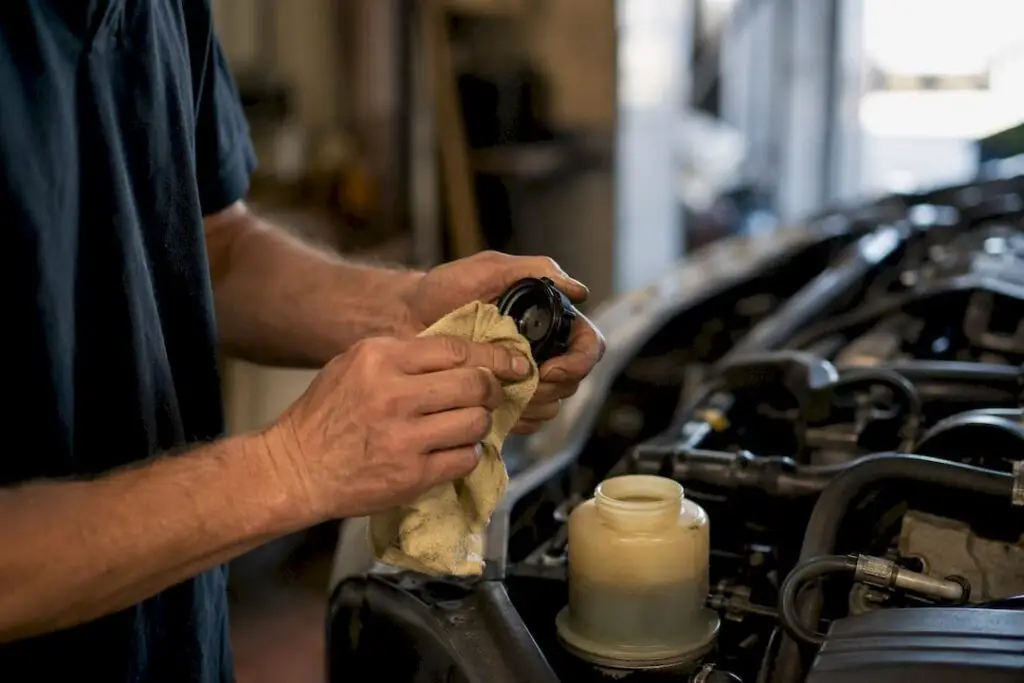
Yes, a power steering leak is worth acting on right away. If steering feels normal, top off the correct fluid as a stopgap and schedule an inspection this week. If steering has turned heavy, stiff, or noisy, stop driving and get the vehicle looked at before the pump runs dry and burns itself out. The fastest path to a lasting fix is a proper leak diagnostic, not a guess.
TL;DR:
- Power steering leaks often originate from pump seals, hoses, or rack seals, with hose or fitting repairs being the simplest and cheapest to fix.
- Running the pump dry causes severe damage, so stop driving immediately if steering becomes heavy, noisy, or unresponsive, and get it inspected.
- Diagnosing a leak with UV dye and pressure testing ensures accuracy, preventing repeat repairs and unnecessary part replacements.
- Short, low-speed trips with a small leak are tolerable temporarily, but constantly topping off fluid risks pump overheating and seizing.
- Proper bleeding after repair is essential to ensure system quietness and prevent air lock or resurgence of leaks.
Table of Contents
- Power Steering Fluid Leak Symptoms You Shouldn’t Ignore
- What Actually Causes a Power Steering Leak
- Can You Keep Driving With a Power Steering Leak?
- How Technicians Actually Track Down a Power Steering Leak
- DIY Fixes vs. When to Call in a Pro
- Power Steering Leak Repair Cost: What to Expect
- Bleeding the System and Confirming the Leak Is Actually Fixed
- A Specialist’s View on Why Diagnosis Beats Guesswork
- Get Your Power Steering Leak Diagnosed the Right Way
- Sources
- FAQ
Power Steering Fluid Leak Symptoms You Shouldn’t Ignore
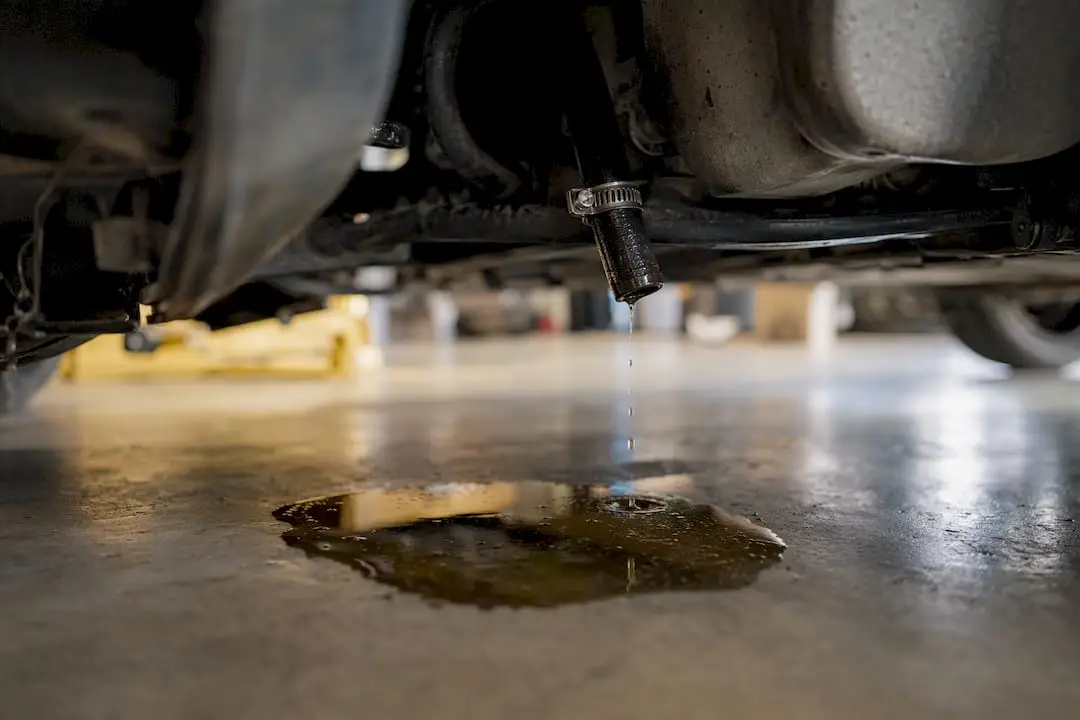
A puddle under the front of the car, roughly beneath the engine or just behind the front wheel, is usually the first clue. The fluid itself is typically red, pink, or amber and feels slicker than motor oil between your fingers. Dark brown or black fluid with a burnt smell points to old, overdue fluid rather than a fresh leak, though both problems can coexist.
Steering symptoms tend to show up before or alongside the puddle:
- A whining or groaning noise that gets louder when you turn the wheel, especially at low speed or idle.
- Stiffer steering that takes noticeably more arm strength, particularly on cold starts or tight turns.
- Intermittent loss of assist, where the wheel suddenly feels heavy for a second and then normalizes.
- A grinding or squealing sound coming from the pump area under the hood.
Pro Tip: Grease bleeding at the tie rod ends or CV boots can look identical to a hydraulic leak. Wipe the area clean, drive a short loop, and check again. If the wetness returns and smells like steering fluid rather than axle grease, you’re looking at an actual leak.
Not every wet spot is a power steering problem. Engine oil drips further back and centered under the motor; transmission fluid is usually redder but thinner and appears further toward the middle or rear of the engine bay. Location and color together usually settle the question.
What Actually Causes a Power Steering Leak
Every leak traces back to one of a handful of failure points, and each fails for a different mechanical reason. Common leak sources include pump shaft seals, pressure and return hoses, rack-and-pinion seals, reservoir cracks, and O-rings at fittings, with severity ranging from minor seepage to a steady drip that empties the reservoir in a day.
- Pump shaft seal: The seal around the spinning pump shaft hardens and shrinks with age and heat cycling, letting fluid weep out at the front of the pump.
- Pressure and return hoses: These lines run hot and under real hydraulic pressure, so rubber sections crack, and metal fittings loosen or corrode where they clamp onto the hose.
- Reservoir problems: Plastic reservoirs get brittle over years of engine bay heat, and a warped or cracked filler cap lets fluid weep past the seal at the neck.
- Rack-and-pinion seals: Internal seals inside the steering rack wear from constant piston movement, and once they fail, fluid can leak externally or bypass internally, which shows up as weak assist rather than a visible drip.
O-rings at any fitting are the quiet culprit that gets overlooked. They’re cheap, but a shop still has to pull the line to reach them.
Can You Keep Driving With a Power Steering Leak?
Short trips at low speed with a slow, contained leak are generally tolerable for a day or two, provided you check the reservoir before each drive. The real risk is running the pump dry: without enough fluid, the pump cavitates, overheats, and can seize permanently, turning a $150 hose repair into a $700 pump replacement.
- Safe to drive short distances: Fluid level still reads on the dipstick, steering feels normal, and the puddle is small and slow to form.
- Top off with caution: Add small amounts of the manufacturer-specified fluid, check the level again after a few minutes, and never overfill above the HOT or COLD mark.
- Stop driving immediately: Steering has gone heavy or notchy, you hear grinding from the pump, or the reservoir is visibly empty.
Pro Tip: Never top off with whatever fluid is on the shelf. Some vehicles need ATF, others need a dedicated power steering fluid, and mixing the wrong type can swell seals and turn a small leak into a bigger one.
How Technicians Actually Track Down a Power Steering Leak
Guessing at a leak location wastes money on parts that were never the problem. Here’s the sequence a shop actually follows, and one you can walk through yourself before handing it off:
- Confirm fluid identity and level. Check color, smell, and level against the reservoir’s HOT/COLD marks, noting whether the check happens cold or after the engine has run a few minutes, since that changes the reading.
- Clean the suspect area. Degrease the pump, hoses, and rack thoroughly so any new leak shows up as fresh wetness rather than old residue.
- Add UV dye if the source isn’t obvious. Run the engine, cycle the wheel, then inspect under a blacklight. This step catches leaks invisible to the naked eye, especially ones that only appear once the system is hot.
- Run a pressure test. Technicians check fluid level and condition, clean the suspect zone, trace the leak with fluorescent dye, and pressure test the system at normal operating temperature to catch leaks that only appear under load.
- Bump the steering stops instead of holding them. Turning the wheel to full lock and holding it there spikes pressure and can blow out an already weak seal; a brief bump at the stop builds enough pressure to reveal a leak without the risk.
- Document the exact drip pattern and location before touching anything, and rule out grease bleeding at the tie rod boots, which mimics a hydraulic leak but isn’t one.
Pro Tip: If a leak only shows up after ten minutes of driving, it’s often a pressure-dependent leak that a cold, static inspection will completely miss. That’s the entire reason the pressure test step exists.
DIY Fixes vs. When to Call in a Pro
Some of this is genuinely within reach for a driveway mechanic; some of it isn’t, and pretending otherwise usually costs more in the end.
Reasonable DIY territory includes tightening a loose hose clamp or fitting, swapping an easily accessible return hose, topping off fluid correctly, and bleeding the system after a simple repair. These jobs need basic hand tools and patience, not specialized equipment.
Stop-leak additives sit in a gray zone. They can temporarily slow a small seep, but they rarely cure a genuinely worn seal or a deteriorating hose, and should be treated as a stopgap while you arrange the real repair, not a fix on their own.
- Pump shaft seal replacement usually requires pulling the pump and specialized seal drivers.
- Internal rack leaks mean removing the steering rack, which affects alignment and often requires a lift.
- High-pressure line repairs need proper flaring or crimping tools most owners don’t own.
Anything involving the rack, the pump internals, or a pressure line is worth handing to a shop with the right equipment.
Power Steering Leak Repair Cost: What to Expect
Repair costs swing widely because the fix depends entirely on which component failed. Small, accessible hose or fitting repairs tend to sit at the lower end, while pump or rack work runs significantly higher and can add alignment costs and extended labor time.
- Return hose or fitting replacement: Lower parts cost, straightforward labor, often a same-day job.
- Reservoir replacement: Inexpensive part, but labor varies depending on how buried it is in the engine bay.
- Pump replacement: Higher parts cost, moderate labor, and often needs a system flush and bleed afterward.
- Rack-and-pinion replacement: The most expensive repair on this list, involving significant labor and usually a follow-up alignment.
OEM guidance stresses cleaning and pinpointing the exact leak location before any part gets replaced, because a seal kit fixes some failures while others truly require replacing the whole housing. That’s exactly why a vague quote based on symptoms alone, without a proper leak trace, is a red flag. Ask any shop for a parts-and-labor breakdown and whether the repair carries a warranty before you approve the work.
Bleeding the System and Confirming the Leak Is Actually Fixed
A repair isn’t finished until the trapped air is out and the fix is verified under real driving conditions. The standard bleeding sequence is to fill the reservoir, start the engine at idle, turn the wheel lock to lock several times without holding at the extremes, recheck the fluid level, and repeat until no more bubbles appear.
- Fill the reservoir to the correct mark with the specified fluid.
- Start the engine and let it idle, then turn the wheel gently from side to side, bumping rather than holding the stops.
- Shut off the engine, recheck the fluid level, and top off as needed.
- Repeat the cycle until the fluid is clear of bubbles and the level holds steady.
- Take a short test drive, then inspect every cleaned surface for fresh wetness.
A properly bled system turns quietly with no whine and holds a steady fluid level for several days. If the rack was serviced, get the alignment checked, since removing it can shift toe settings even on a careful reinstall.
A Specialist’s View on Why Diagnosis Beats Guesswork
Most repeat power steering leaks aren’t repeat failures. They’re the same leak, misdiagnosed the first time. A shop that skips the dye trace and pressure test and just swaps the most likely-looking hose ends up chasing the same puddle two months later, and the customer pays twice.
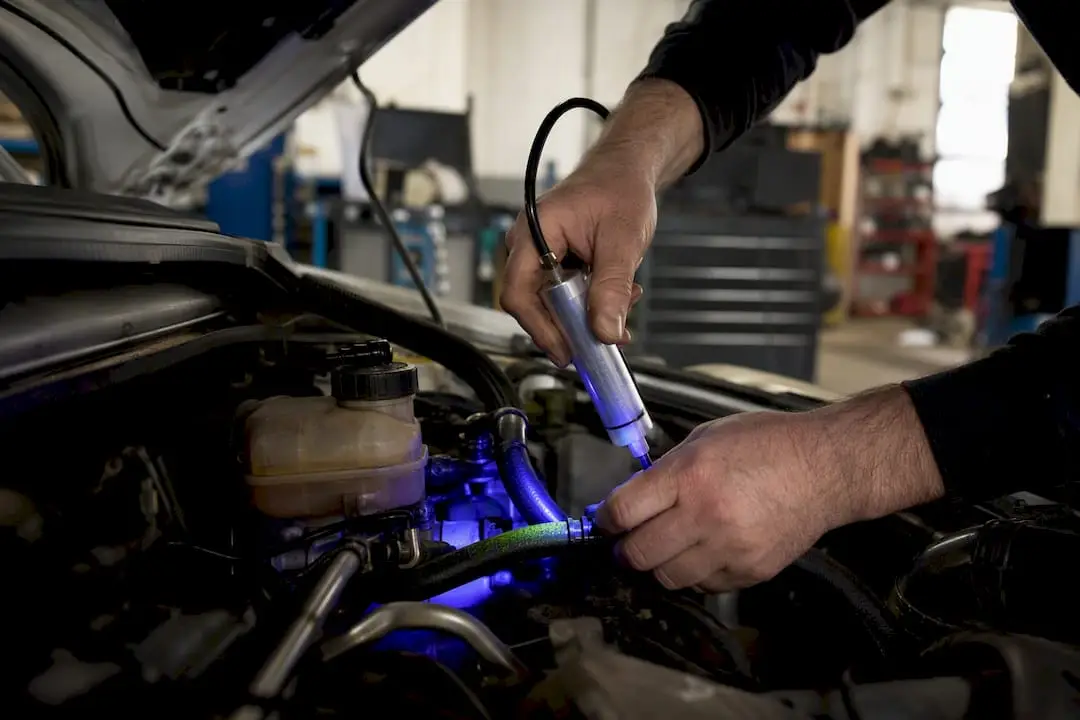
Dealer-level diagnostic tools change that equation. Pressure testers and dye tracing let a technician confirm the exact failure point before a wrench ever touches the car, which matters most on internal rack leaks that never show up during a cold, static inspection. Experienced techs know to bump the steering stops rather than hold them, know which fluid a given rack actually wants, and know when a seal kit will hold versus when the housing itself needs to go.
Transparent estimates matter just as much as the diagnostic work. A customer who sees the parts-and-labor breakdown, and understands why a $1,200 rack quote isn’t the same job as a $180 hose swap, trusts the number a lot more than one handed a flat price with no explanation. Built into that is the preventative side: a maintenance plan that catches a weeping seal at 5% wear instead of 95% wear is the difference between a seal kit and a full rack replacement down the road.
— Hassan
Get Your Power Steering Leak Diagnosed the Right Way
If you’ve read this far because there’s fluid under your car right now, the honest next move is a proper diagnostic, not another bottle of stop-leak from the parts store. Alternativecarcare runs the same dye-trace-and-pressure-test workflow described above on every leak complaint that comes through the bay, so you get an accurate answer on the first visit instead of a repeat repair a few months later.

Every estimate breaks down parts and labor before any work starts, so you know exactly what a hose repair costs versus a rack replacement and why. For European, domestic, or high-performance vehicles where power steering systems can be finicky about fluid type and line routing, that kind of dealer-level diagnostic work saves real money over guessing. Schedule a diagnostic with Alternativecarcare and get the leak identified correctly the first time.
Sources
- Automotive Leak Detection (Tracer Products)
- How to Check Power Steering Fluid and Fix Leaks (FleetRabbit)
- What Causes a Steering Fluid Leak? (AutoZone DIY)
- GM service bulletin: Hydraulic power steering system leak diagnostic actions
FAQ
Can I Still Drive With a Power Steering Leak?
Short, careful trips are usually fine if steering still feels normal and the reservoir holds fluid, but heavy or grinding steering means stop driving and get it inspected before the pump runs dry.
How Much Does It Usually Cost to Fix a Power Steering Leak?
Cost depends entirely on the failed part: a hose or fitting repair sits at the low end, while pump or rack replacement runs considerably higher and often adds alignment work.
Where Is the Most Common Place for a Power Steering Leak?
Pump shaft seals, pressure and return hoses, reservoir cracks, and rack-and-pinion seals account for most leaks, with hoses and fittings being the easiest to spot and cheapest to fix.
How Do I Fix My Power Steering Leak?
Clean the area, confirm the exact source with UV dye or a pressure test, then repair or replace the specific failed part, bleed the system, and verify no leaks remain after a short test drive. For anything beyond a hose or fitting, a shop like Alternativecarcare with proper pressure-testing equipment gets it right the first time.