
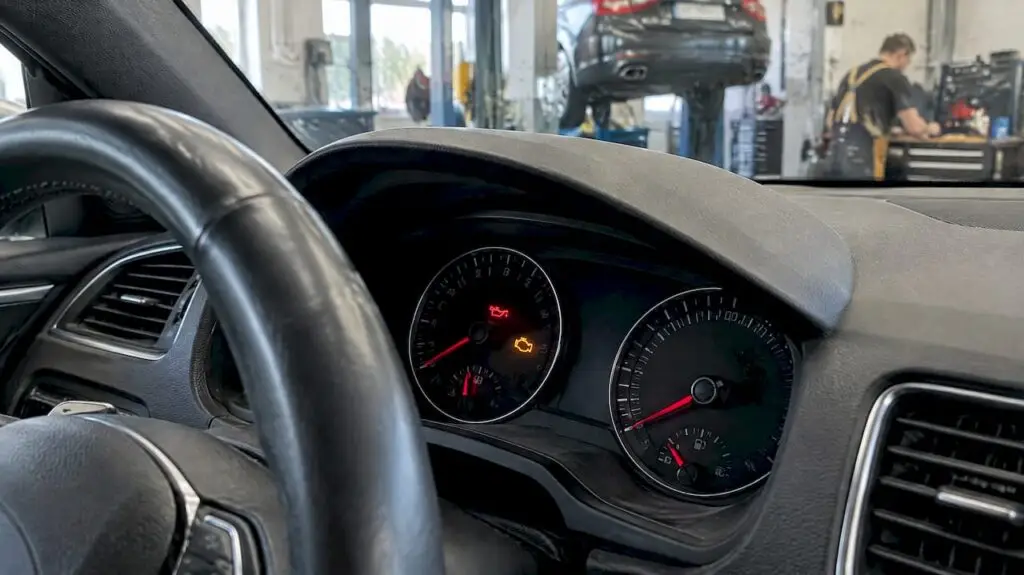
A service or warning light generally falls into one of three categories: a routine maintenance reminder, a system status notice, or an active fault. Red means stop as soon as it’s safe, amber means schedule service soon, and green or blue simply confirm a system is working. When a light is flashing or paired with unusual noise or smell, treat it as more urgent and get a diagnostic scan before driving further.
TL;DR:
- An oil pressure warning requires an immediate safe stop and engine shutdown; even a short drive without lubrication can destroy major engine parts.
- With a steady engine warning light, arrange a diagnostic scan soon; if it flashes, reduce driving because an active misfire can damage the catalytic converter.
- An ABS warning usually leaves standard braking intact but disables anti lock assistance, so drive gently to a shop and book prompt diagnosis.
- Reset maintenance reminders only after completing the listed service, because clearing them early hides a due task rather than fixing a fault.
Table of Contents
- Color and Status: How Dashboards Use Color, Flashing, and Text to Show Urgency
- Common Critical Red Lights and What to Do About Them
- Common Amber Warnings and When They Need a Shop Visit
- Other Common Indicators: Airbags, Seatbelts, Bulbs, and Maintenance Messages
- Reading Codes and Deciding Between a Quick Check, a Shop Visit, or a Tow
- How Alternative European & Domestic Approaches Dashboard Warning Diagnostics
- What Drivers Get Wrong About Dashboard Lights
- Schedule a Diagnostic Visit for Your Dashboard Warning Light
- FAQ
- Sources
Color and Status: How Dashboards Use Color, Flashing, and Text to Show Urgency
Dashboard designers follow a consistent color logic across most manufacturers, even though the exact icons differ from brand to brand. Red indicates a condition that needs immediate action, amber or yellow signals something that needs attention soon, and blue or green simply confirms a system is on or working as expected.
A light’s behavior matters as much as its color. A steady light usually means a condition is present but stable, while a flashing light means the problem is active and potentially worsening. A flashing check-engine light, for example, points to a misfire severe enough to risk damaging the catalytic converter. A flashing or rapidly blinking oil or temperature warning carries the same elevated urgency.
- Red lights call for pulling over and shutting off the engine when it’s safe to do so.
- Amber or yellow lights mean the vehicle is drivable but needs service in the near term.
- Green or blue lights confirm a feature, like high beams or cruise control, is active.
- A flashing light of any color is more urgent than the same light shown steady.
Symbols for the same warning can look different across brands, so the owner’s manual remains the definitive guide to what a specific icon means for your vehicle. AAA’s warning-light road map lays out this same color hierarchy: red demands immediate action, amber calls for prompt attention, and blue or green lights describe system status rather than a fault.
One standard to note: flashing lights outside this color system are regulated too. NHTSA’s interpretation of FMVSS No. 108 restricts nonstandard flashing amber lights specifically because inconsistent flashing patterns confuse drivers, which is part of why manufacturers stick closely to the red, amber, and blue/green convention inside the cabin.
Common Critical Red Lights and What to Do About Them
Red warnings share one rule: stop driving as soon as you can do so safely. Three of the most common, and most damaging if ignored, are oil pressure, engine temperature, and battery or charging warnings.
- Oil pressure light: This means the engine isn’t getting adequate lubrication, often shown as an oil-can icon. Pull over immediately, shut off the engine, and check the oil level once it’s safe to pop the hood. Driving even a short distance with zero oil pressure can destroy bearings, the crankshaft, or the entire engine, and restarting an engine that just lost pressure risks finishing the damage a warning light was trying to prevent.
- Engine or coolant temperature light: An overheating engine needs a safe pull-over away from traffic, engine off, and a visual check for steam or coolant leaks before you touch anything under the hood. Never open a hot radiator cap, and don’t restart the engine if you see steam or smell coolant; let it cool and arrange a tow or service visit instead.
- Battery or charging light: This usually points to an alternator that has stopped charging the battery, which means the car is running on stored battery power alone. Turn off nonessential electrical loads like the radio, heated seats, and rear defroster to extend driving range, because losing all electrical power can mean losing power steering assist, lighting, and eventually the engine itself.
Deciding between a tow and a careful drive to a shop comes down to risk. If the oil light is on with zero pressure, if the engine is visibly overheating, or if you’ve lost power steering or braking assist, call for a tow rather than risk stranding yourself or causing further damage. If the battery light just came on and the car is still running normally, driving directly to a shop is often reasonable, especially if you cut nonessential electrical use along the way. Our engine repair services page covers the diagnostic process once your vehicle reaches the shop.
Pro Tip: Note the exact moment the light appeared, what you were doing (idling, highway speed, right after fueling), and any smell, noise, or gauge reading. That detail speeds up diagnosis considerably.
Common Amber Warnings and When They Need a Shop Visit
Amber lights don’t demand pulling over, but they shouldn’t sit ignored for weeks either. A steady check-engine light is the most common example. It can mean anything from a loose gas cap to a failing oxygen sensor or an emissions-related fault, and the only reliable way to know is a diagnostic scan. AAA’s check-engine light guide explains that a steady light calls for diagnosis soon, while a flashing light is more urgent because it can signal a misfire serious enough to overheat and damage the catalytic converter. If your check-engine light starts flashing, reduce driving and get it looked at right away rather than waiting out the week.
- A steady check-engine light often traces back to a loose gas cap, a worn sensor, or an emissions component, and a scan narrows it down fast.
- A flashing check-engine light suggests an active misfire and calls for reduced driving until it’s diagnosed.
- A tire-pressure warning means one or more tires has dropped meaningfully below the recommended cold pressure, so check all four with a gauge rather than assuming which one is low.
- An ABS or traction-control light typically does not mean your primary brakes have failed. It more often points to a wheel-speed sensor, wiring issue, or wheel-bearing wear, though it still deserves prompt diagnosis since it disables anti-lock assistance.
- Multiple amber lights appearing together, especially ones tied to electrical systems, often point to a body control module or wiring issue rather than several unrelated failures.
For the tire-pressure light, a quick check with a gauge at a gas station tells you whether you’re dealing with normal seasonal pressure loss or a leak that needs a shop’s attention. Driving a short distance on a slightly underinflated tire to reach a shop is generally fine, but a rapidly dropping tire warrants stopping to inspect for a nail or puncture.
The ABS light deserves a closer look because drivers often assume the worst. AAA notes that ABS warning causes are commonly traced to a wheel-speed sensor, wiring, or wheel-bearing wear, and that while ABS assistance becomes unavailable, standard hydraulic braking usually still works. That changes the immediate risk calculus: you can typically drive to a shop, but you’re doing so without the anti-lock safety net, so gentler braking and a prompt appointment both matter. If you want to understand what’s happening with a check-engine code specifically, our guide on diagnosing a check-engine light walks through the live-data steps a technician uses before recommending any repair.

Other Common Indicators: Airbags, Seatbelts, Bulbs, and Maintenance Messages
Not every light on the dash is a fault. Some are safety reminders, some are convenience notices, and some are simply telling you it’s time for scheduled upkeep.
- An airbag warning light signals a fault somewhere in the supplemental restraint system and should be addressed before your next trip, since it affects whether airbags deploy correctly in a crash.
- A seatbelt reminder is a safety prompt, not a system fault, and clears once belts are fastened.
- A bulb-out warning means a exterior light has failed and should be replaced promptly for visibility and legal compliance.
- A washer-fluid or low-fuel light can usually wait until your next stop, but it’s worth addressing before a long trip.
Maintenance reminder messages are a different category entirely from fault warnings. Manufacturer systems like Honda’s Maintenance Minder track oil life as a percentage and display coded maintenance items based on how the vehicle has actually been driven, not a fixed mileage interval. Seeing a maintenance code pop up doesn’t mean something is broken. It means the system has calculated that an oil change or another scheduled service is due based on your driving conditions.
These displays should be reset only after the corresponding service is actually performed, using the procedure in your owner’s manual, since resetting it early just hides a legitimate reminder rather than addressing it. Our maintenance service page covers the scheduled work tied to these reminders.
Reading Codes and Deciding Between a Quick Check, a Shop Visit, or a Tow
Before you call anyone, a few owner-level checks take less than five minutes and can rule out simple causes. Confirm the oil level on the dipstick, glance at the coolant reservoir, check tire pressure with a gauge, look at the battery terminals for corrosion, and make sure the gas cap is tightened.
- Check fluid levels and tire pressure first, since these explain a surprising share of amber warnings without any fault at all.
- Get an OBD-II code read if the light persists, since the code points to a system (emissions, fuel, ignition) even though it rarely names the exact failed part.
- Have a technician pull live data and test components under load when the code alone doesn’t explain the symptom, which is common with intermittent misfires or sensor faults.
- Call for a tow if you’ve lost the ability to steer or brake normally, see smoke, or the vehicle won’t maintain power, since driving in that condition risks your safety and the vehicle’s drivetrain.
A diagnostic-first approach matters because the same light can have several different causes. AAA’s dashboard warning light guidance points out that replacing parts based on the light alone often means replacing the wrong part, while reading stored codes and live data first narrows the cause before anything gets swapped. If your vehicle has gone into reduced-power mode alongside a warning light, our page on limp mode causes explains why that symptom specifically calls for dealer-level diagnostics rather than guesswork.
Pro Tip: If a light appeared right after a repair, a fuel fill-up, or aftermarket work like an exhaust modification, tell the shop that detail first. It often points straight to the cause.
How Alternative European & Domestic Approaches Dashboard Warning Diagnostics
We run dealer-level diagnostic equipment built for European, domestic, and high-performance vehicles, which matters because electrical and emissions systems on these platforms often need manufacturer-specific scan tools to read accurately. Our workflow starts with pulling stored and pending codes, then capturing live data while the vehicle idles and runs under load, before we inspect the related wiring, sensors, or components the data points to.
- We scan for stored and pending codes as the first step on every dashboard-light visit.
- We capture live data under real operating conditions rather than relying on the code alone.
- We inspect the specific components the data implicates before recommending any part replacement.
When you bring a vehicle in, it helps to tell us when the light first appeared, what you were doing at the time, whether you’ve had recent fuel fill-ups or repairs, and any photos of the dash. That context often shortens the diagnostic process considerably.
What Drivers Get Wrong About Dashboard Lights
The most common mistake isn’t ignoring a light entirely, it’s misjudging which ones can wait. Drivers routinely continue driving on a flashing check-engine light because the car “still runs fine,” not realizing that flashing specifically signals a misfire actively heating up the catalytic converter. Others guess at a replacement part based on the light’s name alone, which leads to spending money on a part that was never the problem. Resetting a warning without diagnosing it first just buys a few quiet days before the same light returns.
- Driving on a flashing light because the car still runs normally is one of the costliest habits we see.
- Guessing at a part before reading codes wastes money more often than it fixes the issue.
- Clearing a code without diagnosis just delays the same warning, not the underlying cause.
A short pre-appointment checklist helps: snap a photo of the dash, write down when the light appeared and what you were doing, check your fluid levels, and note any recent fuel stops or repairs. For any red warning, or an amber light paired with a noise, smell, or handling change, skip the troubleshooting and bring the vehicle straight to a qualified diagnostic shop.
— Alternative European & Domestic
Schedule a Diagnostic Visit for Your Dashboard Warning Light
Dashboard lights rarely explain themselves fully, and guessing at parts tends to cost more than a proper diagnostic scan from the start. We bring dealer-level tools to every visit, which matters most on European and high-performance vehicles where generic code readers often miss the manufacturer-specific detail that explains what’s actually happening.
At your appointment, expect a code scan, a live-data review, and a straightforward explanation of what we found before any repair begins. Common fixes for dashboard warnings include sensor replacement, charging-system repair, brake-related component service, or scheduled maintenance tied to a reminder message.
- We diagnose check-engine, oil-pressure, and temperature warnings with advanced scan tools.
- We handle charging-system and battery warning light diagnostics for European, domestic, and performance vehicles.
- We service brake and ABS-related warnings through our brake repair team.
- We cover engine faults through our engine repair services page.
If a dash light has you wondering whether to drive or stop, schedule an appointment and we’ll scan it properly before anything gets replaced.
FAQ
Can I drive with my service light on?
It depends on the color and behavior of the light. A steady amber service light generally allows careful driving to a shop, while any red warning light or a flashing amber light, especially a flashing check-engine light, means you should reduce driving immediately and get it diagnosed.
What does a service light mean on my car?
A service light usually means a scheduled maintenance item, like an oil change, is due based on mileage or calculated operating conditions, rather than an active fault. Manufacturer systems such as Honda’s Maintenance Minder display these as percentage-based reminders tied to real driving conditions.
What does it mean when all my service lights come on?
When several lights illuminate at once, especially electrical or amber indicators, it often points to a shared cause like a body control module or wiring issue rather than several unrelated failures. A diagnostic scan that captures live data is the fastest way to narrow down the common source.
What are the three main warning light colors?
Dashboard warnings use red, amber or yellow, and blue or green to indicate urgency. Red means stop and address the issue immediately, amber means arrange service soon, and blue or green simply confirm a system is active, according to AAA’s warning-light guidance.
Sources
- A warning-light road map | AAA Club Alliance
- Check engine light | AAA
- Honda Maintenance Minder system — owner documentation (PDF)
- NHTSA interpretation on flashing amber lights and FMVSS No. 108