
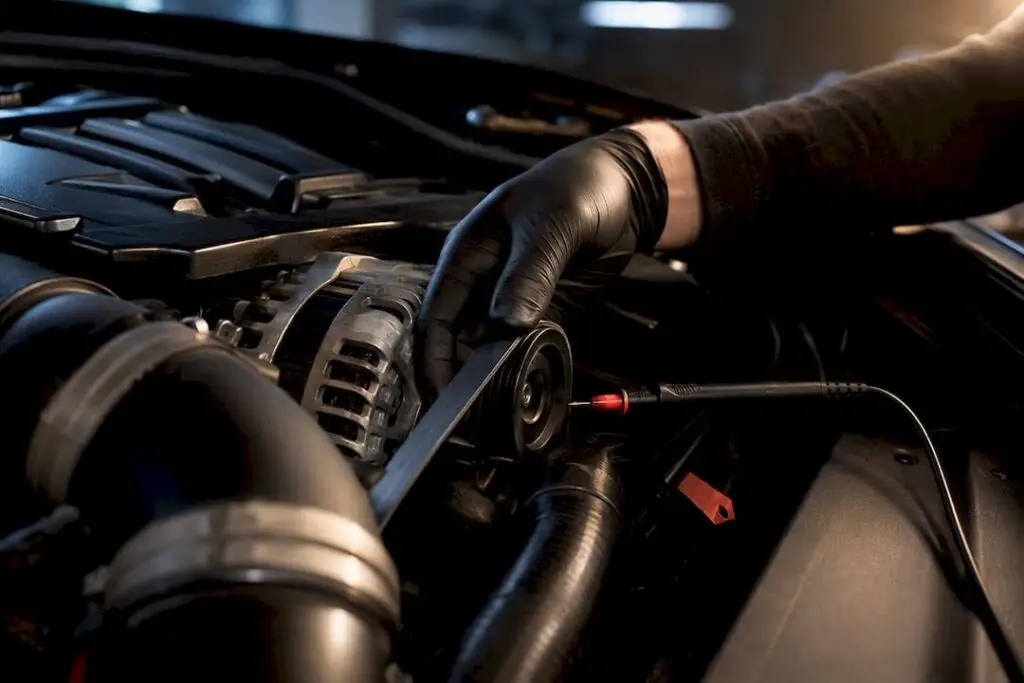
If your battery light comes on while driving, your car stalls minutes after a jump-start, and a multimeter reading falls outside the 13.0 to 14.7 volt range, the alternator is almost certainly the problem. Stop driving if you notice smoke, a burning smell, or a battery that’s hot to the touch. A quick voltage check with a multimeter, followed by a professional look at the battery, belt, and wiring, will confirm it before you spend money on the wrong part.
TL;DR:
- A voltage reading outside 13.0 to 14.7 volts with the engine running indicates alternator or regulator issues, especially if combined with dim lights or dashboard warnings.
- Common signs include the battery or charging light, headlight flickering, recurring dead batteries, and strange electrical accessory behavior, often worsening over time.
- Checking battery terminals, drive belt, and fuses before testing can rule out simple causes; a multimeter test can confirm if the alternator is undercharging or overcharging.
- Overcharging poses a serious risk of battery damage and should prompt immediate professional diagnosis rather than DIY fixes.
- Proper diagnostic steps involve testing the battery at rest, under load, and verifying all wiring, grounds, and belts before replacing the alternator.
Table of Contents
- What Does the Alternator Actually Do?
- Common Alternator Failure Symptoms to Watch, Listen, and Smell For
- Why These Symptoms Happen: Alternator Faults vs. Other Culprits
- How to Check the Alternator Yourself: DIY Steps and Multimeter Readings
- What to Do Next: Safety, Temporary Fixes, and Professional Diagnosis
- Workshop Perspective: Why Methodical Diagnostics Beat Guesswork
- Book a Charging System Diagnostic in Dallas
- Sources
- FAQ
What Does the Alternator Actually Do?
The alternator’s job sounds simple: it powers your car’s electrical systems while the engine runs and keeps the battery topped off. It doesn’t just “help” the battery. It’s doing almost all the electrical work once the engine turns over. The battery’s role shrinks to starting the car and covering brief gaps.
That’s why alternator failure symptoms show up as electrical chaos rather than one obvious complaint. Headlights dim because the alternator can’t supply enough current. The engine stalls because ignition components lose power. The battery drains because nothing is recharging it between drives. Every symptom traces back to the same source: the alternator isn’t delivering the voltage your car’s systems expect.
Common Alternator Failure Symptoms to Watch, Listen, and Smell For
Alternator problems rarely announce themselves with a single clean signal. They show up as a cluster of small annoyances that get worse over days or weeks. Here’s what to watch for, roughly in order of how often drivers report them:
- Battery or charging light on the dashboard. This is the most direct alternator warning light your car has, and it means the charging system has detected a voltage problem, not necessarily a dead battery.
- Stalling shortly after a jump-start. A car can start after a jump even with a failed alternator, but it will often stall within 10 to 15 minutes once the battery’s residual charge runs out.
- Dim, overly bright, or flickering headlights. Lights that visibly brighten when you rev the engine and dim at idle point to inconsistent alternator output rather than a simple bulb issue.
- Repeated dead batteries. If you’ve replaced the battery and it still won’t hold a charge, the alternator likely isn’t recharging it properly between drives.
- Slow or erratic accessories. Power windows that crawl, an infotainment screen that reboots randomly, or a radio with a whine that changes pitch with engine speed are all classic electrical failure symptoms in cars.
- Whining, growling noises. A failing alternator bearing often produces a high-pitched whine that rises and falls with RPM, distinct from belt squeal.
- Burning smells. Hot wiring insulation or an overheating alternator can produce a rubber or electrical burning odor, sometimes paired with a hot battery.
- Intermittent problems. Lights that pulse, gauges that jump, or electronics that cut out randomly and then seem fine often mean the alternator is starting to fail but hasn’t failed completely.
Consumer resources compiling real-world cases point to the same core pattern: dim lights, dashboard warnings, dead batteries, and strange smells almost always cluster together rather than appearing alone. If you’re only seeing one of these signs in isolation, it’s worth checking other causes before assuming the alternator is bad.
Why These Symptoms Happen: Alternator Faults vs. Other Culprits
Inside the alternator, three things typically fail: the brushes wear down and lose contact, the diodes or rectifier that convert AC to DC current break down, or the voltage regulator stops controlling output correctly. Bearing wear causes that telltale whine and eventually seizes the unit entirely.
But plenty of alternator-looking symptoms have nothing to do with the alternator. Corroded or loose battery terminals, a bad ground connection, damaged wiring, a blown fusible link, or a worn drive belt and tensioner can all produce the exact same dimming lights and stalling. Manufacturer diagnostic guidance from HELLA links charging-lamp behavior, starting trouble, and headlamp brightness changes to specific causes that start with checking cables, belts, and tensioners before touching the alternator itself.
There’s also a meaningful difference between overcharging and undercharging. Undercharging shows up as dimming lights and slow cranking. Overcharging is more dangerous. It can boil the battery, cause it to spew acid, and fry sensitive electronics, and it usually means the voltage regulator has failed rather than the alternator’s charging capacity alone. That’s exactly why technicians follow a set diagnostic order instead of jumping straight to alternator replacement.
How to Check the Alternator Yourself: DIY Steps and Multimeter Readings
Before you touch a multimeter, do a few visual checks. Look at the battery terminals for corrosion or looseness, glance at the drive belt for cracking or glazing, and check obvious fuses if accessories have stopped working. These take five minutes and rule out the cheapest, most common causes.
Once that’s done, here’s the sequence a technician would follow:
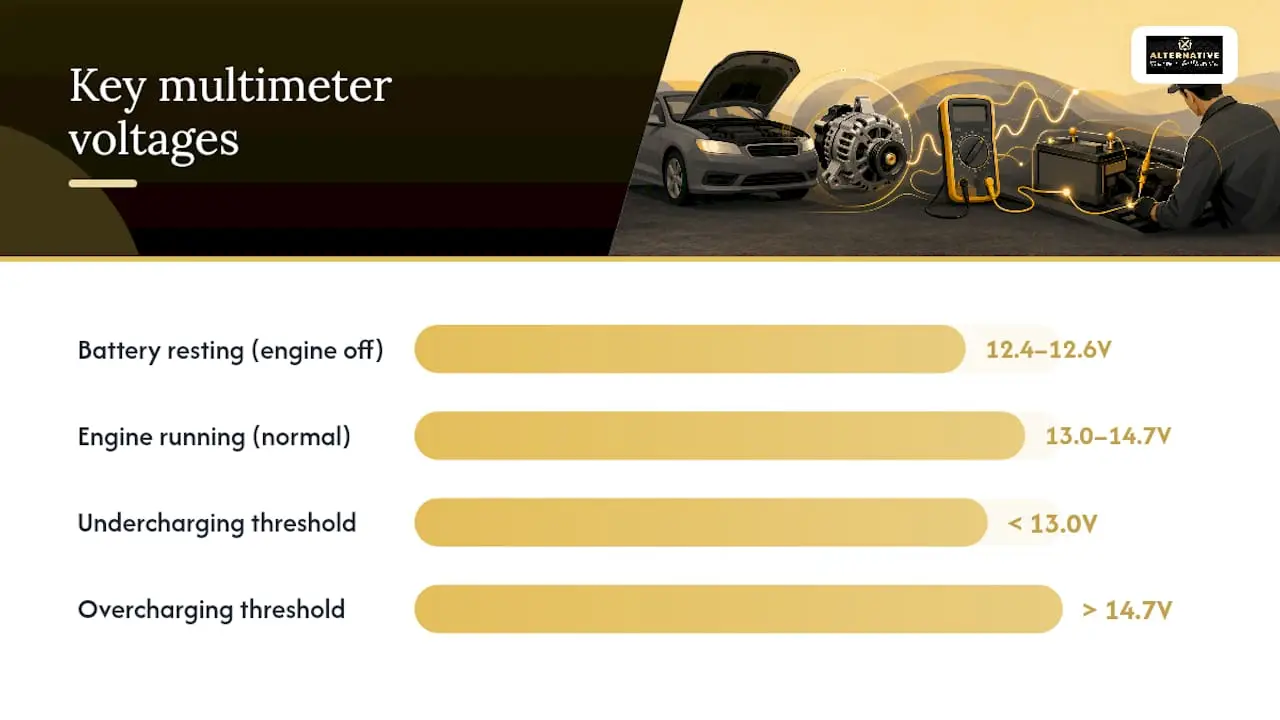
- Check resting voltage with the engine off. A healthy battery reads between 12.4 and 12.6 volts at rest. Anything meaningfully lower suggests a battery problem, not necessarily an alternator problem.
- Start the engine and recheck voltage. It should rise about 0.5 to 2 volts above resting, landing in the 13.0 to 14.7 volt range that AAA cites as normal for a properly functioning charging system.
- Turn on accessories and watch the reading. Switch on headlights, the blower motor, and the radio, then note whether voltage holds steady or drops noticeably. A significant drop under load points to an alternator that can’t keep up with demand.
| Reading | Voltage Range | What It Means |
|---|---|---|
| Battery resting (engine off) | 12.4–12.6V | Normal, healthy battery charge |
| Engine running, no accessories | 13.0–14.7V | Alternator charging normally |
| Below 13.0V while running | Undercharging | Possible alternator, regulator, belt, or wiring fault |
| Above 14.7V (climbing) | Overcharging | Regulator fault, risk of battery damage |
If your reading sits under 13 volts, suspect the alternator, the regulator, a slipping belt, or a wiring loss. If it climbs past 14.7 volts and keeps rising, that’s overcharging, and it can cook a battery fast. Either result is a reason to get the car looked at rather than guess further.
Pro Tip: A battery can test fine on a multimeter with no load on it and still fail the moment you ask it to crank the engine. That’s why shops load-test the battery under simulated starter draw instead of trusting a resting voltage number alone.
Stop the DIY checks and call a shop if you hear bearing noise, smell anything burning, or see a reading that’s wildly unstable or climbing well past 15 volts. Those aren’t do-it-yourself situations anymore.
What to Do Next: Safety, Temporary Fixes, and Professional Diagnosis
Your next move depends on how severe the symptoms are:
- Smoke, burning smell, or a battery leaking acid: shut the engine off immediately and arrange a tow. Don’t attempt to drive it anywhere.
- Repeated stalling or a voltage reading climbing well above 14.7 volts: avoid driving. Overcharging can damage the battery and onboard electronics within minutes.
- Mild, stable symptoms like slightly dim lights or one dashboard warning: drive directly to a repair shop and ask for a charging-system test rather than waiting for it to get worse.
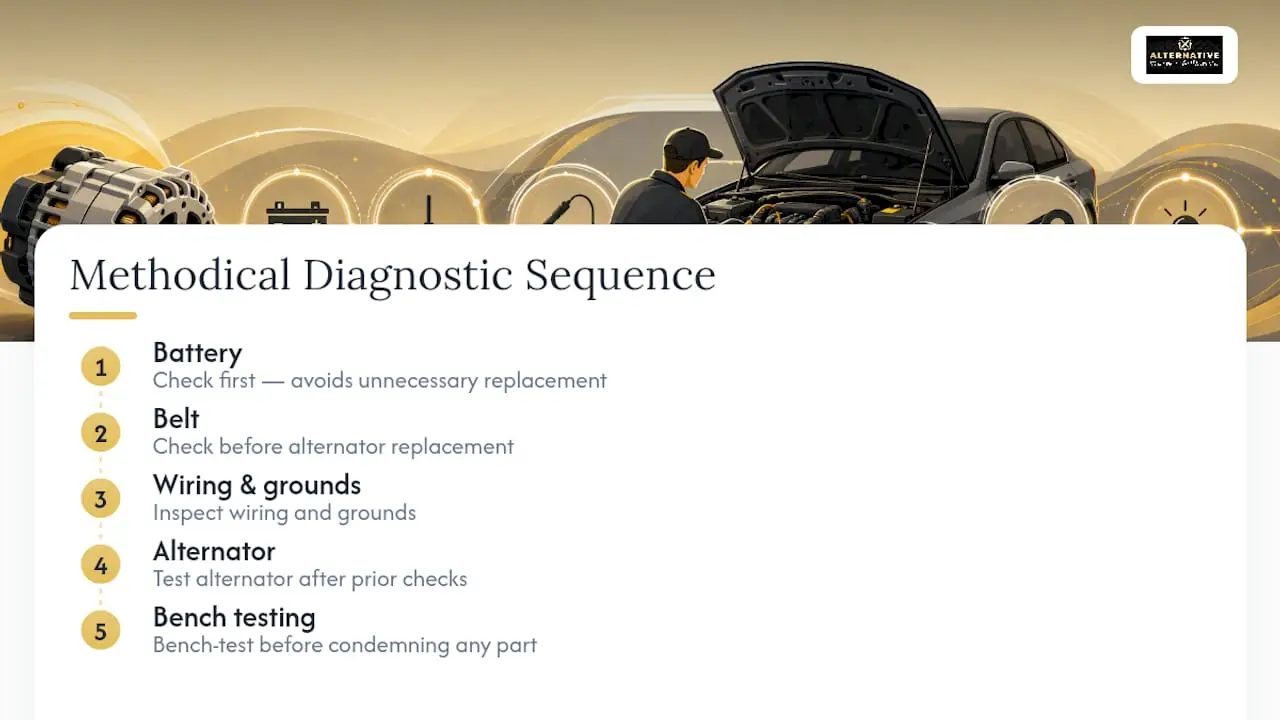
Once you’re at a shop, a proper diagnostic won’t start and end with the alternator. Technicians run a battery load test, check for voltage drop across cables and connections, inspect the belt and tensioner, verify grounds, and bench-test the alternator and regulator separately before recommending a replacement. That order matters, because it catches the cheap fixes, corroded terminals, loose grounds, worn belts, before anyone pays for a part that was never the problem.
Workshop Perspective: Why Methodical Diagnostics Beat Guesswork
Too many alternator replacements happen because someone saw a dashboard light and skipped straight to the most expensive fix. The right order is battery, then belt, then wiring and grounds, then the alternator itself, and bench-testing before condemning any part. Alternative European & Domestic built its diagnostic process around that discipline because European and high-performance electrical systems punish shortcuts. Dealer-level diagnostics and transparent recommendations aren’t a luxury here. They’re what keeps a driver from paying twice for the same problem.
Book a Charging System Diagnostic in Dallas
Guessing at alternator failure symptoms wastes time and money if the real issue turns out to be a corroded ground wire or a worn belt tensioner. Alternative European & Domestic runs full electrical diagnostics, alternator bench testing, and battery and charging-system repair using the same methodical sequence outlined above, so you’re not paying for a new alternator when the fix is a $40 wiring repair.

That accuracy matters even more on European and high-performance vehicles, where charging systems are tightly integrated with onboard computers and a misdiagnosed electrical fault can cascade into other problems. If your dashboard light is on, your battery keeps dying, or your headlights are doing something strange at idle, schedule a diagnostic appointment and get a straight answer before the problem leaves you stranded.
Sources
- DENSO TechTip: Diagnosing Alternator Faults the Right Way | DENSO
- Checking the alternator | HELLA
- Tool Q&A: Diagnosing and replacing a bad alternator | Vehicle Service Pros
- Bad Alternator vs. Bad Battery: A Quick Guide | AAA Automotive
FAQ
How Do You Detect an Alternator Failure?
Check the battery’s resting voltage, then start the engine and measure again. A reading outside the 13.0 to 14.7 volt range, combined with dimming lights or a dashboard warning, points to the alternator or its regulator.
What’s the First Sign of a Bad Alternator?
The battery or charging warning light on the dashboard is usually the earliest and most reliable sign, often appearing before lights dim or the battery dies.
Can a Car Run Without a Working Alternator?
Briefly, yes. It runs on residual battery charge, but most cars stall within 10 to 15 minutes once that charge is used up.
Is It Safe to Keep Driving With the Battery Light On?
Only for a short distance to reach a repair shop. Driving further risks a stall in traffic and can allow an overcharging fault to damage the battery further.
What Voltage Should an Alternator Put Out While Running?
A healthy charging system typically reads between 13.0 and 14.7 volts with the engine running, roughly 0.5 to 2 volts above the battery’s resting voltage.