
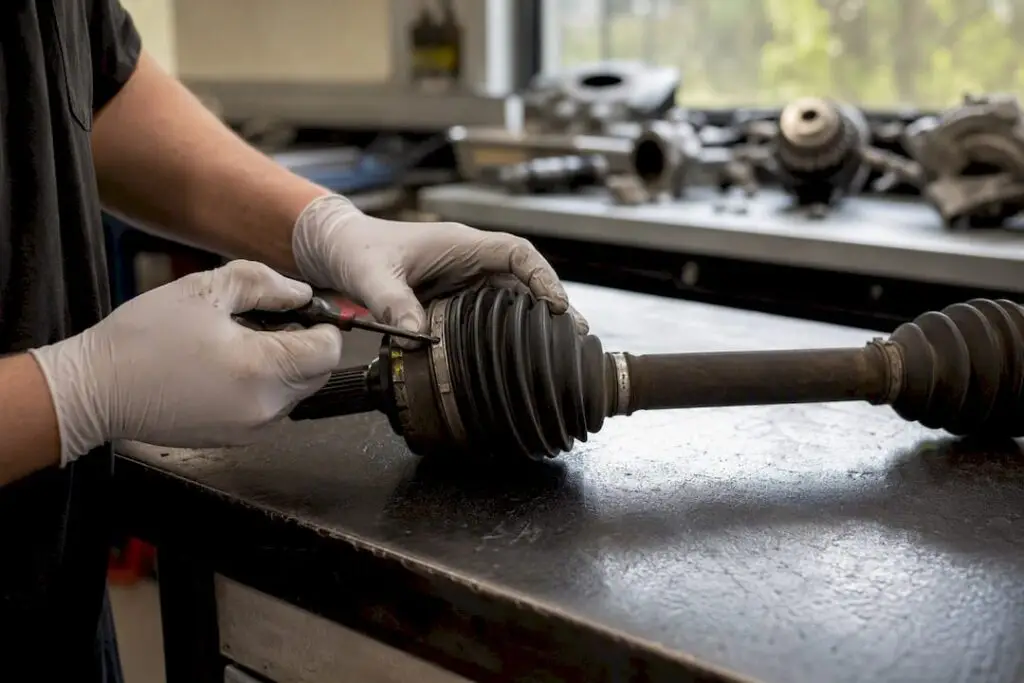
If you hear rhythmic clicking or popping when turning the wheel, especially while accelerating, you’re almost certainly dealing with a worn outer CV joint. Avoid sharp, full-throttle turns until you check it. Pull into an empty lot, turn the wheel to full lock, and listen. If you hear clicking or see grease flung on the inner wheel, book a diagnostic soon; if you hear grinding or feel a loss of power, stop driving and have the car towed.
TL;DR:
- A full-lock turn test helps distinguish whether clicking is caused by an outer CV joint or a wheel bearing, based on sound and steering response.
- Early-stage CV issues involve torn boots with no noise, which can be fixed with a simple boot replacement if caught promptly.
- Vibrations and grinding under acceleration suggest the joint is already dry or worn, requiring urgent full axle replacement.
- Visual checks for torn boots, grease splatter, and loose or gritty axle movement guide when to seek professional diagnosis.
- Proper diagnostic procedures include lift inspections, load-tested joint rotation, and test drives to prevent unnecessary or misdirected repairs.
Table of Contents
- What Does CV Axle Noise Sound Like?
- CV Axle Noise vs. Wheel Bearing: How to Tell the Difference
- How to Check for a Bad CV Axle Yourself
- How Urgent Is CV Axle Noise, Really?
- Boot Replacement or Full Axle: What Will It Actually Cost?
- When to Bring It to a Diagnostic Shop
- The Diagnosis-First Mindset Most Drivers Skip
- Book a CV Axle Diagnostic With Alternativecarcare
- Sources
- FAQ
What Does CV Axle Noise Sound Like?
The sound tells you almost everything before a mechanic even lifts the car. Clicking or popping during sharp turns, especially under acceleration, is the textbook symptom of a worn outer CV joint that has lost its grease or developed pitted ball races, according to AutoZone’s diagnostic guide. A knock or clunk when you shift into gear or accelerate hard usually means the wear has progressed, or the axle isn’t seated correctly. Vibration that builds with speed and changes with throttle input often points to the inner joint or a bent, unbalanced shaft rather than the outer joint.
Before you even start the car, look at the axle boots:
- Grease splattered on the inner wheel or lower control arm
- A torn, cracked, or split rubber boot
- Grease that looks dry, gritty, or discolored instead of smooth and gray
Any of those means the joint has been running without proper lubrication, and time is not on your side.
CV Axle Noise vs. Wheel Bearing: How to Tell the Difference
Wheel bearings and CV joints get confused constantly, even among people who work on cars for a living. Mechanics on forums like Mechanics Stack Exchange point out that hand-play checks and full-lock tests are what actually separate the two, not guesswork from the driver’s seat. Here’s how to narrow it down:
- Run the full-lock test. Turn the steering wheel all the way to one side and drive slowly in a tight circle, forward and then in reverse. Clicking that appears mainly at full lock is one of the most reliable signs of an outer CV joint problem, and it usually tells you which side is failing, per DiagGarage’s breakdown of CV joint noise.
- Note how the sound reacts to speed. Wheel bearing noise tends to be a droning hum that grows louder with speed and shifts pitch when you swerve gently to load the bearing differently. CV noise stays tied to steering angle and throttle, not straight-line speed.
- Check for play. With the wheel off the ground, grab it at 12 and 6 o’clock and rock it. Looseness suggests a bearing; a gritty or notchy feel when you rotate the axle by hand suggests the joint itself.
Pro Tip: A stethoscope or listening stick can help you triangulate a sound, but hub and axle components sit so close together that it’s easy to blame the wrong part. Use it to confirm what the full-lock and play tests already told you, not as your only evidence.
How to Check for a Bad CV Axle Yourself
You don’t need a lift to get useful information. Here’s a safe order of operations:
- Park on level ground, set the parking brake, and if you plan to raise a wheel, use jack stands. Never rely on a jack alone.
- Turn the wheel to full lock and creep forward in a slow, tight circle, then repeat in reverse. Full-lock reverse clicking is especially telling for a failing outer joint.
- Look at both CV boots for tears, cracks, or grease flung around the wheel well.
- If you can safely raise a wheel, spin it by hand and feel for grinding, notchiness, or looseness at the hub.
- Stop testing and call a shop if you feel any looseness in the hub itself, or if the noise gets noticeably worse during the test.
Before you call a shop, jot down three things: which side clicks, whether it happens more in forward or reverse, and whether you saw grease anywhere. That short list saves diagnostic time and money.
How Urgent Is CV Axle Noise, Really?
CV joint failure moves through fairly predictable stages, and your driving decisions should match the stage you’re in.
- Torn boot, no noise yet: Early. Get it addressed soon, ideally within a couple weeks.
- Clicking only at full steering lock: Early to mid stage. Schedule a repair; avoid hard turns in the meantime.
- Clicking at moderate turning angles, or vibration under acceleration: Advanced. Get it inspected within days, not weeks.
- Grinding, clunking, or a sudden loss of power: Critical. Stop driving and have the vehicle towed.
You can sometimes drive short distances with early-stage clicking, but mechanics warn that vibration or grinding under acceleration signals an urgent repair, and pushing past that point risks sudden failure with no warning. A joint that’s already clicking or vibrating has typically lost lubrication or structural integrity, and engineering-focused guides on CV joint longevity recommend skipping highway driving and full-lock turns entirely once symptoms start.
Boot Replacement or Full Axle: What Will It Actually Cost?
If the boot is torn but the joint still spins smoothly with no play or grit, a boot replacement and regrease can save you real money and is a legitimate early fix. Once the joint itself has been running dry, though, the math usually favors full axle replacement. Labor to strip, clean, repack, and reboot an existing joint often costs close to what a new or remanufactured axle assembly costs installed, so many shops steer customers toward the full swap for the sake of reliability.
- Boot replacement and regrease: lower parts cost, but only works before the joint shows wear
- Full axle replacement: higher upfront cost, but restores the whole assembly and usually comes with a warranty
- Ask the shop to confirm proper axle seating, correct hub-nut torque, and a post-repair test drive before you leave
If a shop suggests swapping just the boot on a joint that already feels gritty or has measurable play, that’s a red flag. Replacing a boot without checking joint smoothness can waste money if the joint needs full replacement anyway.
When to Bring It to a Diagnostic Shop
Home tests narrow things down, but they can’t replace a shop that puts the car on a lift and checks everything under load. At Alternativecarcare, a CV axle complaint typically involves:
- Full inspection on a lift, checking both boots for tears and grease loss
- Hand-rotating each joint under load to feel for roughness or play
- Verifying hub-nut torque and correct axle seating
- Listening-device checks to cross-reference suspected noise sources
- A road test that includes full-lock maneuvers in both directions to reproduce the complaint
That combination matters because clicking, popping, and vibration can all come from more than one source, and swapping the wrong part first wastes both time and money. Alternativecarcare’s dealer-level diagnostic approach on European, domestic, and high-performance vehicles is built around confirming the actual cause before recommending a repair.
Pro Tip: Bring your notes from the driveway test. Telling a technician “it clicks in reverse full lock on the driver’s side” cuts diagnostic time compared to a vague “it’s making a noise.”
The Diagnosis-First Mindset Most Drivers Skip
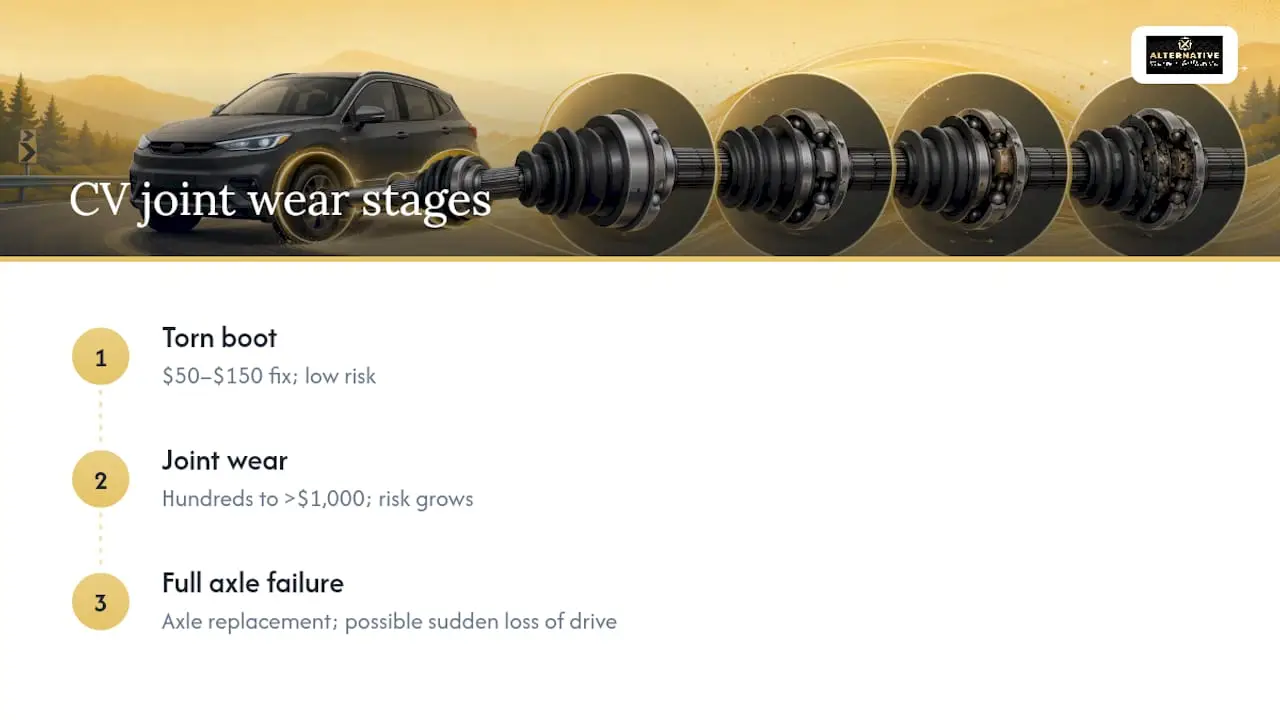
Most advice about CV axle noise jumps straight to replacement costs, which skips the part that actually protects your wallet and your safety: figuring out what stage the joint is in before you decide anything. A torn boot caught early is a $50 to $150 problem. The same joint ignored for another few thousand miles becomes a full axle job, and in rare cases a sudden loss of drive at highway speed.
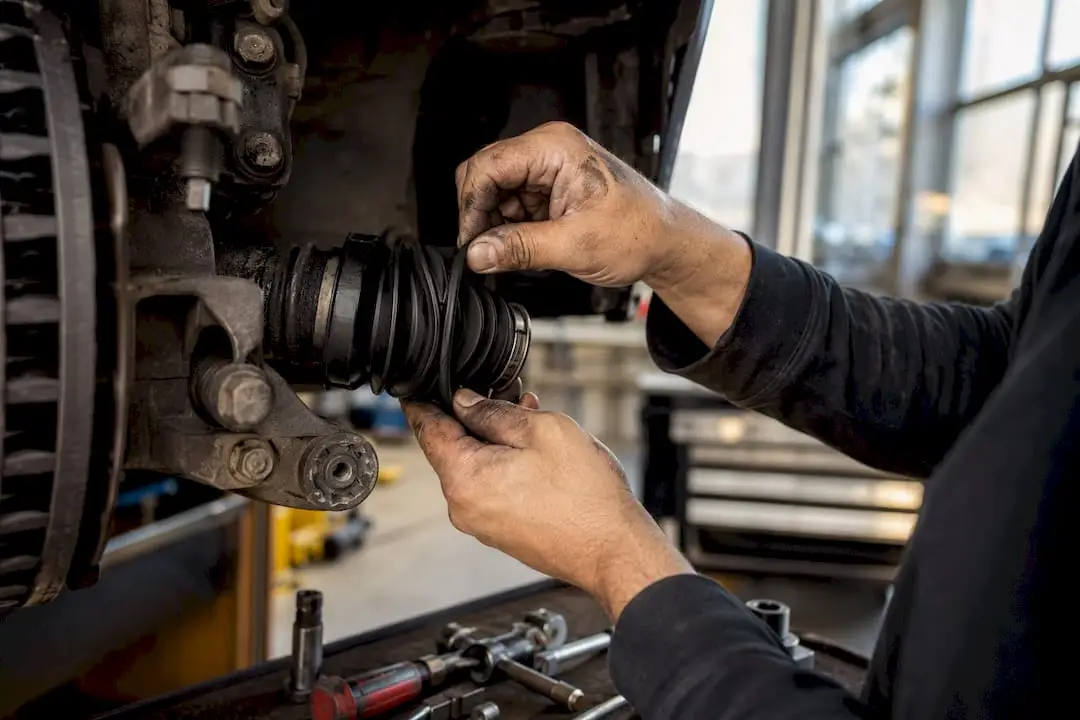
The conventional advice to “just replace the axle if you hear clicking” isn’t wrong, exactly, but it skips the diagnostic step that tells you whether you’re dealing with a five-minute fix or a car that shouldn’t be driven another mile. The full-lock test and a visual boot check take less time than reading this article, and they change the decision entirely.
If there’s one thing worth prioritizing, it’s this: don’t wait for the noise to answer the question for you. A joint that’s merely clicking gives you a choice. A joint that’s grinding has already made the choice for you.
— Hassan
Book a CV Axle Diagnostic With Alternativecarcare
Alternativecarcare gives you a real answer instead of a guess. Where a quick-lube counter might just quote you a new axle on sound alone, Alternativecarcare puts the car on a lift, checks both boots, hand-rotates the joints under load, and road-tests with full-lock turns to confirm exactly which side and which stage of wear you’re dealing with before recommending anything.

That means you’re not paying for a full axle replacement when a boot and regrease would have done the job, and you’re not driving away with a “clicking is normal” shrug when the joint is actually close to failing. Alternativecarcare uses quality parts, explains what it finds in plain terms, and backs its repairs with clear warranty terms. If you’ve noticed clicking, popping, or vibration, schedule a diagnostic appointment and get a straight answer on what your CV axle actually needs.
Sources
- How to tell if your CV axles are going bad – AutoZone
- CV joint noise – DiagGarage
- Can You Drive With A Bad CV Axle? Honest Mechanic Advice | The Motor Guy
- Engineerskill
FAQ
What does a bad CV axle sound like?
A bad CV axle typically clicks or pops during sharp turns, especially under acceleration, and may add a knock on gear engagement or vibration at speed as wear worsens.
Is it safe to drive with CV joint noise?
Short trips with early, mild clicking are sometimes tolerable, but vibration or grinding under acceleration means you should stop driving and arrange a tow, since the joint can fail without warning.
How much does it usually cost to fix a CV axle?
A boot replacement and regrease costs less but only works before the joint shows wear; once the joint is worn, full axle replacement is usually the more reliable and often comparably priced option once labor is factored in.
How can I tell if it’s a bad wheel bearing or a CV axle?
Run a full-lock turn test in both forward and reverse. Clicking tied to steering angle points to the CV joint, while a hum that grows with speed and shifts during a gentle swerve points to the wheel bearing.
Should I get a professional diagnosis before replacing parts?
Yes. A shop like Alternativecarcare checks joint play, boot condition, and hub-nut torque on a lift, which prevents paying for a part that wasn’t actually the problem.