
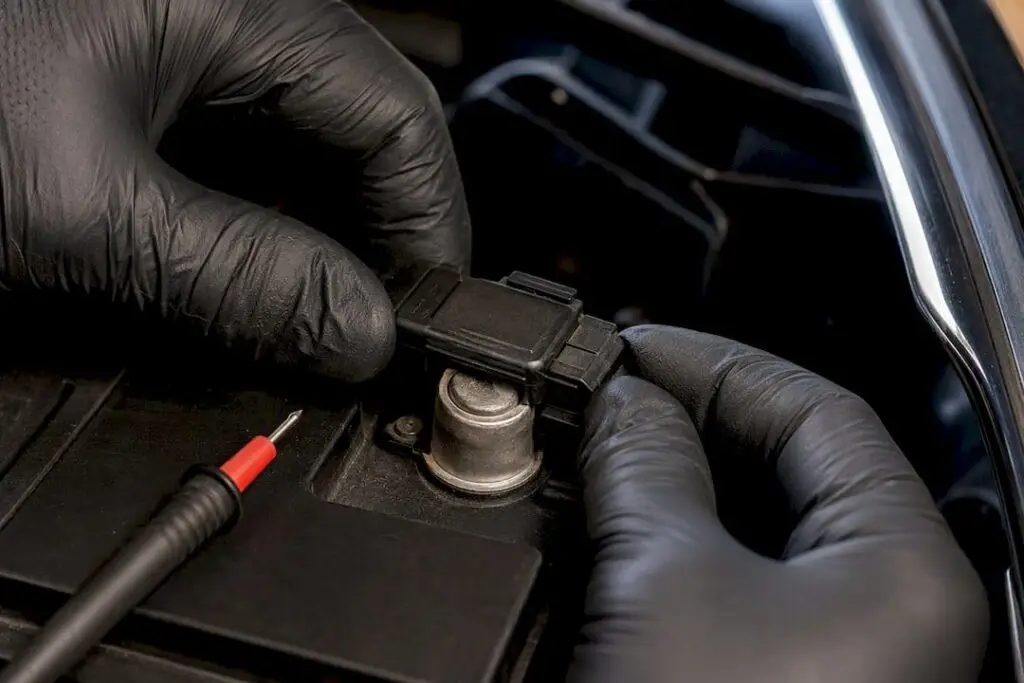
The “Increased battery discharge” message means your BMW’s 12V battery is losing charge faster than the power-management system can replenish it. It usually points to an aging battery, a parasitic draw, an unregistered replacement battery, or a charging fault. Stop repeated cold-start attempts, which stress the battery further, and either check the voltage yourself or book a diagnostic before the warning escalates to a no-start.
TL;DR:
- An aging battery, parasitic draw, or unregistered replacement battery are common causes of increased discharge warnings in BMWs.
- Proper testing requires full sleep cycle measurement and circuit isolation to accurately identify the root of parasitic drains.
- Battery registration after replacement is crucial to ensure the charging system adapts correctly and prolongs battery life.
- Repeatedly swapping batteries without diagnosing underlying electrical issues typically results in recurring discharge warnings.
- Dealer-level diagnostics using factory tools like ISTA and BimmerLink are the most effective way to pinpoint and fix the actual problem.
Table of Contents
- What Does Increased Battery Discharge Mean on a BMW?
- What Causes Battery Drain in a BMW?
- How Do You Check a BMW Battery for Discharge Yourself?
- How Do You Test for Parasitic Draw on a BMW?
- What Repairs Actually Fix Increased Battery Discharge?
- How Can You Prevent Battery Discharge Warnings on a BMW?
- How Does a Dealer-Level Shop Diagnose This Problem?
- Why Methodical Diagnosis Beats Repeated Battery Swaps
- Book a Battery Diagnostic in Dallas
- Sources
- FAQ
What Does Increased Battery Discharge Mean on a BMW?
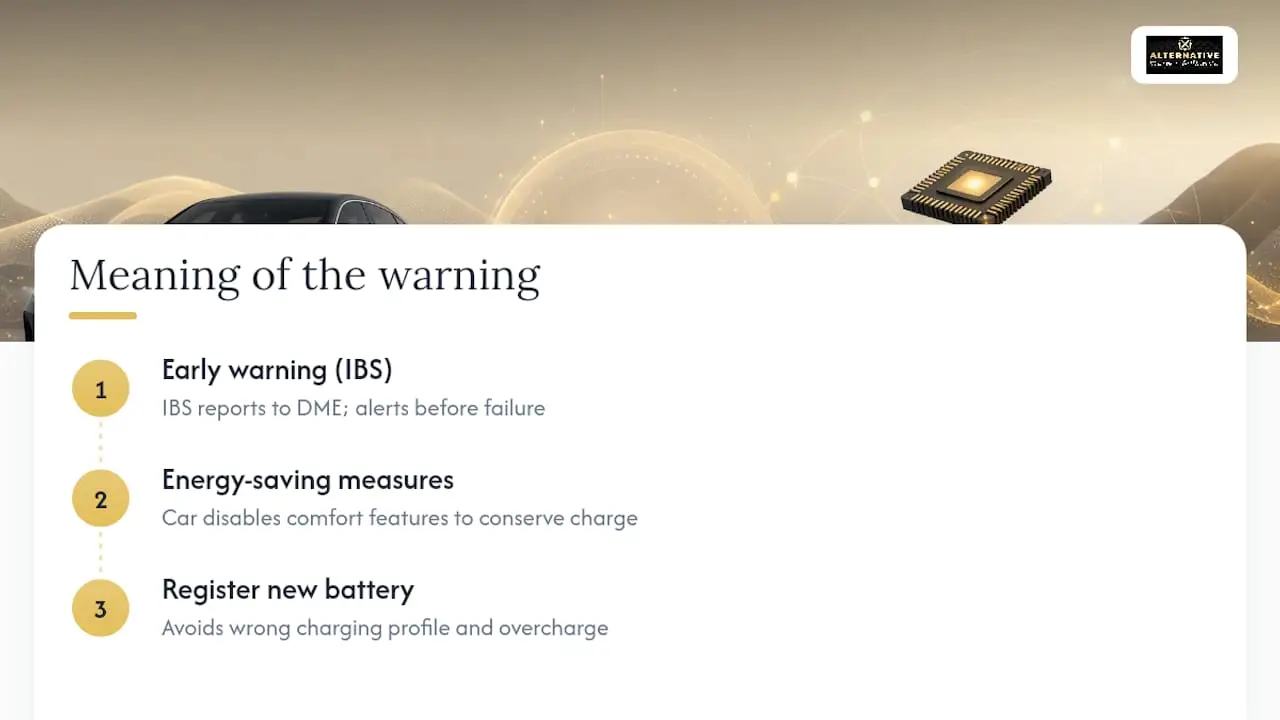
The warning comes from the Intelligent Battery Sensor, a small module clipped to the negative battery terminal that tracks voltage, current, and temperature in real time. The IBS reports this data to the engine control unit, and when the state of charge drops below a programmed threshold, the DME triggers the “Increased battery discharge” alert before the situation becomes critical.
That distinction matters for how you respond. This is an early warning, not a “Battery discharged” failure message. BMW’s energy management system uses the gap between the two to protect the battery: it starts by disabling comfort features like heated seats or auto climate adjustments to conserve remaining charge, buying you time to get the car diagnosed instead of stranded.
Battery type and registration play a bigger role here than most owners realize. BMWs since the mid 2000s use AGM or EFB batteries paired with smart charging, where the alternator varies its output based on driving conditions rather than charging constantly. The car’s software needs to know the battery’s exact age, capacity, and condition to calculate that charging strategy correctly. Skip registration after a replacement and the charging algorithm keeps referencing the old battery’s profile, which can overcharge the new one and shorten its life within months.
What Causes Battery Drain in a BMW?
Most cases trace back to one of six problems, and they’re worth checking in roughly this order of likelihood:
- An aging or weakened AGM battery. Cold weather and short trips are brutal on batteries already past three to four years old, since the alternator never gets enough runtime to fully replenish what a cold start pulls out.
- A parasitic draw from a module that won’t sleep. Comfort Access sensors, the head unit, telematics, and the FRM or BDC body control modules are frequent offenders when they stay awake instead of powering down.
- Charging system faults, most often a failing alternator diode that lets current leak back into the battery when the engine is off.
- An unregistered or wrong-spec replacement battery, which throws off the charging profile the DME relies on.
- Loose, corroded, or damp terminals and grounds, sometimes hidden by water intrusion from a clogged sunroof drain or a leaking shark-fin antenna seal.
- Aftermarket accessories wired directly to constant power instead of a switched circuit, like dash cams, alarm systems, or amplifiers.
A failed IBS itself can also mimic these symptoms, triggering discharge warnings even when the battery tests fine on a basic voltage check, which is one reason this diagnosis benefits from more than a multimeter.
How Do You Check a BMW Battery for Discharge Yourself?
Before assuming the worst, run through these checks in order. Each one narrows down whether you’re dealing with a tired battery, a charging problem, or something that needs a shop’s attention.
- Let the car sit for at least an hour, then check resting voltage. A healthy AGM battery should read close to 12.6 volts; anything under 12.2 volts signals significant discharge and warrants a charge before you do anything else.
- Start the engine and check charging voltage. With the engine running, the charging voltage should normally be within a typical operating range; readings clearly outside this range suggest alternator or regulator issues rather than battery faults.
- Inspect terminals and clamps visually. Look for white or green corrosion buildup, a loose clamp, or a damp smell near the trunk liner or headliner that would suggest water intrusion.
- Check for obvious drains. A trunk light that won’t shut off, a glovebox light stuck on, or a phone charger left plugged into an always-on outlet are easy wins to rule out.
- Decide between charging and diagnosing. If resting voltage is low but charging voltage is normal, a trickle charger overnight may solve it. If either reading is off, or the warning returns within days, that’s your signal to book a diagnostic instead of cycling the battery again.
Pro Tip: Never judge a battery’s health by cranking speed alone. A battery can still spin the starter normally while sitting well below the state of charge the IBS needs to avoid triggering the warning again within days.
How Do You Test for Parasitic Draw on a BMW?
Testing too early is the single most common mistake owners and even some shops make. BMWs run through a CAN bus sleep sequence after the last door closes, and that process can take 20 to 40 minutes to complete. Measure current before every module has powered down and you’ll get a falsely high reading that sends you chasing a problem that doesn’t exist.
Here’s the sequence that avoids that trap:
- Lock the car and wait the full sleep cycle, ideally 40 minutes, before connecting any test equipment.
- Use a DC clamp meter around the negative battery cable rather than breaking the circuit with an inline ammeter, since clamp meters don’t risk resetting modules and corrupting the data you’re trying to read.
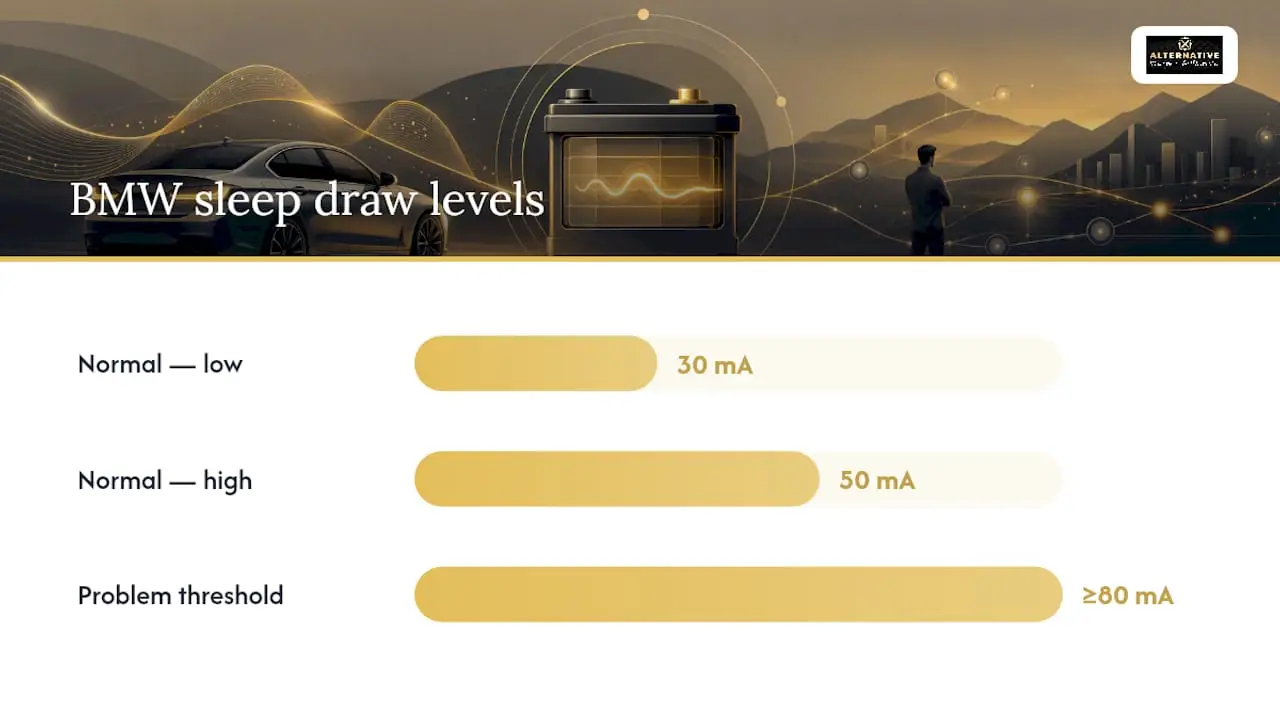
- Compare your reading against the normal range. A BMW in full sleep should draw about 30 to 50 milliamps. Anything sustained above roughly 80 mA indicates a real parasitic drain that needs isolating.
- Pull fuses one at a time from the fuse box, consulting your model’s fuse chart, and watch for the draw to drop after each pull. Log which fuse corresponds to which drop.
- If no single fuse changes the reading, or the draw comes and goes, stop guessing. An intermittent draw almost always needs a factory-level energy diagnosis through ISTA or BimmerLink to catch it.
Threshold to remember: 30 to 50 mA is normal sleep current on most BMWs. Sustained draw above 80 mA means something is staying awake that shouldn’t be.
What Repairs Actually Fix Increased Battery Discharge?
The right fix depends entirely on what the diagnostics found, but a few repairs come up again and again:
- Battery replacement with correct spec and full registration. The new battery needs to match the AGM or EFB spec the car was designed for, arrive fully charged before installation, and get registered through ISTA or BimmerLink immediately after. Skipping registration is a leading cause of “new” batteries failing early, since the charging system keeps applying the old battery’s profile.
- IBS inspection or replacement, along with cleaning and properly torqueing the terminal connections and chassis grounds nearby.
- Module repair for parasitic draws, which might mean reprogramming a module that won’t sleep, replacing a stuck switch, or sealing a water leak that’s been waking up modules through moisture on the wiring harness.
- Alternator diode repair when the charging system itself is leaking current back into the battery overnight.
Pro Tip: If you’ve replaced your battery more than once in under two years and the warning keeps coming back, the battery was probably never the problem. Ask specifically whether registration was completed and whether a parasitic-draw test was run before the last replacement.
Diagnostic time and repair scope vary by cause, so treat any cost estimate you hear as a starting point for discussion with your shop, not a fixed number.
How Can You Prevent Battery Discharge Warnings on a BMW?
A few habits go a long way toward keeping this warning from coming back:
- Have the battery tested once it’s three to four years old, and plan for replacement proactively rather than waiting for a warning light to force the decision.
- Use a quality battery maintainer for any BMW that sits unused for more than a week or two, and make sure aftermarket accessories are wired through a switched circuit instead of constant power.
- Take the car on an occasional longer drive instead of only short trips, which gives the alternator time to actually restore what cold starts and short runs pull out.
- Keep the key fob away from the car when parked for extended periods, since proximity sensors can keep modules partially awake.
- Check for water intrusion periodically, especially around the sunroof drains and shark-fin antenna, and keep module software current through routine service.
For more general guidance on evaluating battery condition before a sale or major repair decision, RS Auto’s battery inspection overview covers useful ground on what a healthy battery should look like.
How Does a Dealer-Level Shop Diagnose This Problem?
A proper energy-diagnosis report pulls module wake logs, IBS telemetry, and charge history straight from the car’s memory, turning guesswork into a timeline. That’s the real advantage of factory-level tools reading event history instead of a clamp meter alone: an intermittent draw that only shows up every third night still leaves a trace.
Technicians wait out the full sleep cycle before pulling any fuse, then isolate circuits methodically so the process doesn’t corrupt the very module data they’re trying to read. Typical repairs coming out of that workflow include IBS replacement, battery registration resets, alternator diode repair, and tracking down the specific wiring or module fault behind a stubborn draw.
Why Methodical Diagnosis Beats Repeated Battery Swaps
Alternative European & Domestic sees the same pattern often: an owner replaces the battery two or three times without anyone testing for a parasitic draw first, and the warning keeps returning because the battery was never the actual problem. A proper energy diagnosis using factory-level tools finds the real cause the first time, which saves both the repeat visit and the cost of another battery that was never going to fix anything.
Book a Battery Diagnostic in Dallas
Alternative European & Domestic gives Dallas BMW owners something a quick-fix battery swap can’t: a dealer-level energy diagnosis that actually finds why the discharge warning keeps coming back, instead of guessing with a new battery and hoping. Our shop runs the same ISTA and BimmerLink diagnostics that read module wake logs and IBS telemetry directly from your car’s memory, so the fix addresses the real cause the first time.

When you book an appointment, bring your key fob and let us know if the warning has appeared once or repeatedly, since that history shapes where we start testing. A diagnostic visit includes electrical system testing, parasitic-draw isolation if needed, and a written summary of findings with your repair options laid out clearly before any work begins. If a battery replacement is the answer, we handle the registration as part of the job so the new battery doesn’t inherit the same problem. Schedule your diagnostic appointment with Alternative European & Domestic today.
Sources
- BMW Increased Battery Discharge (Causes, Diagnosis, and Fix Guide) – GearFixes
- BMW/Mercedes battery drain: what a parasitic draw test finds – Bavarian Performance
FAQ
How Can I Fix Increased Battery Discharge?
Start by checking resting voltage and charging voltage, then test for parasitic draw once the car has fully entered sleep mode. If the battery was recently replaced without registration, that alone often resolves it; otherwise the fix depends on whether a module, ground, or alternator is at fault.
What Are Signs of a Bad Alternator in a BMW?
Charging voltage reading outside the normal 13 to 14.5 volt range with the engine running, dimming or flickering lights, and a battery that keeps losing charge despite testing healthy are the main signs of alternator or diode trouble.
How Do I Fix High Battery Drain on a BMW?
Isolate the draw by pulling fuses one at a time after the full sleep cycle and watching for the current to drop, then repair or replace whatever component that fuse controls. If no fuse pull changes the reading, an energy diagnosis through ISTA or BimmerLink is the next step.
What Does “Increased Battery Discharge” Mean?
It means the 12V battery’s state of charge has dropped below the threshold the IBS monitors, triggering an early warning before a full discharge failure. It’s a heads-up to check charging and battery health, not an immediate breakdown.
Does a New BMW Battery Need to Be Registered?
Yes. Skipping registration after a battery replacement leaves the charging system referencing the old battery’s profile, which can overcharge the new battery and shorten its lifespan within months.