
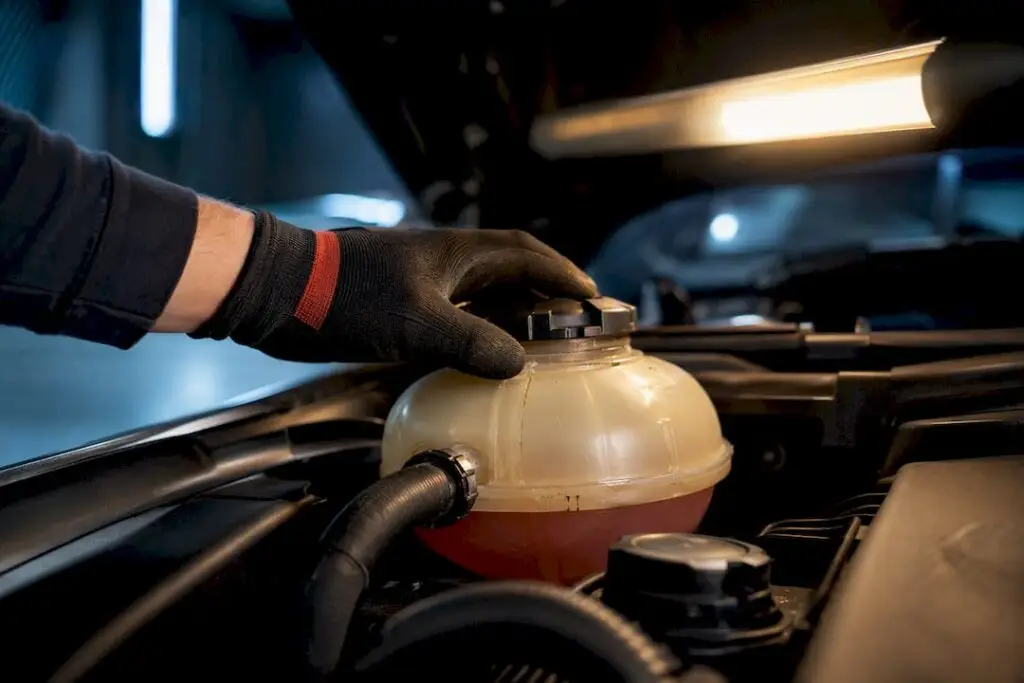
A BMW coolant leak that shows steam, a rapidly climbing temperature gauge, or fluid actively dripping means one thing: stop driving and let the engine cool before doing anything else. If you’re only seeing a slow weep or a faint puddle overnight, top off the coolant, keep an eye on the reservoir over the next day or two, and get a pressure test scheduled soon. Either way, don’t ignore it. A minor coolant leak becomes an overheated engine faster on a BMW than on most cars, thanks to tight underhood packaging and plastic components that don’t forgive neglect.
TL;DR:
- The expansion tank, water pump, and thermostat housing are the most common and easily identifiable sources of coolant leaks in BMWs.
- Diagnosing a leak involves visual inspection, pressure testing, UV dye tracing, and sometimes advanced tools like borescopes or leak-down tests.
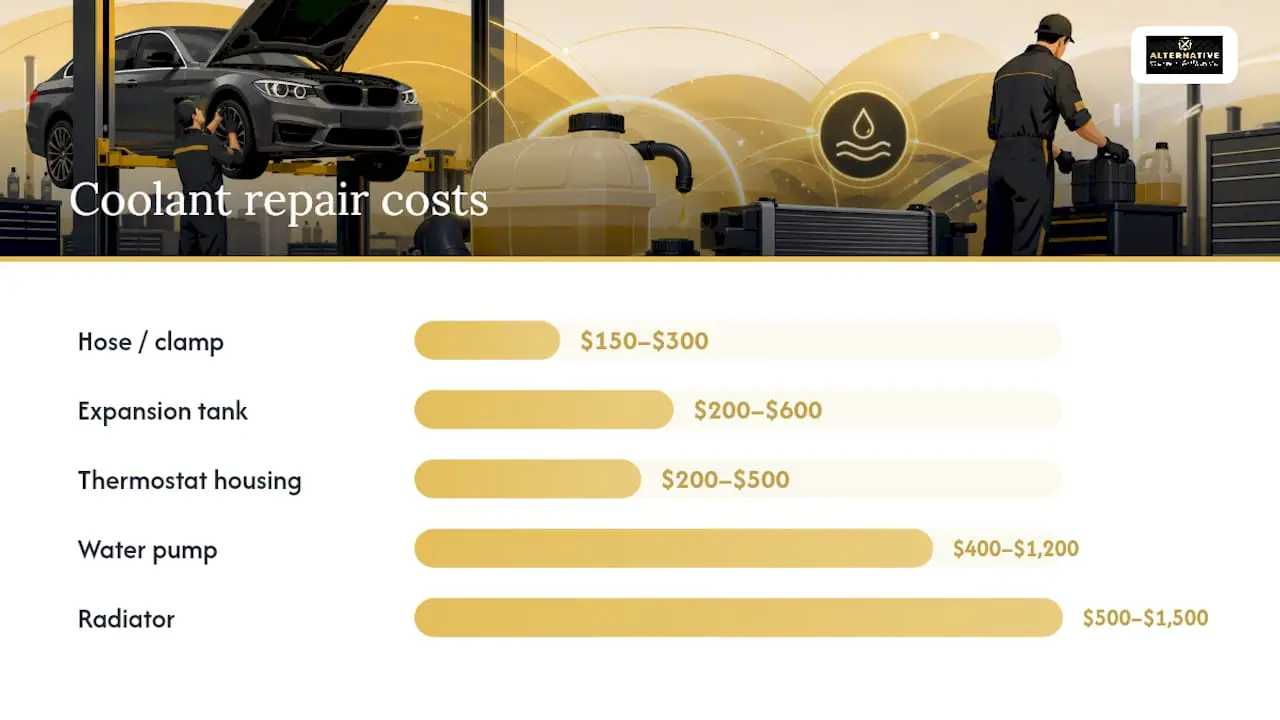
- Repair costs vary widely, with hoses and clamps costing around $150–$300, while water pumps and radiators can require $400–$1,500 or more depending on complexity.
- DIY fixes are limited to checking and replacing simple parts like the reservoir cap or tightening hoses to avoid more costly repairs.
- Prompt detection and repair prevent serious engine damage, with comprehensive diagnostics and system refreshes recommended for high-mileage vehicles.
Table of Contents
- What Causes a BMW Coolant Leak?
- How to Spot Where a Coolant Leak Is Coming From
- How Shops Diagnose a BMW Coolant Leak
- What Does It Cost to Fix a BMW Coolant Leak?
- Can You Fix a BMW Coolant Leak Yourself?
- How to Prevent Future Coolant Leaks
- Why a Specialist Diagnostic Makes the Difference
- Do Coolant Leaks Differ Across BMW Models and Years?
- Patch It Now or Refresh the System? Our Take
- Schedule a Coolant System Diagnostic
- Sources
- FAQ
What Causes a BMW Coolant Leak?
Most coolant leak causes on BMWs trace back to one of six spots, and figuring out which one is failing is the difference between a $200 fix and a bill with three zeros.
The expansion tank is usually the first casualty. It’s made of plastic, sits under constant pressure, and lives right next to engine heat. Over time the seams get brittle and crack, or the cap loses its seal and lets pressure escape where it shouldn’t. This tends to show up after significant mileage and years of use, though heat and climate speed things along.
The electric water pump, standard on most modern BMW engines, is another frequent failure point. When the internal seal or impeller housing wears out, coolant can escape gradually as a weep or fail all at once with surprisingly little warning. AAutomotives identifies pump seal and impeller failure as one of the most common causes of BMW coolant loss, and it’s a big reason technicians check this component early in a diagnostic.
The thermostat housing on many BMW engines is also plastic, and it sits right at the engine block, one of the hottest zones under the hood. Cracks form at the mating surface, or the housing gasket hardens and fails. Highline Motorsports points to this kind of material fatigue from repeated heat cycling as a core reason BMWs develop leaks that other brands’ metal housings tend to avoid.
Other common culprits:
- Radiator or end tanks: plastic end tanks crack where they meet the metal core, often showing dried residue along the seams.
- Hoses, clamps, and quick-connect fittings: rubber hardens and splits with age; plastic quick-connects can crack at the locking tabs.
- Heater core: an internal leak here won’t puddle under the car. Instead, expect a sweet smell and foggy, wet interior glass.
Pro Tip: If you smell coolant inside the cabin before you ever see a drop on the driveway, check the heater core and its hose connections first. That symptom rarely points anywhere else.
How to Spot Where a Coolant Leak Is Coming From
Finding the source starts with your own eyes and nose before any shop gets involved.
- Check for puddles and residue. BMW coolant typically runs blue or bluish-green (formula varies by model year). Dried coolant leaves a white or greenish crusty residue, especially around hose clamps and housing seams.
- Follow the smell. Coolant has a distinct sweet odor. If you notice it near the engine bay or, worse, inside the cabin with the vents on, that’s coolant, not oil or fuel.
- Watch the gauge, but don’t trust it blindly. BMW temperature gauges are intentionally damped so normal fluctuations don’t alarm the driver. That’s useful for daily driving but dangerous with a leak, since the needle can stay put for longer than expected before finally showing overheating.
- Track the low-coolant warning. If it comes on more than once in a short period, that’s not a fluke. It means fluid is disappearing somewhere.
- Consider a UV dye test for slow weeps. A small amount of dye added to the coolant will glow under a blacklight, revealing leaks that evaporate before ever forming a visible puddle. This is standard practice for locating leaks that BMWInsights notes are otherwise nearly impossible to trace by eye alone.
Some symptoms mean you stop immediately: visible steam, a temperature gauge climbing fast, or coolant showing up mixed into the oil. Any of those calls for a tow, not a drive to the shop. A slow drip with a stable gauge and a topped-off reservoir usually means you can drive carefully to a shop the same day.
How Shops Diagnose a BMW Coolant Leak
A proper diagnostic goes well beyond a flashlight and a guess.
A pressure test pressurizes the cooling system to spec without the engine running, then measures how fast pressure drops. A slow bleed-down over several minutes points to a small weep; a rapid drop usually means a more serious crack or failed seal.
UV dye tracing comes next for leaks that don’t show themselves under pressure alone. The dye circulates with the coolant, and a blacklight later reveals exactly where it’s escaping, even from a leak too small to see with the naked eye.
Visual inspection then targets the usual suspects in sequence:
- Expansion tank seams and cap sealing surface
- Water pump weep hole and housing
- Thermostat housing mating surface
- Radiator end tank seams
- Hose connections and quick-connect fittings
If none of that turns up an obvious answer, a shop may go further with a borescope inspection, a cylinder leak-down test, or a coolant sample analysis, useful when a head gasket is suspected rather than an external leak. This is also where correct bleeding matters. Highline Motorsports notes that BMW cooling systems often require a specific bleed sequence, sometimes involving running the electric water pump at a set speed through a diagnostic tool, to purge trapped air. Skip that step and you can get hotspots that mimic a leak or cause a repeat failure even after the actual leak gets fixed.
What Does It Cost to Fix a BMW Coolant Leak?
Repair costs swing widely depending on which part failed and how much labor it takes to reach it. Here’s a realistic range by common fault:
- Hose or clamp replacement: roughly $150–$300
- Expansion tank replacement: roughly $200–$600
- Thermostat housing: roughly $200–$500
- Water pump: roughly $400–$1,200
- Radiator: roughly $500–$1,500
- Heater core or head gasket/engine damage from prolonged overheating: $1,500 or more
BimmerBoom’s cost guide puts labor at roughly 50 to 70% of the total bill on most coolant leak repairs, which is exactly why access difficulty matters as much as parts cost.
Statistic Callout: Labor often accounts for the majority of what you pay on a coolant leak repair, according to BimmerBoom’s analysis, not the parts themselves. That’s why two shops quoting the same part can land on very different totals.
Jobs that require removing intake components, the alternator, or other accessories to reach a housing or pump take longer and cost more, regardless of the part’s price tag. This is also why replacing multiple aging cooling components in one visit tends to save money over time. If the water pump and thermostat housing sit side by side and both are worn, doing them together avoids paying the same access labor twice a year apart. Parts choice matters too. OEM parts typically cost more upfront but come with tighter tolerances and manufacturer-backed sourcing, while OE-equivalent aftermarket parts can lower the bill; ask any shop which option they’re quoting and why.
Can You Fix a BMW Coolant Leak Yourself?
Some checks and minor fixes are well within reach for a comfortable DIYer. Others aren’t worth the risk.
- Check the reservoir level and cap. A weak or cracked cap sometimes causes what looks like a mystery leak, and it’s a cheap, straightforward swap.
- Inspect visible hose clamps for looseness. Tightening a loose clamp or swapping an obviously split hose is reasonable if you’re mechanically confident.
- Never mix coolant chemistries. Adding the wrong type on top of BMW-spec coolant can cause chemical reactions that damage seals and gaskets.
- Be cautious with stop-leak products. They can temporarily mask a small weep but often clog narrow passages in the water pump or radiator, turning a simple fix into an expensive one later.
- Stop DIY when the leak involves the water pump, thermostat housing, or anything requiring pressure testing. These need specialized tools and torque procedures to avoid a repeat failure.
Pro Tip: Keep a jug of the correct BMW-spec coolant in your trunk during hot months. Topping off with the wrong fluid, even plain water in a pinch, dilutes the corrosion inhibitors and can cause bigger problems down the line.
How to Prevent Future Coolant Leaks
The single best move against coolant leak causes on a BMW is treating the cooling system as a whole, not a pile of individual parts waiting to fail one at a time.
- Plan a cooling-system refresh around 60,000 to 80,000 miles, covering the expansion tank, water pump, thermostat housing, and major hoses together, a timing window Highline Motorsports recommends specifically to head off cascading plastic-component failures.
- Have hoses and clamps inspected at every service interval, and replace anything showing brittleness before it splits on its own schedule.
- Use BMW-spec coolant exclusively, and make sure whoever refills the system follows the proper bleed procedure to purge trapped air.
- If you notice the reservoir dropping gradually with no obvious puddle, schedule a pressure test rather than just topping it off repeatedly.
Why a Specialist Diagnostic Makes the Difference
European and high-performance vehicles pack more components into a smaller engine bay than most domestic models, and a generic shop unfamiliar with BMW-specific bleed sequences or plastic component quirks can miss the real source of a leak. Alternative European & Domestic specializes in exactly these vehicles, using dealer-level diagnostics and transparent repair recommendations rather than guesswork.
A quality repair should come with a pressure-test report, photos of the actual leak site, a choice between OEM and OE-equivalent parts, and a clear bleeding and verification plan before the car leaves the shop. When booking anywhere, ask about the diagnostic fee, the estimated diagnostic time, whether overlapping components will be recommended for replacement, and what warranty applies to parts and labor.
Do Coolant Leaks Differ Across BMW Models and Years?
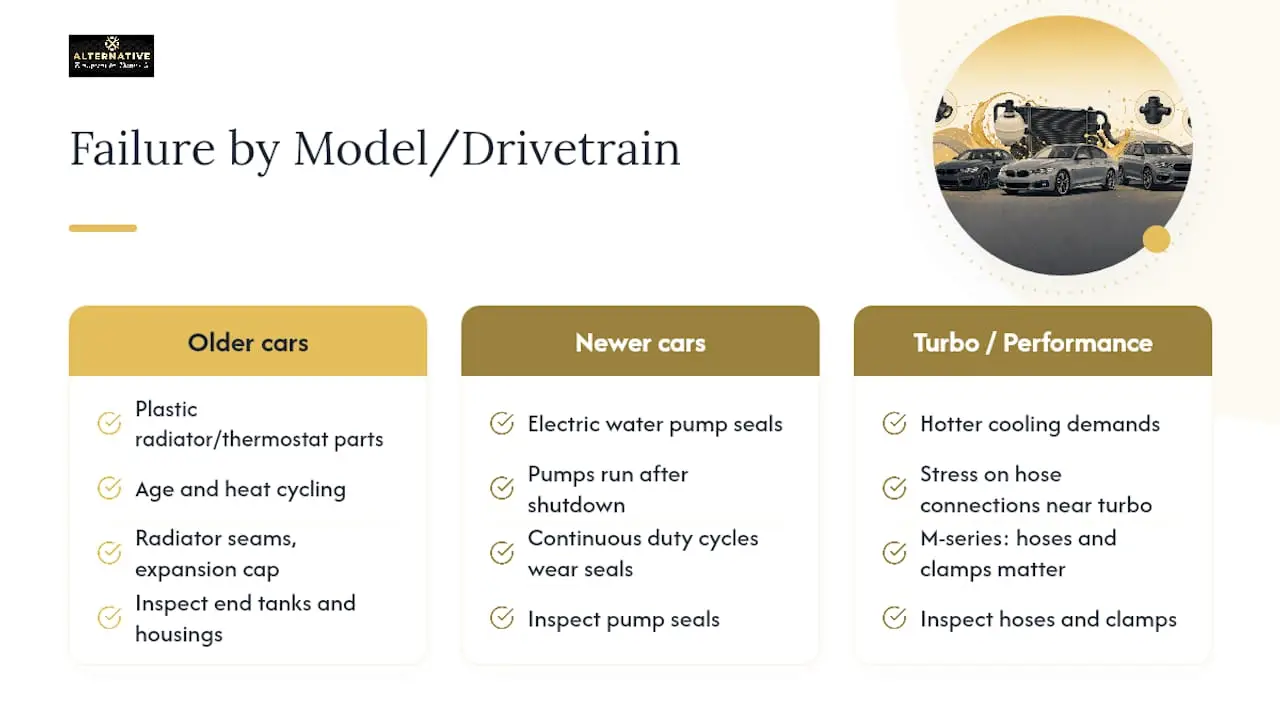
Older BMW models, particularly E46 and E90-chassis cars from the 2000s, are more associated with plastic radiator end tanks and thermostat housings that grow brittle with age, since those parts have simply had more years of heat cycling to fail. Coolant leak symptoms on these older cars often show up first at the radiator seams or the expansion tank cap.
Newer BMWs with electric water pumps, common across most of the current lineup, shift the risk profile toward pump seal failure rather than radiator cracking. These pumps run continuously even after the engine shuts off, which is efficient for cooling management but means more duty cycles and, eventually, more seal wear.
Turbocharged engines across the newer lineup also run hotter cooling demands than older naturally aspirated engines, putting extra stress on hose connections near the turbo housing. If you’re driving an M-series or a performance trim, expect hose and clamp inspections to matter more, simply because those systems work harder under normal driving conditions.
The takeaway isn’t that any particular model is doomed to leak. It’s that the specific component most likely to fail shifts with age and drivetrain, which is exactly why a diagnostic tailored to your model and mileage beats a one-size-fits-all checklist.
Patch It Now or Refresh the System? Our Take
If you’re planning to sell the car soon or it’s a low-mileage vehicle with one isolated failure, a targeted repair is a reasonable call. But if you intend to keep the BMW long-term and it’s already past 80,000 miles, a bundled refresh of the expansion tank, pump, thermostat housing, and hoses is usually the smarter spend. You avoid paying overlapping labor twice within a year or two. Whatever route you choose, get a written estimate with documented findings and photos before authorizing any work.
Schedule a Coolant System Diagnostic
There’s a real cost to waiting on a coolant leak: what starts as a $200 hose fix can turn into head gasket damage if the engine overheats even once. Alternative European & Domestic runs pressure testing and UV leak detection on every coolant diagnostic, using the same dealer-level diagnostic approach that catches the actual failure point instead of guessing and replacing parts one at a time.

Every visit includes a documented findings report and a transparent estimate covering your repair options, whether that’s a single component fix or a full cooling-system flush and bleed using OEM or OE-equivalent parts. If your BMW is actively overheating or steaming, don’t drive it in. Let it cool completely and arrange a tow instead. If it’s a slow weep with a stable gauge, you can bring it in as-is. Book your diagnostic appointment with Alternative European & Domestic and get a clear answer on what’s actually leaking before it costs you more.
Sources
- BMW Coolant System 101 — Why BMWs Overheat (And How to Prevent It) | Highline Motorsports
- Why Is My BMW Leaking Coolant? | AAutomotives
- BMW Coolant Leak Repair Cost: What to Expect | BimmerBoom
FAQ
How much does it cost to fix a BMW coolant leak?
Costs range from about $150–$300 for a simple hose or clamp job up to $1,500 or more for a heater core or engine damage from prolonged overheating, with water pumps and radiators typically falling in the $400–$1,500 range depending on labor access.
Can I drive my BMW with a coolant leak?
If you see steam, a rapidly rising temperature gauge, or coolant mixed into the oil, stop and arrange a tow. A slow weep with a stable gauge and topped-off reservoir usually allows careful, short-term driving to a shop.
Are BMWs known for leaking coolant?
BMWs use plastic components like the expansion tank and thermostat housing that become brittle from heat cycling over time, making coolant leaks a more common maintenance item than on cars with all-metal cooling systems.
Is there a recall on BMW coolant leaks?
There is no widely documented recall covering coolant leaks across BMW models; most cases stem from normal wear on plastic components and water pump seals rather than a manufacturing defect requiring a recall.