
If your car’s heater isn’t putting out heat, the cause is almost always one of two things: an internal coolant leak in the heater core, or a mechanical failure in the blend door or blower motor that controls airflow. The first can lead to engine overheating and interior contamination. The second is usually annoying but not dangerous. Telling them apart takes about five minutes.
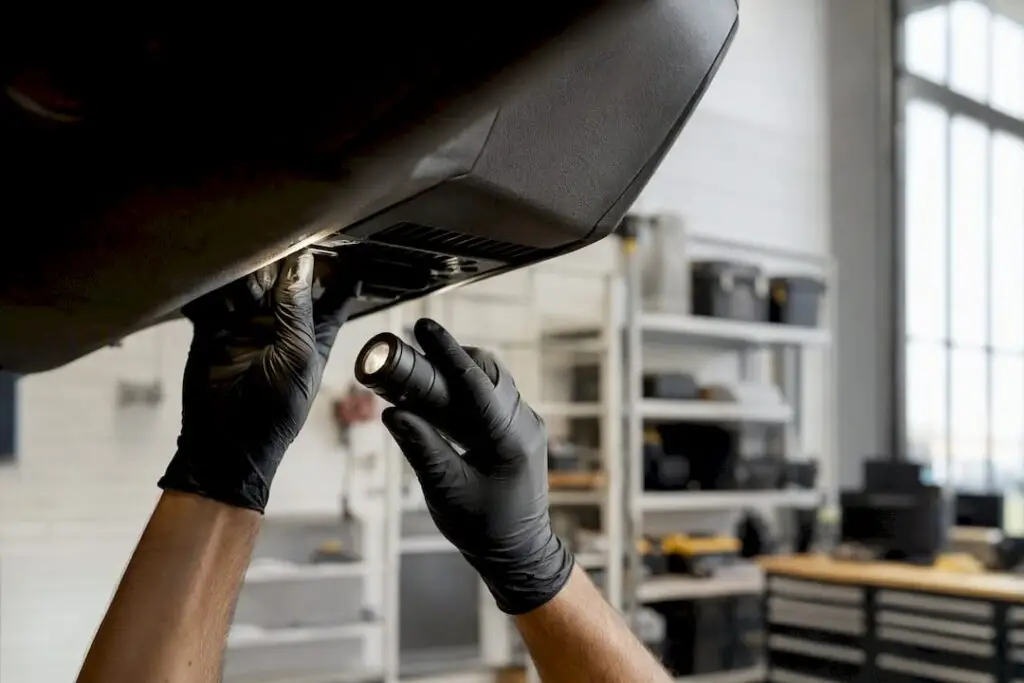
Before calling a shop, do two quick checks. Pop the hood on a cold engine and look at the coolant reservoir. Then check the passenger footwell carpet for dampness or an oily film.
- Coolant reservoir low or dropping between fill-ups? That points toward a heater-core leak, and you should stop driving and get the car towed if the temperature gauge climbs.
- Reservoir full, carpet dry, but the air is just cold or inconsistent? That’s more likely a blend-door or blower issue. It’s safe to drive to a shop.
Quick gut check: a sustained coolant drop without any visible puddle under the car is one of the clearest signs of an internal heater-core leak, not just a nuisance airflow problem.
Key Takeaways
A car heater that won’t produce heat almost always traces back to either an internal coolant leak in the heater core or a mechanical fault in the blend door or blower system, and telling them apart starts with a coolant check and a hose-temperature test.
| Point | Details |
|---|---|
| Check coolant first | A dropping reservoir with no external puddle signals a possible internal heater-core leak. |
| Smell and carpet test | A sweet odor or oily residue on the passenger carpet points to coolant entering the cabin. |
| Hose temperature delta | One hot hose and one cool hose at the firewall usually means a clogged or restricted core. |
| Confirm before replacing | Pressure testing and UV dye isolate the real fault and prevent unnecessary core replacement. |
| Book with a specialist | Alternativecarcare runs pressure tests, dye inspection, and actuator scans before recommending repair. |
Table of Contents
- Heater Not Working: A Checklist Before You Call a Shop
- Why Is My Heater Off? Common Causes Explained
- What Diagnostic Steps Should a Shop Run?
- How Much Does Heater Repair Cost?
- What the Data Actually Tells Drivers
- Booking a Heater Diagnostic With Alternativecarcare
- Sources
- FAQ
Heater Not Working: A Checklist Before You Call a Shop
You don’t need a lift or a scan tool to gather useful evidence. A few minutes of careful observation gives your technician a real head start and can shave time (and cost) off the diagnostic bill.
- Check the coolant reservoir cold. Note the level and the color. Milky, rust colored, or oddly thin coolant tells its own story. Never open a hot radiator cap. The system is pressurized and will burn you.
- Press a clean white cloth into the passenger footwell carpet. Hold it there for a few seconds. A faint oily or waxy residue, even without obvious wetness, is a classic early sign of a slow heater-core leak.
- Run the heater on max and pay attention to smell. A sweet, almost syrupy odor is antifreeze, not dust burning off. If you also notice a light film building on the inside of the windshield, that’s coolant vapor circulating through the cabin.
- Feel both heater hoses at the firewall. These are the two rubber lines running from the engine into the cabin. If one is noticeably hot and the other stays cool or barely warm, something is restricting flow through the core.
- Walk around and under the car. Look for puddles, crusty white or pink residue near the firewall, or drips coming from the HVAC drain under the dash. External leaks change the diagnostic picture.
Write down what you find, even if it’s “nothing unusual.” A negative result matters just as much as a positive one when a technician is narrowing down causes.
Pro Tip: Keep a small flashlight and a rag in your glovebox. Checking coolant color and smelling the heater output takes thirty seconds and can save you a diagnostic fee if the answer turns out to be something simple, like a stuck blend-door actuator instead of a leaking core.
Why Is My Heater Off? Common Causes Explained
Two failure types dominate no-heat complaints, and they leave very different fingerprints.
A heater-core leak shows up as a sweet smell inside the cabin, a damp or oily passenger carpet, coolant that keeps disappearing from the reservoir with no visible puddle outside, and windshield fogging that seems to reappear no matter how often you wipe it. This is a fluid problem, and it tends to get worse, not better.
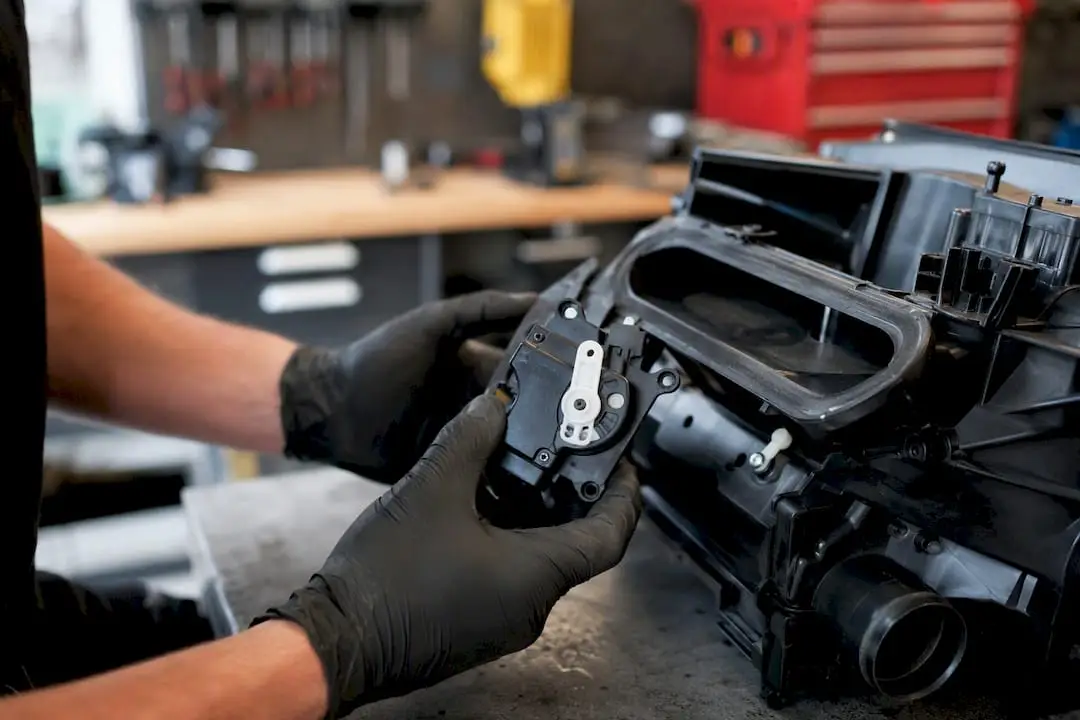
A blend-door or actuator failure behaves completely differently. Coolant level stays normal. You might hear a clicking or ticking sound behind the dash when you adjust the temperature dial. Air might blow from the wrong vents, or one side of the car runs warm while the other stays cold. Blend-door and heater-core failures produce distinct symptom patterns: one is a fluid issue, the other is mechanical or electrical.
There’s a third, less obvious cause: a clogged or partially restricted heater core. Coolant level is fine, there’s no smell, but heat output is weak. This is where the hose-temperature check pays off. One hose runs noticeably hotter than the other because sediment or corrosion inside the core is blocking flow.
Finally, a failing thermostat or water pump can mimic a heater problem entirely. If the engine never reaches full operating temperature, the heater core never gets hot coolant to work with, no matter how healthy it is.
These categories overlap more than owners expect. A neglected cooling system can produce a slow leak and a partial clog at the same time. That overlap is exactly why shops run a sequence of tests instead of guessing from symptoms alone, and why systematic cooling-system diagnosis rules out the thermostat and water pump before anyone touches the dashboard.
What Diagnostic Steps Should a Shop Run?
A professional diagnosis isn’t guesswork with a fancier toolbox. It’s a sequence designed to confirm the actual fault before anyone recommends a repair, especially on European and high-performance vehicles where dashboard removal can add hours of labor.
- Symptom interview and visual inspection. The technician asks when the smell or wetness started, checks the carpet, dash vents, and HVAC drain for residue, and rules out obvious external leaks first.
- Cooling system pressure test. The system is pressurized to spec and monitored for a drop, which isolates internal leaks (including the heater core) from external ones.
- UV dye injection. A fluorescent dye added to the coolant glows under a blacklight, letting a technician trace a leak’s exact path, sometimes through the core itself, without tearing anything apart first.
- Heater-hose temperature differential test. Using a digital pyrometer at the firewall, the technician compares inlet and outlet hose temperatures. A significant delta between the two hoses is a reliable field indicator of a clogged core, and it can rule out a bad blend door in minutes.
- Scan tool check for HVAC actuator codes. Many modern climate systems log fault codes when a blend-door or blower actuator fails calibration, which points straight at an electrical or mechanical cause instead of a fluid one.
- System bleed (“burping”) and recheck. Trapped air can mimic a clog by blocking flow through the core. Bleeding the system properly sometimes resolves a no-heat complaint without replacing a single part.
Only after these steps confirm an internal core problem does core removal become the answer, and on many vehicles that means partial dashboard disassembly.
Pro Tip: Ask whether your shop uses pressure testing and dye before quoting a heater-core replacement. Skipping that step is how some drivers end up paying for a new core when the real problem was a $40 actuator.
How Much Does Heater Repair Cost?
Repair complexity ranges from a fifteen-minute fix to a multi-hour dashboard job, and the price follows that spread closely.
- Lower-effort repairs include topping off coolant after a minor seep, replacing a stuck heater control valve, swapping a failed blend-door actuator, or replacing a clogged cabin air filter. These jobs usually run a few hundred dollars parts and labor combined, since the dashboard stays intact.
- Heater core flush can restore flow in a partially clogged core and costs far less than replacement, though it won’t help a core that’s actually cracked and leaking internally.
- Heater core replacement is the expensive outcome. Many vehicles require significant dashboard disassembly to reach the core, which is why labor, not the part itself, drives most of the cost. European and high-performance models often carry higher labor time because of tighter dash packaging and more electronics to disconnect and recalibrate.
- Related preventive work frequently gets bundled in: a full coolant flush, thermostat replacement, or water pump service, aimed at stopping the same failure from recurring in a system that’s already been opened up.
Time on the vehicle also varies widely. A blend-door actuator swap might take under an hour on some models. A heater-core replacement on a car with a deeply integrated dash can take most of a working day. That gap is exactly why an accurate diagnostic, built on pressure testing and dye rather than a guess, matters before anyone authorizes the bigger job. Confirming a clogged core with a hose-temperature check first can save a customer from paying for a core replacement when a flush would have worked.
What the Data Actually Tells Drivers
Most no-heat complaints don’t need heroics. They need a technician who checks the boring stuff first: coolant level, hose temperature, a pressure test, before anyone reaches for a wrench near the dashboard. The conventional owner advice online skips straight to “it’s probably your heater core,” and that instinct is often wrong. Blend-door actuators fail constantly on modern vehicles with electronic climate control, and they get misdiagnosed as core problems because both can produce weak or uneven heat.
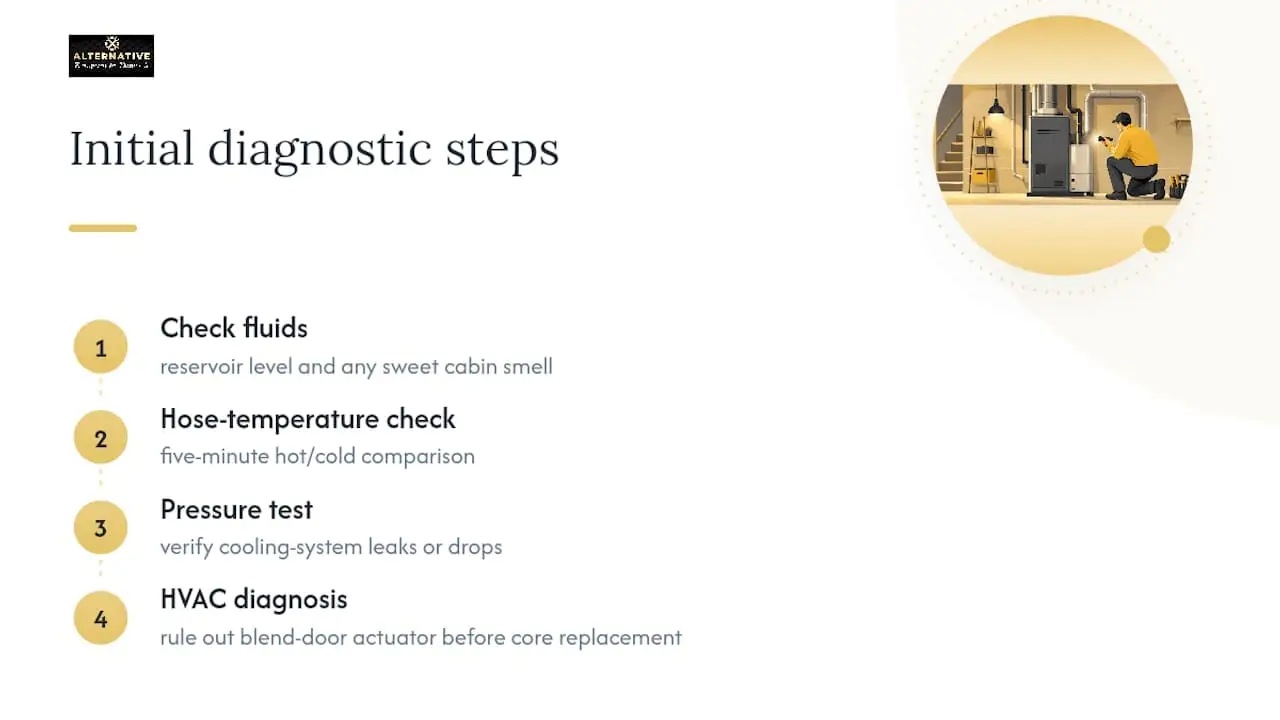
Where the advice falls short is in treating a no-heat complaint as one problem instead of a decision tree. A five-minute hose-temperature check or a look at the coolant reservoir can eliminate half the possibilities before a shop even opens the hood for real. Skipping that sequence is how drivers end up quoted for a full core replacement when the actual fix was a forty-dollar part.
Prioritize the fluid question first. If coolant is dropping and there’s a sweet smell in the cabin, treat it as urgent. If the reservoir is full and it’s just cold or uneven air, there’s no rush, and a proper diagnostic will find the real cause without guesswork.
— Hassan
Booking a Heater Diagnostic With Alternativecarcare
Alternativecarcare runs the same sequence outlined above on every no-heat complaint: cooling-system pressure testing, UV dye leak tracing, hose-temperature checks, and scan-tool actuator diagnostics, before recommending any repair. That order matters most on European and high-performance vehicles, where dashboard labor drives the majority of a heater-core replacement bill and a misdiagnosis gets expensive fast.

The shop’s approach centers on transparency: you get a clear explanation of what the pressure test and dye inspection found, what parts are actually failing, and what quality parts and labor the repair requires, before any work is authorized. That’s a different experience than a flat quote based on a guess.
Before you book, gather what you already found: coolant reservoir level and color, whether the carpet felt damp or oily, any smell when the heater ran on max, and whether one heater hose felt hotter than the other. Note when the symptom started and whether it’s gotten worse. That information speeds up the visit considerably. After booking, expect a symptom review, the diagnostic sequence itself, and a written explanation of findings before any repair begins, so you’re deciding with real information instead of a guess. You can review services and schedule a diagnostic visit directly to get a heater-core or blend-door problem confirmed before it turns into a bigger repair.
Sources
- Heater Core Failure Symptoms & How to Diagnose — Car Care Total
- Cars
- Cooling System Diagnosis | MOTOR
- Solving no-heat complaints — Underhood Service
FAQ
Can I Drive With No Heat in My Car?
Yes, if the temperature gauge is normal and there’s no coolant loss or sweet smell inside the cabin. Stop driving and arrange a tow if the gauge climbs or coolant is visibly disappearing.
What Does It Mean if My Heater Blows Cold Air Suddenly?
A sudden switch to cold air usually points to a stuck blend-door actuator or a low coolant level rather than a slow mechanical wear issue, since gradual clogging tends to reduce heat output over weeks, not instantly.
How Do I Know if It’s the Heater Core or the Blend Door?
A heater-core problem comes with fluid signs: a sweet smell, wet or oily carpet, and dropping coolant. A blend-door issue shows up as clicking sounds, wrong vent temperatures, or uneven airflow with no coolant loss at all.
How Much Does Heater Core Repair Cost?
Cost varies widely depending on how much dashboard disassembly your vehicle requires, since labor time drives the bulk of the price rather than the part itself. A heater-core flush costs far less than full replacement when the core isn’t actually cracked.
Does Alternativecarcare Diagnose Heater Problems Before Recommending Repairs?
Yes. Alternativecarcare uses cooling-system pressure testing, UV dye leak tracing, and scan-tool actuator checks to confirm the exact cause before recommending a heater-core or blend-door repair.