
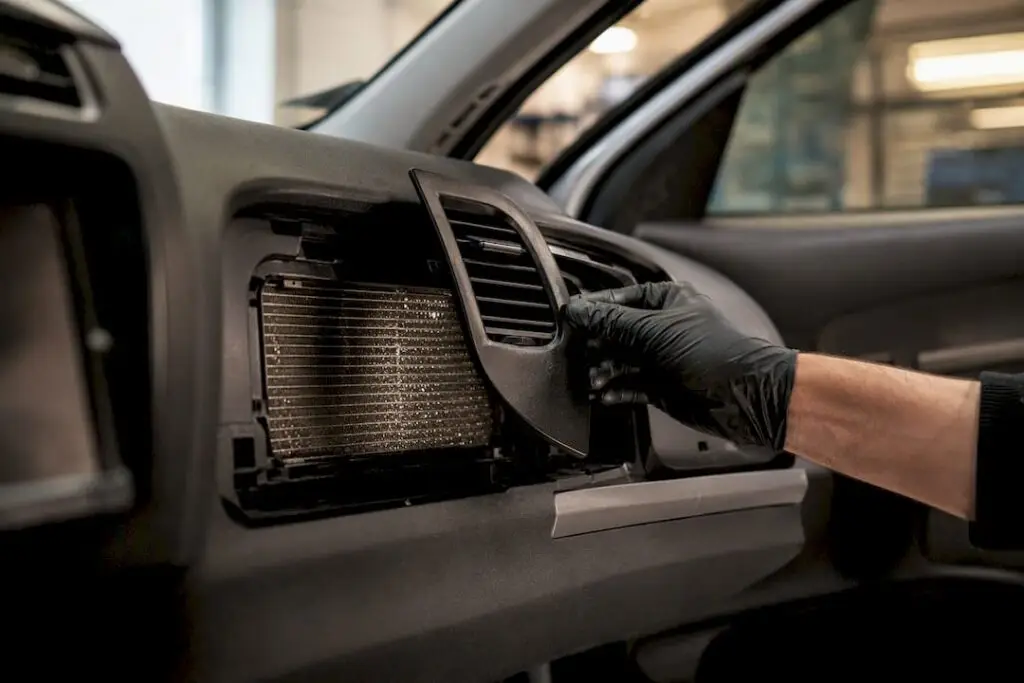
If your car’s A/C smells like mildew, the most likely cause is microbial growth on the evaporator or moisture trapped in the HVAC housing. This isn’t a refrigerant problem, and it usually isn’t dangerous, but it won’t fix itself.
You’ll notice a pattern: the odor hits hardest the second the blower kicks on, then fades within a minute or so as airflow clears the cabin. That timing tells you the smell is coming from inside the ventilation system, not the interior carpet or something you spilled last week.
Start here, right now:
- Roll the windows down and let the cabin air out for a few minutes.
- Run the fan on high with the A/C off to push stale air out of the vents.
- Pull the cabin air filter and check it. A gray, damp, or debris-packed filter is often the whole story.
Key Takeaways
Mildew smell in a car’s A/C system almost always traces back to microbial growth on the evaporator or moisture trapped by a clogged drain, and lasting fixes require treating that source rather than masking the odor.
| Point | Details |
|---|---|
| Odor timing reveals the cause | Smell strong at start-up that fades within seconds points to evaporator biofilm, not refrigerant. |
| Filter and drain drive recurrence | A saturated cabin filter or clogged condensate drain lets moisture linger and feeds microbial growth. |
| DIY sprays offer temporary relief only | Plenum disinfectant sprays and filter swaps reduce odor short-term but rarely eliminate biofilm on the coil. |
| Watch for red-flag signs | Recurring smell, damp carpet, or a sweet coolant scent all signal it’s time for professional diagnostics. |
| Alternativecarcare offers dealer-level diagnosis | Alternativecarcare maps moisture sources before recommending treatment, tailored to European and high-performance HVAC designs. |
Table of Contents
- Diagnosing Where the Musty Smell From Vents Is Coming From
- What Causes AC Odor Issues in the First Place
- Safe DIY Steps for a Moldy Smell From AC (and Their Limits)
- When an AC Odor Means You Need a Shop, Not a Spray Can
- Preventing Mildew in AC Units From Coming Back
- Why a Quick Fix Rarely Solves a Musty AC for Good
- Book a Professional AC Diagnostic With Alternativecarcare
- Sources
- FAQ
Diagnosing Where the Musty Smell From Vents Is Coming From
Before you spend money on cleaners or a shop visit, run through this sequence. It takes about ten minutes and tells you whether you’re dealing with a filter problem, a drainage problem, or something bigger.
- Run the start-up smell test. Turn the A/C on cold with the fan on medium. If the odor is strong for the first 20 to 30 seconds and then fades, that’s a classic sign of microbial growth on the evaporator. OEM technical bulletins describe this exact pattern, and it’s one reason technicians treat it as a near-diagnostic clue on its own.
- Pull the cabin air filter. It’s usually behind the glove box or under the hood on the passenger side. Look for dark spots, a matted texture, or a sour smell coming off the filter itself.
- Check the condensate drain. Look under the passenger-side firewall for a small rubber tube. Pour a cup of water near the evaporator housing (if accessible) or just check for a steady drip after A/C use. No drip usually means a clog.
- Do a floor and seat check. Press down on the carpet in the footwells and under the seats. Damp spots that spring back slowly point to standing water, not just HVAC condensation.
- Smell test with the A/C off. If the musty smell lingers even with the system off, you likely have wet carpet, foam, or a leak, not just an evaporator issue.
A positive result on the start-up test with a clean filter usually means evaporator biofilm. A dirty filter plus no drain flow suggests a maintenance backlog rather than a serious fault. Damp carpet changes the diagnosis entirely, since that points to water intrusion from a clogged sunroof drain or failed door seal.
Pro Tip: Do the start-up test first thing in the morning before the car has run at all. A cold start gives you the clearest read on whether the odor is evaporator-based, since overnight condensation on the coil is at its peak.
What Causes AC Odor Issues in the First Place
An evaporator coil runs cold and wet by design. Every time you run the A/C, moisture condenses on those aluminum fins, and that moisture doesn’t always drain away cleanly. Add dust, pollen, and organic debris pulled in through the intake, and you’ve got the exact conditions biofilm needs: a damp surface, a food source, and warm air cycling over it every time you start the car.
Two mechanical issues make it worse:
- A clogged condensate drain traps water in the housing instead of letting it drip out under the car, giving mold and bacteria a permanent water supply.
- A dirty, saturated cabin filter restricts airflow, which lets moisture sit longer on the coil instead of getting swept through the system.
The smell itself is a diagnostic clue. A musty, damp-basement odor points to evaporator biofilm. A sweet smell usually means coolant leaking into the cabin through the heater core, a completely different repair. A burning smell points to an electrical or mechanical issue, not moisture at all.
It’s worth being direct about one common misconception: refrigerant recharges don’t fix this. Technicians consistently report that a mildew odor is a microbial growth issue, and topping off refrigerant changes cooling performance, not what’s growing on the evaporator fins.
Safe DIY Steps for a Moldy Smell From AC (and Their Limits)
These steps genuinely help, but think of them as damage control rather than a cure. If the smell keeps coming back, that’s your sign the evaporator itself needs attention.
- Replace the cabin air filter. Most manufacturers recommend swapping it every 12,000 to 15,000 miles, but if it smells or looks saturated, replace it now regardless of mileage.
- Spray disinfectant into the plenum intake. Consumer Reports recommends removing the cabin filter first, then spraying disinfectant into the intake opening with the windows down and the fan running on low to pull the cleaner through the ductwork.
- Try a foaming evaporator cleaner through the service access port if your vehicle has one. It reaches the coil directly instead of just treating the air passing through, which makes it more effective than a vent-mounted air freshener.
- Check the condensate drain tube for kinks or clogs. Working under the dash or from below the car, always use jack stands, never a jack alone.
Skip the ozone generators and air freshener clips. They mask the smell without touching the biofilm causing it, and repair guides note that the odor typically returns within days.
When an AC Odor Means You Need a Shop, Not a Spray Can
Some situations call for dealer-level diagnostics instead of another can of disinfectant. Watch for these signals:
- The smell returns within a week or two of a DIY treatment.
- Carpet or seat foam stays damp for days, not just after rain.
- You notice a sweet smell, which suggests coolant rather than mildew.
- You can see mold growth in vents or housing areas you can’t reach yourself.
A proper shop visit typically includes evaporator access and inspection, condensate drain clearing, and moisture mapping across the footwells and trunk. If a sweet smell is present, a heater core check gets added to rule out a coolant leak. Severe cases sometimes call for professional antimicrobial fogging or full carpet extraction, work that usually requires trim removal most owners aren’t equipped to do at home.
A shop that takes odor complaints seriously documents where the moisture is actually coming from before recommending a treatment, rather than defaulting to a generic “AC service” line item.
Alternativecarcare approaches these calls with the same dealer-level diagnostic process it uses for engine and electrical work: identify the moisture source first, then recommend the specific repair that addresses it, not just a spray-and-hope fix.
Preventing Mildew in AC Units From Coming Back
A few habits keep the evaporator dry enough that biofilm never gets a foothold in the first place.
- Swap the cabin filter on schedule, generally every 12,000 to 15,000 miles, sooner if you drive in dusty or high-pollen conditions.
- Run the blower for the last minute or two of every drive with the A/C off. This pulls warm, dry air across the evaporator and dries the coil before you park.
- Clear the plenum intake and condensate drain periodically, especially after leaf season, when debris tends to pack into the cowl area.
- If you live somewhere humid or mostly drive short trips, treat these habits as non-optional. Short trips never give the coil enough time to dry between uses, and humidity replenishes moisture faster than a dry climate would.
Pro Tip: Set a phone reminder for the last mile of your commute to switch off the A/C compressor and just run the fan. It costs nothing and it’s the single habit that does the most to keep the evaporator dry.
Why a Quick Fix Rarely Solves a Musty AC for Good

Most owners try the spray-and-pray approach first, and I get why. It’s cheap and it’s fast. The problem is that masking a smell and eliminating its source are two different jobs, and treating one like the other is how a $15 can of disinfectant turns into three repeat visits over six months.
What actually works is figuring out whether you’re dealing with a dirty filter, a clogged drain, or biofilm on the coil itself, then treating that specific cause. That’s the whole reason dealer-level diagnostics exist: to stop guessing and start measuring moisture, airflow, and drain function before recommending a repair. It’s a more honest way to spend a customer’s money, even when the honest answer is “replace a $20 filter.”
— Hassan
Book a Professional AC Diagnostic With Alternativecarcare
Alternativecarcare specializes in dealer-level diagnostics for European, domestic, and high-performance vehicles, which matters here because import HVAC systems often have evaporator access points and drain designs that differ from what a generic quick-lube shop is set up to handle.

When you call to book, mention when the smell shows up (right at start-up, or the whole drive), whether you’ve noticed any damp carpet, and whether you’ve already tried a filter change or disinfectant spray. That saves diagnostic time and helps the technician decide whether you need a simple evaporator treatment or a deeper moisture inspection. Alternativecarcare offers straightforward appointment scheduling and explains every recommendation before any work begins, so you know exactly what you’re paying for and why. If you’re ready to stop guessing, book a diagnostic appointment and get the actual cause identified.
Sources
- Why My Car AC Smells Bad? — Motor1
- How to Get Rid of Musty Smell From Your Car’s Air Conditioner — Consumer Reports
- Service bulletin: Unpleasant odor from heating and ventilation system (OEM bulletin)
- Why Your Car Smells Like Mildew and How to Stop It — Rick’s Free Auto Repair Advice
FAQ
Why Does My AC Smell Like Mildew When I First Turn It On?
Moisture condenses on the evaporator coil overnight, and organic debris on the fins creates a biofilm that releases odor the moment airflow starts moving. The smell fades as fresh air displaces the concentrated air trapped in the housing.
Can a Dirty Cabin Air Filter Cause a Musty Smell From Vents?
Yes. A saturated or debris-packed filter restricts airflow, which keeps the evaporator wetter for longer and gives mold and bacteria more time to grow.
Will Refrigerant Recharge Fix a Moldy Smell From the AC?
No. Technicians report that refrigerant level affects cooling performance, not the microbial growth that causes the odor.
How Do I Know If I Need Professional AC Diagnostics?
If the smell returns after a filter change and disinfectant spray, or if you notice damp carpet or a sweet coolant-like odor, book a shop visit for evaporator inspection and moisture mapping.
Is a Sweet Smell From the AC Different From a Mildew Smell?
Yes. A sweet smell usually signals a coolant leak into the cabin through the heater core, which is a separate repair from evaporator mildew and needs prompt attention.