
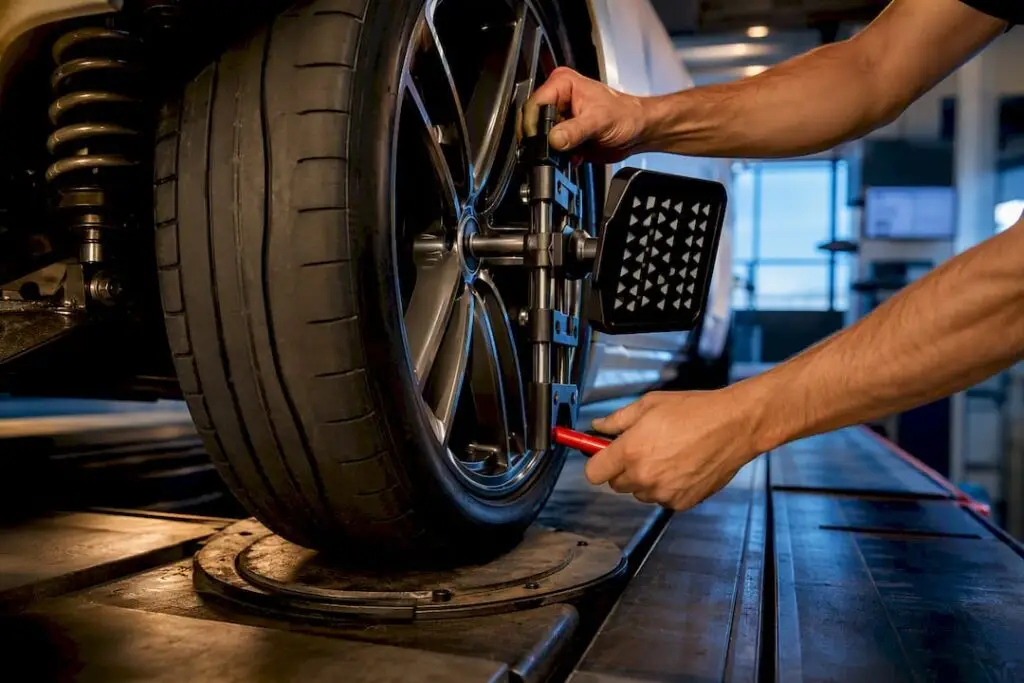
A performance alignment is a targeted wheel geometry setup that optimizes cornering contact and predictability for modified or track driven cars. You need one after lowering the car, swapping suspension parts, mounting stickier tires, or logging track miles, and any time the car starts pulling, wandering, or eating tires unevenly. Done right, it turns vague, nervous handling into something you can trust at the limit.
TL;DR:
- A performance alignment intentionally adjusts camber, caster, and toe settings to maximize cornering contact and handling predictability, especially after modifications or track use.
- Factory alignment ranges are broad and conservative, often unsuitable for lowered, track-driven, or performance-tire-equipped cars, requiring more aggressive tuning beyond OEM specs.
- A professional performance alignment involves a detailed inspection, loading the car to its actual weight, measurement on a computerized rack, and test driving with documented before-and-after results.
- Changes to ride height, suspension components, or wheel size should trigger an alignment check, ideally before and after track events or any significant impact to suspension geometry.
- Owners should prioritize shop-driven adjustments with proper diagnostics over DIY efforts, as precise angles and corner balancing need specialized equipment and expertise for optimal results.
Table of Contents
- What Makes a Performance Alignment Different From a Standard Shop Alignment
- Camber, Caster, and Toe: What Each Angle Actually Does
- Why Factory Specs Are Conservative and How Technicians Adjust From There
- What Happens During a Professional Performance Alignment
- When to Schedule a Performance Alignment
- How to Choose a Shop for Performance Alignment Work
- DIY Checks vs. Professional Alignment Work
- Why Alternative European & Domestic Recommends a Shop-Driven Approach
- Book a Performance Alignment With Alternative European & Domestic
- Sources
- FAQ
What Makes a Performance Alignment Different From a Standard Shop Alignment
A standard alignment chases one goal: get the car back to the middle of the factory range so it drives predictably for a decade of commuting. A performance alignment chases a different goal. It maximizes contact patch under cornering loads and keeps handling predictable right up near the limit of grip, not just in a straight line at 65 miles per hour.
That gap matters because most general repair shops reset every car to the same factory numbers regardless of what the owner actually does with it. For a stock daily driver, that is fine. For a lowered coupe on coilovers or stickier summer tires, factory-center numbers often leave real grip on the table. Standard alignments assume stock geometry, and a car that has been lowered, track-driven, or fitted with performance rubber usually needs settings well outside that assumption to handle the way it should.
Camber, Caster, and Toe: What Each Angle Actually Does
These three angles are the foundation of every alignment, performance or otherwise, and each one earns its own tuning conversation.
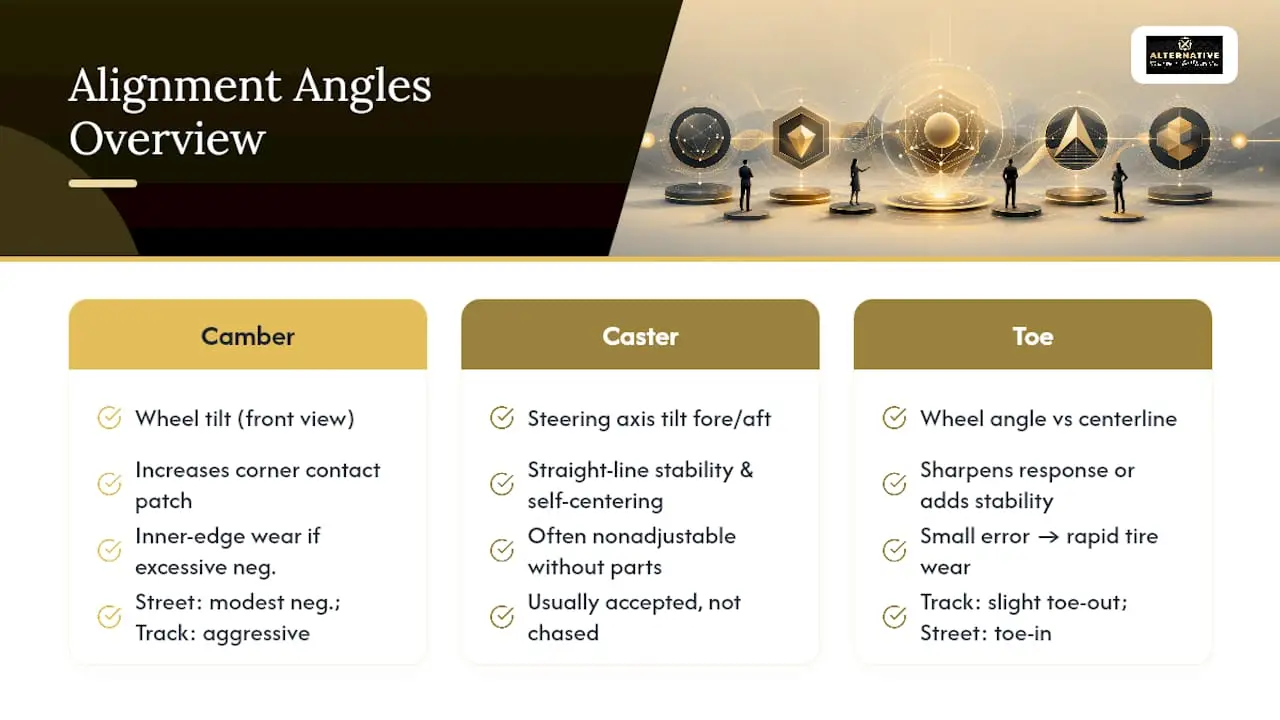
Camber is the inward or outward tilt of the tire when viewed from the front. Negative camber tilts the top of the tire inward, which increases the tire’s contact patch during hard cornering, when the outside tire would otherwise roll onto its edge. The tradeoff shows up on the tread: too much negative camber wears the inner edge fast. A street-driven performance car might run around modest negative camber; a dedicated track car often runs a much more aggressive negative camber up front.
Caster controls straight-line stability and steering self-centering, tilting the steering axis fore or aft. More caster generally means a heavier but more confident steering feel at speed. Many platforms offer limited or no caster adjustment without aftermarket arms, so this is often the angle you accept rather than chase.
Toe is the angle each wheel points relative to the car’s centerline, and it is the single biggest factor in uneven tire wear. Slight toe out sharpens initial steering response, which track drivers like; toe in adds straight-line stability, which street drivers prefer. Even a small toe error accelerates wear on high-performance tires faster than most owners expect.
Pro Tip: If you split time between street and track, ask your shop for numbers biased slightly toward stability. Chasing maximum track camber and toe out on a car you also commute in usually costs you tire life a lot faster than it gains you lap time.
Why Factory Specs Are Conservative and How Technicians Adjust From There
Automakers set alignment specs to satisfy three priorities: predictable handling for average drivers, long tire life across a wide range of driving styles, and enough tolerance to absorb normal manufacturing variance. That means factory ranges are built wide on purpose, not because the car cannot handle sharper geometry.
Factory tolerances are deliberately broad, so an experienced technician treats the OEM range as a starting point rather than a target to hit dead center. For a car used hard, the tech dials settings toward the aggressive end of that range, or slightly beyond it with aftermarket parts, based on tire choice, ride height, and how the car is actually driven.
Pushing too far the other direction carries real consequences. Excess toe adjustment can cause tramlining, where the car tugs toward road grooves and cracks. Too much negative camber without enough caster to compensate can make the car feel nervous and reduce straight-line stability, exactly what a street driven car does not need on a long highway stretch.
What Happens During a Professional Performance Alignment
A real performance alignment appointment looks nothing like a quick drive-in, drive-out reset. The sequence generally runs:
- Inspection first. The technician checks tire condition and pressures, suspension bushings, ball joints, and wheel fitment before touching an adjustment bolt, since worn parts throw off any measurement taken afterward.
- Load the car to driven weight. Loading the vehicle to its actual driven weight, including a driver, before measuring is an easy step to skip and an easy way to get numbers that look right on paper but feel wrong on the road.
- Measure on a 4-wheel computerized rack. This captures camber, caster, and toe at all four corners simultaneously, along with cross-angle differences between the left and right sides.
- Adjust in sequence, starting with camber and caster where adjustable, finishing with toe. Some platforms need aftermarket adjustable control arms or camber plates to reach performance numbers at all.
- Verify with a test drive and a printed before-and-after comparison, confirming the car tracks straight and steers evenly before it leaves the rack.
Corner balancing can be added for track focused builds on coilovers, though it is an optional service beyond a standard alignment.
When to Schedule a Performance Alignment
Certain events should trigger an alignment check automatically, no symptoms required:
- Any ride height change, including new coilovers, springs, or a lowering kit
- Installing new control arms, tie rods, or other suspension components
- Mounting new wheels or a different tire size or profile
- Hitting a pothole, curb, or anything hard enough to jolt the suspension
For track drivers, check the alignment before a track weekend and again after, since curb strikes and aggressive cornering loads can shift settings you would never notice on the street. Cars driven at the track regularly benefit from a mid-season check rather than waiting for visible wear or a pull to show up. Stock, street-only cars can generally go by the vehicle’s normal service interval; heavily modified or frequently track-driven cars hold their settings less reliably and deserve more frequent attention.
How to Choose a Shop for Performance Alignment Work
Not every shop that can align a sedan can properly set up a track car, and asking the right questions up front saves you a wasted trip.
- Ask whether the shop has documented motorsport or track experience, not just general alignment volume.
- Confirm they use a 4-wheel computerized rack and are familiar with your specific platform’s adjustment points.
- Ask if they load the car to driven weight before measuring, and whether they print before-and-after numbers.
- Ask how they’d set up your car for a street and track compromise, not just one extreme.
Treat a few answers as warning signs: a shop that automatically resets every car to factory-center numbers, skips the test drive, or cannot explain the tradeoffs of the numbers they chose is not equipped for performance work.
DIY Checks vs. Professional Alignment Work
Owners can handle a few useful checks between visits. Look at tire pressures regularly, scan the tread for uneven wear across the face of the tire, note whether the steering wheel sits centered when driving straight, and feel for a pull to one side on a flat, empty road.
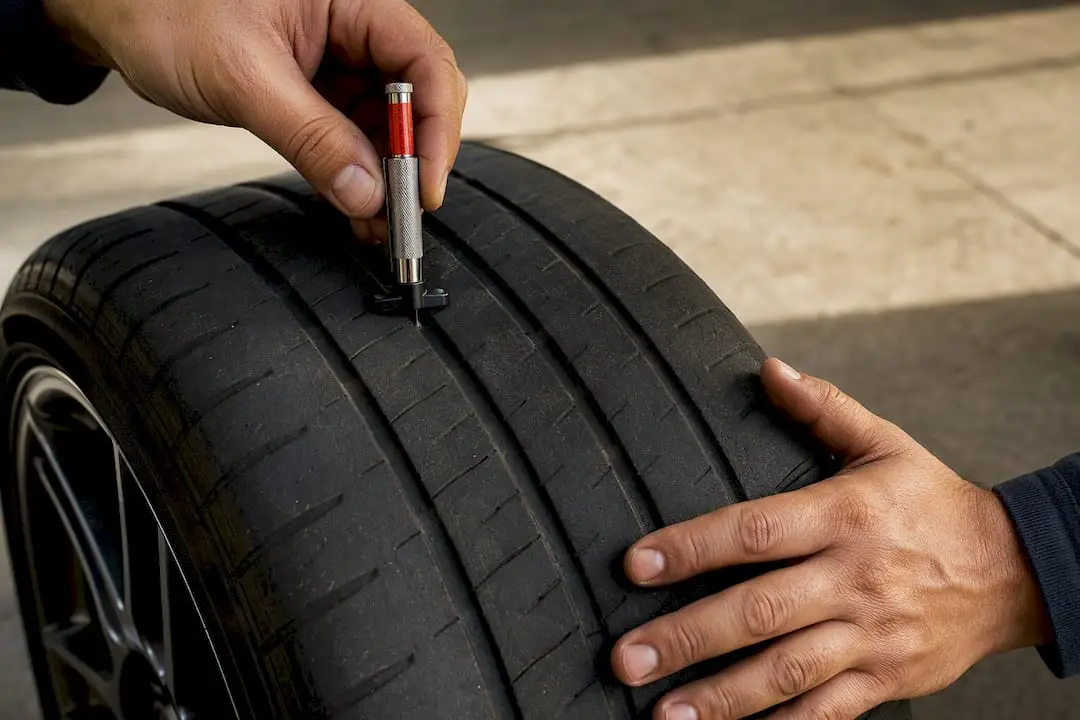
What owners cannot do at home is measure and adjust the actual angles. Camber, caster, and toe require a calibrated rack and trained interpretation of the printout, and corner balancing needs scale equipment most driveways do not have. If a pull test or visual wear check turns up something off, treat that as the signal to book a shop appointment rather than attempting an adjustment with strut bolts and a tape measure.
Why Alternative European & Domestic Recommends a Shop-Driven Approach
Chasing internet-forum camber numbers without a real inspection first is how owners end up with unpredictable handling and prematurely worn tires. Alternative European & Domestic builds its alignment process around dealer-level diagnostics and motorsport-informed judgment, not a one-size-fits-all reset to factory center.
That means a documented inspection of tires, bushings, and wheel fitment before any adjustment, measurement on a 4-wheel computerized rack with the car loaded to driven weight, and a test drive with printed before-and-after numbers to confirm the work. When a platform needs aftermarket adjustable arms or camber plates to reach real performance geometry, that gets flagged and explained rather than glossed over.
Book a Performance Alignment With Alternative European & Domestic
If your car has been lowered, tracked, or fitted with stickier rubber, a factory-center alignment is not going to show you what it can really do. Alternative European & Domestic sets up performance alignments around how the car is actually driven, not a generic reset, using dealer-level diagnostics and a measured, test-driven process instead of guesswork off a chart.

Before your appointment, note any recent suspension work, your current tire brand and wear pattern, and whether the car sees regular track time. That gives the technician the context to choose real numbers instead of defaulting to the middle of the factory range. Expect a full inspection, a loaded 4-wheel measurement, and a printed before-and-after readout so you know exactly what changed and why. Head to the Alternative European & Domestic booking page to schedule your performance alignment and get specifics on prepping your car for the visit.
Sources
- Performance Wheel Alignment | MOTOR
- Wheel alignment — Wikipedia
- Alignment & Corner Balancing: Why It Matters After Every Mod | WheelPrice
- What is wheel alignment? | Kelley Blue Book
FAQ
What Does Performance Alignment Mean?
It means setting camber, caster, and toe specifically for cornering grip and handling predictability under load, rather than simply returning the car to factory-center specs.
How Much Does a Performance Alignment Cost?
A standard 4-wheel alignment typically runs roughly $100 to $200 at a quality shop, with corner balancing or aftermarket-part adjustments adding to that depending on what your car needs.
How Can I Tell if My Car Needs an Alignment?
Watch for a pull to one side, an off-center steering wheel when driving straight, or uneven wear across the tire’s tread face; any of those, plus lowering the car or hitting a curb hard, are signs it is time for a check.
Can I Do Tire Balancing Without an Alignment?
Yes, but they solve different problems. Balancing corrects uneven weight distribution to stop vibration, while alignment sets the actual geometry angles that prevent pulling and uneven wear, so a car can need one, the other, or both.
Do I Need a Performance Alignment After Lowering My Car?
Yes. Lowering changes camber, caster, and toe from their factory relationship, and often requires adjustable arms or camber plates to bring geometry back into a usable range for handling and tire wear.