
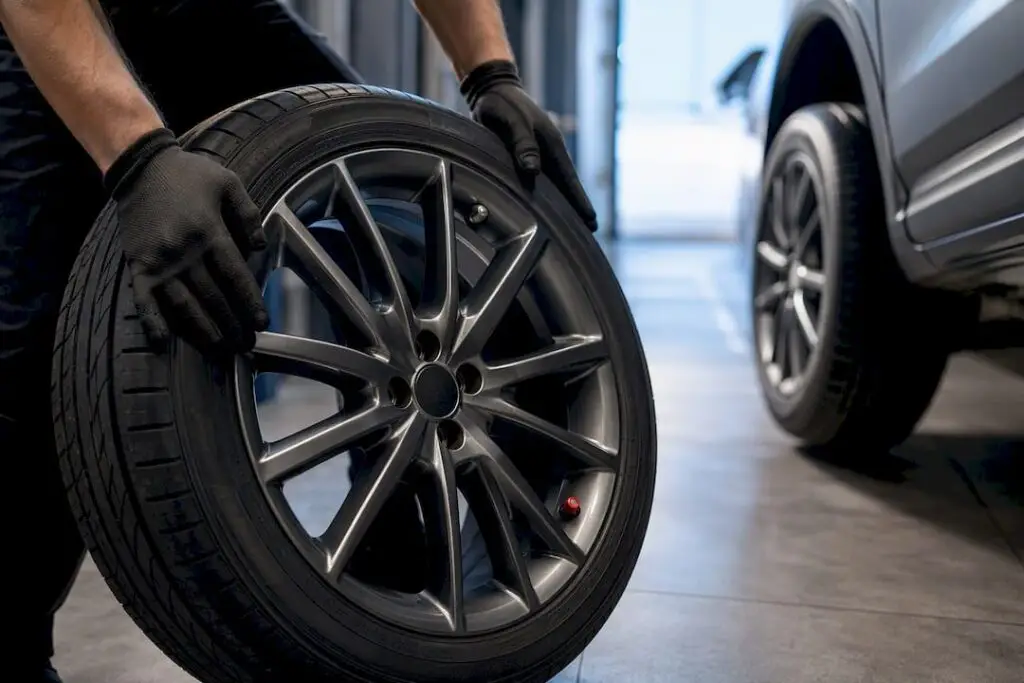
If your car pulls right, the most likely culprits are uneven tire pressure, a wheel alignment issue, or a dragging brake. Check your cold tire pressures right now, and don’t drive it if the pull is sudden, strong, or only shows up when you hit the brakes. Everything else is a matter of narrowing down which of those three is the actual cause.
TL;DR:
- Uneven tire pressure, tire conicity, or uneven tread wear are common causes of a car pulling right, and checking cold tire pressure is the first step.
- Wheel alignment issues typically involve unequal camber or caster angles, with correction requiring specialized equipment at a shop.
- Braking problems such as sticking calipers or seized brake hoses can cause a pull, especially noticeable when applying the brakes.
- A visual and physical inspection after driving can reveal heat build-up in a wheel hub or tire damage indicating the source of the pull.
- Misdiagnosing the problem as an alignment issue without testing for tire conicity or road crown can lead to unnecessary repairs and repeated pulling.
Table of Contents
- Why Does a Car Pull Right? The Main Causes
- How to Diagnose Why Your Car Pulls Right
- Fixing a Car That Pulls Right: DIY vs Shop Repair
- When a Right Pull Means Stop Driving Now
- How Alternative European & Domestic Diagnoses a Right Pull
- Book a Diagnostic With Alternative European & Domestic
- Sources
- FAQ
Why Does a Car Pull Right? The Main Causes
A rightward pull almost always traces back to one of four systems: tires, alignment, brakes, or suspension. Knowing which category fits your symptom saves you from paying for an alignment when the real problem is a $3 fix with a tire gauge.
Tire pressure and tire wear. A tire with noticeably lower pressure than the others acts like a slightly bigger, softer contact patch, and the car drifts toward that side. Uneven tread wear does the same thing, and so does tire conicity, a manufacturing quirk where the belts inside the tire aren’t perfectly centered, causing the tire to roll like a cone instead of a straight cylinder. A tire with conicity will pull the car even when pressure and alignment are both fine, according to Performance Plus Tire’s diagnostic breakdown.
Wheel alignment. Camber (the inward or outward tilt of the tire) and caster (the forward or backward tilt of the steering axis) both affect directional pull when they’re uneven side to side. A car tends to drift toward whichever side has more positive camber, and toward the side with less caster, according to an OEM/NHTSA diagnostic bulletin. Shops generally try to keep that side-to-side difference kept small to avoid pull.
Brake drag. A caliper that’s sticking, a collapsing brake hose, or a seized parking brake cable on the right side will grab harder than the left and pull the car that direction, usually most noticeable when you brake, according to 1A Auto’s repair guide.
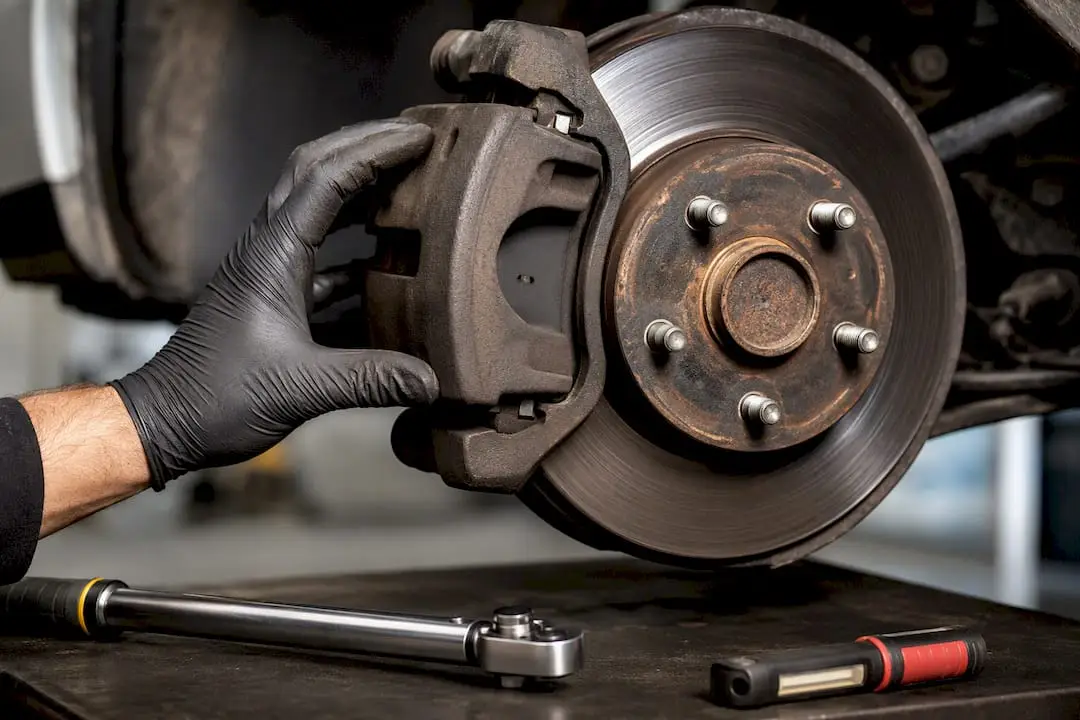
Worn suspension and steering parts. Tie rods, ball joints, and control arm bushings that have loosened up can let one wheel sit at a slightly different angle than it should, creating a steady pull that often gets worse over bumps.
A few things get confused with a true pull, and it’s worth separating them:
- Torque steer happens under hard acceleration in many front-wheel-drive cars and disappears once you ease off the gas. It’s a power-delivery quirk, not a defect, though worn motor mounts or a failing CV joint can make it noticeably worse.
- Road crown is the slight tilt built into most roads for drainage, and it can feel exactly like a car pulling to the right, especially in the right lane where the crown is steepest.
- Memory steer is when the car keeps drifting the direction you last turned, which usually points to a binding strut mount or an overly tight ball joint rather than alignment.
How to Diagnose Why Your Car Pulls Right
Work through these checks in order. Each one rules something out before you spend money on the next step.
- Check cold tire pressures. Measure all four tires before driving, using the PSI number on your door jamb placard, not the tire sidewall. A gap of even a few pounds between the left and right sides is often the entire answer.
- Rule out road crown. Find a flat, level stretch of road with no camber, or drive the same road in both directions. If the pull only happens one way, the road is likely the cause, not the car, as Performance Plus Tire notes in its diagnostic guidance.
- Run the cross-swap test. Swap the two front tires to the rear, and rear to front, on the opposite sides. If the pull switches direction or disappears, you’ve got a tire conicity problem, not a car problem, according to AutoZone’s troubleshooting guide.
- Test under braking versus coasting. Take your foot off the gas and coast in a straight line. If there’s no pull, then apply light, steady brake pressure. A pull that only appears under braking points straight at a caliper or brake hose issue.
- Test under acceleration versus steady speed. If the pull only shows up when you press the gas, especially hard, you’re likely dealing with torque steer, not alignment.
- Do a visual and touch check. After a drive, feel each front wheel hub for excess heat, which can indicate a dragging caliper, and look for uneven tread wear or curb damage on the tire edges.
Pro Tip: Do the cross-swap test before you book an alignment. If a shop aligns your car while a bad tire is still causing the pull, you’ll be back in the same seat a week later, no better off.
Fixing a Car That Pulls Right: DIY vs Shop Repair
Some fixes take five minutes in your driveway. Others need a machine that costs more than most people’s cars.
What you can reasonably do yourself:
- Inflate all four tires to the pressure listed on the door placard, checked cold.
- Rotate tires yourself if you’re comfortable jacking up the car safely and torquing lug nuts to spec.
- Replace a tire with visible cupping, bulging, or uneven wear rather than waiting for it to fail.
What belongs in a shop, not a driveway:
- Alignment corrections. Adjusting camber and caster requires an alignment rack and specialized measurement equipment most owners simply don’t have access to. A shop measures each wheel’s angle against a factory spec and against the opposite wheel, then adjusts until the side-to-side difference is within tolerance, generally under half a degree, per NHTSA’s diagnostic bulletin.
- Stuck caliper repair. This involves brake fluid, a hydraulic system, and parts that directly affect your ability to stop the car safely.
- Suspension component replacement. Tie rods and ball joints affect wheel alignment angles the moment they’re replaced, so they typically need a follow-up alignment anyway.
- Torque steer diagnosis tied to mounts or CV joints. These require lifting the car and inspecting components that aren’t visible from outside.
One detail that trips up a lot of owners: misdiagnosing a tire pull as an alignment problem is a common and avoidable mistake. Skipping the cross-swap test and going straight to an alignment shop often means paying for an adjustment that never fixes the real problem, according to 1A Auto’s repair guide, and the pull comes right back.
Preventing the next pull is mostly about staying ahead of small changes. Check tire pressure monthly, inspect your tires and suspension after hitting a hard pothole or curb, and rotate tires on the schedule your owner’s manual specifies.
When a Right Pull Means Stop Driving Now
Some pulls are annoying. Others are dangerous. Know the difference before you get back on the road.
Pull over and don’t continue driving if you notice:
- A sudden, strong pull that wasn’t there before
- Pulling that appears specifically when you brake
- A burning smell or visible smoke near a wheel
- Rapid, uneven tire wear you can see or feel through the steering wheel
If the pull is mild and consistent, schedule an inspection within the next few days rather than waiting for it to worsen, particularly if it started right after a tire rotation, pothole impact, or recent alignment work.
Before you call a shop, jot down exactly which maneuver triggers the pull (accelerating, braking, or steady cruising), whether you heard or smelled anything unusual, and whether the issue began after a specific event. That information cuts diagnostic time significantly.
How Alternative European & Domestic Diagnoses a Right Pull
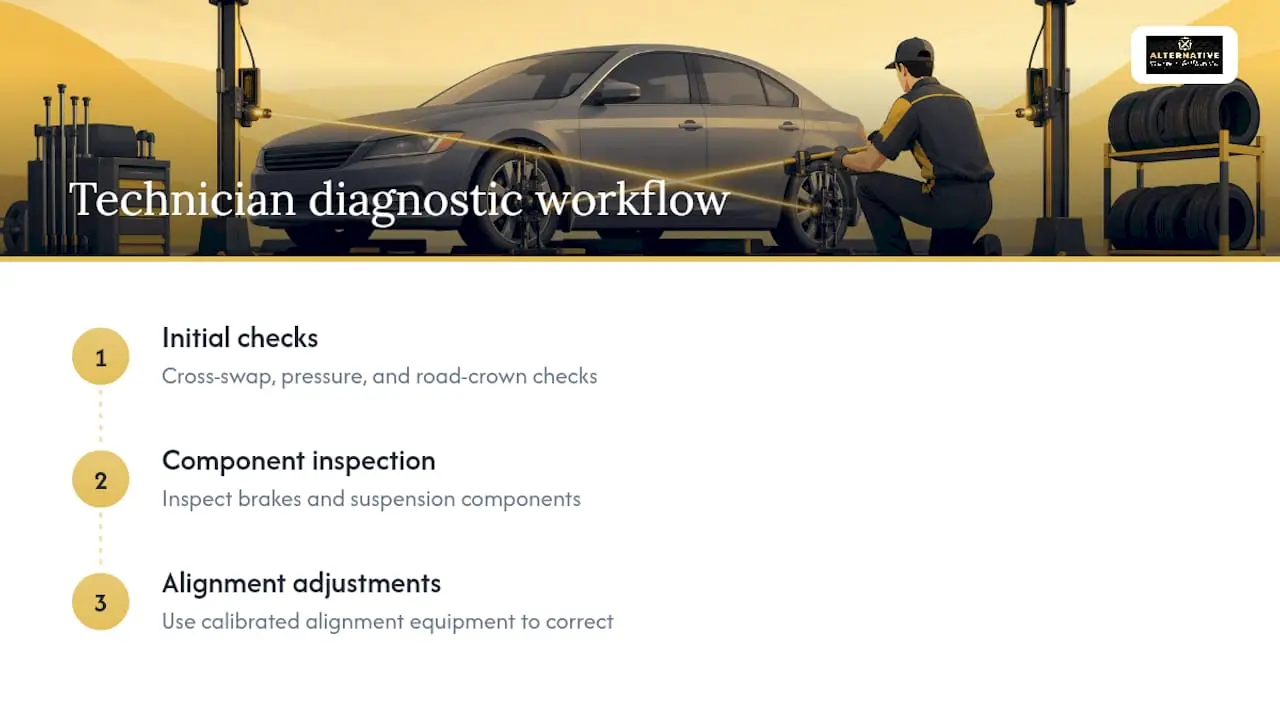
Most pulls hide behind more than one cause, which is why guesswork rarely fixes them for good. Alternative European & Domestic uses calibrated alignment equipment to catch side-to-side camber and caster differences that a visual inspection misses entirely. The technician workflow runs cross-swap, pressure, and road-crown checks first, then inspects brakes and suspension components before alignment adjustments, to avoid unnecessary work.
Book a Diagnostic With Alternative European & Domestic
A right pull that keeps coming back usually means the first fix addressed a symptom, not the source. Alternative European & Domestic runs dealer-level diagnostics on European, domestic, and high-performance vehicles, which means the alignment rack, brake inspection, and suspension checks happen under one roof instead of getting passed between three different shops guessing at the same problem.
When you bring your car in for a pull complaint, expect a full diagnostic inspection covering tire condition and pressure, a wheel alignment check for camber and caster, a brake inspection for caliper drag or a seizing parking brake cable, and a look at tie rods, ball joints, and bushings for play or wear. Bring any notes on when the pull happens (accelerating, braking, or steady driving) and whether it started after a tire rotation, pothole, or prior repair. That detail speeds up the diagnosis and keeps the visit focused. Ready to stop guessing at what’s wrong? Schedule your diagnostic appointment with Alternative European & Domestic, and if the pull is sudden or shows up under braking, call ahead so the team can prioritize getting you in safely.
Sources
For deeper reading, see NHTSA’s OEM diagnostic bulletin on vehicle pull procedures and AutoZone’s troubleshooting guide on tires, alignment, and brakes.
- Why Does My Car Pull to One Side? Tires, Alignment, or Brakes — AutoZone
- Diagnosis of vehicle pull (drift) and/or steering wheel off-center — OEM/NHTSA bulletin
- Car pulls to the right or left—how to diagnose and fix yourself — 1A Auto blog
- Why does my car pull to one side? — Performance Plus Tire
FAQ
How do I fix a car that pulls to the right?
Start by checking cold tire pressure against your door placard, then run the cross-swap test to check for a bad tire. If the pull remains, it likely needs an alignment or brake inspection at a shop.
What does it mean if your car pulls to the right?
It usually means one tire has different pressure, wear, or conicity than the others, or that the wheel alignment or a brake component on that side isn’t matching the opposite wheel. A common alignment target keeps side-to-side camber and caster differences under about half a degree.
What causes a hard, sudden pull to the right?
A hard, sudden pull often points to a blown or rapidly deflating tire, a caliper that’s grabbing hard on one side, or a suspension component that’s failed outright. Stop driving and have the vehicle inspected before continuing.
Why does my car pull to the right when I accelerate?
Pulling only under acceleration, especially hard acceleration, is a classic sign of torque steer in front-wheel-drive vehicles, which can be made worse by worn motor mounts or a failing CV joint. If the pull disappears once you ease off the gas, torque steer is the likely explanation rather than alignment.
Can a car pull right after an alignment?
Yes, a pull after an alignment can mean the adjustment didn’t fully correct a side-to-side camber or caster difference, or that an undiagnosed tire or brake issue was masked during the alignment. Bring the car back so the shop can retest with a cross-swap and brake check before adjusting the alignment again.