
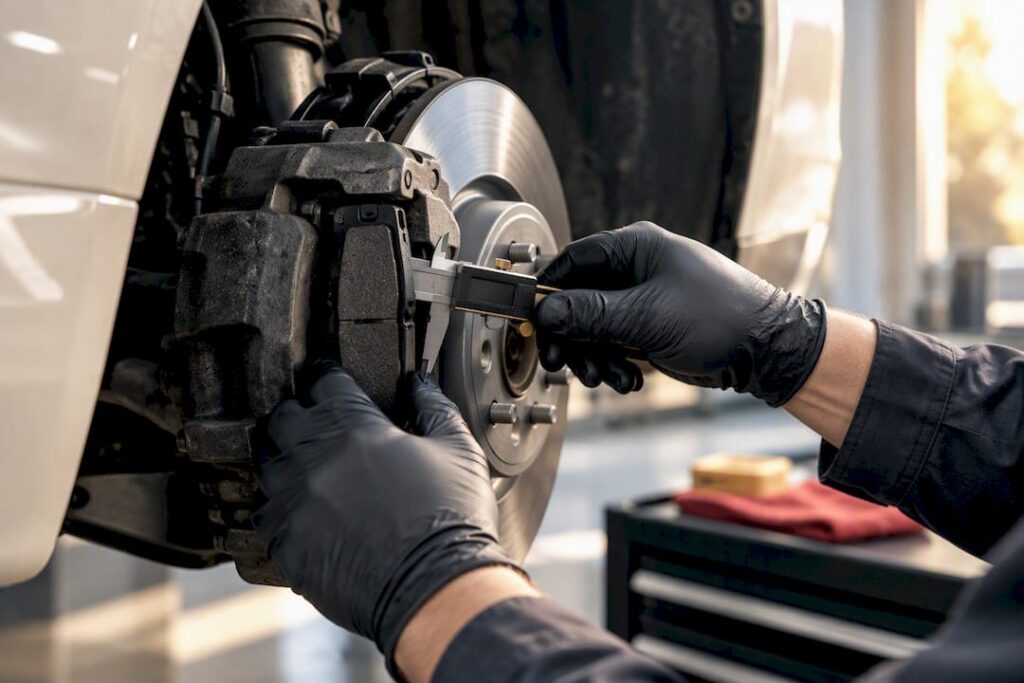
Most vehicles need new brake pads somewhere between 25,000 and 50,000 miles, or roughly every two to five years, though the real answer depends on inspection, not mileage alone. If you hear grinding, feel the pedal sink, or notice a dashboard brake warning, stop relying on estimates and get the car inspected without delay. Your owner’s manual, a measured pad thickness reading, and a shop like Alternative European & Domestic checking both are what actually decide the timeline.
TL;DR:
- Brake pad lifespan varies greatly based on driving habits, with front pads typically lasting 40,000 to 50,000 miles and rear pads often going 20 to 30 percent longer.
- Warning signs such as squealing, grinding noises, or a sinking pedal should prompt immediate inspection to prevent rotor damage and higher repair costs.
- Visual checks should focus on remaining pad material under a quarter inch and look for uneven wear or rotor scoring, with professional tools needed for precise measurement.
- Heavy vehicles, aggressive drivers, and high-performance cars require more frequent and detailed brake inspections due to higher heat and load stresses.
- Regular inspections, especially for European or performance vehicles, should include documented measurements of all components to accurately determine when repairs are necessary.
Table of Contents
- What Is the Typical Brake Pad Replacement Interval?
- What Are the Warning Signs That Brake Pads Need Replacing?
- How Do You Check Brake Pad Wear Yourself?
- Do Pad Material and Driving Style Change the Replacement Schedule?
- When Should You Have a Professional Inspect Your Brakes?
- Why European and Performance Cars Deserve Tighter Brake Inspections
- Get Your Brakes Inspected the Right Way
- Sources
- FAQ
What Is the Typical Brake Pad Replacement Interval?
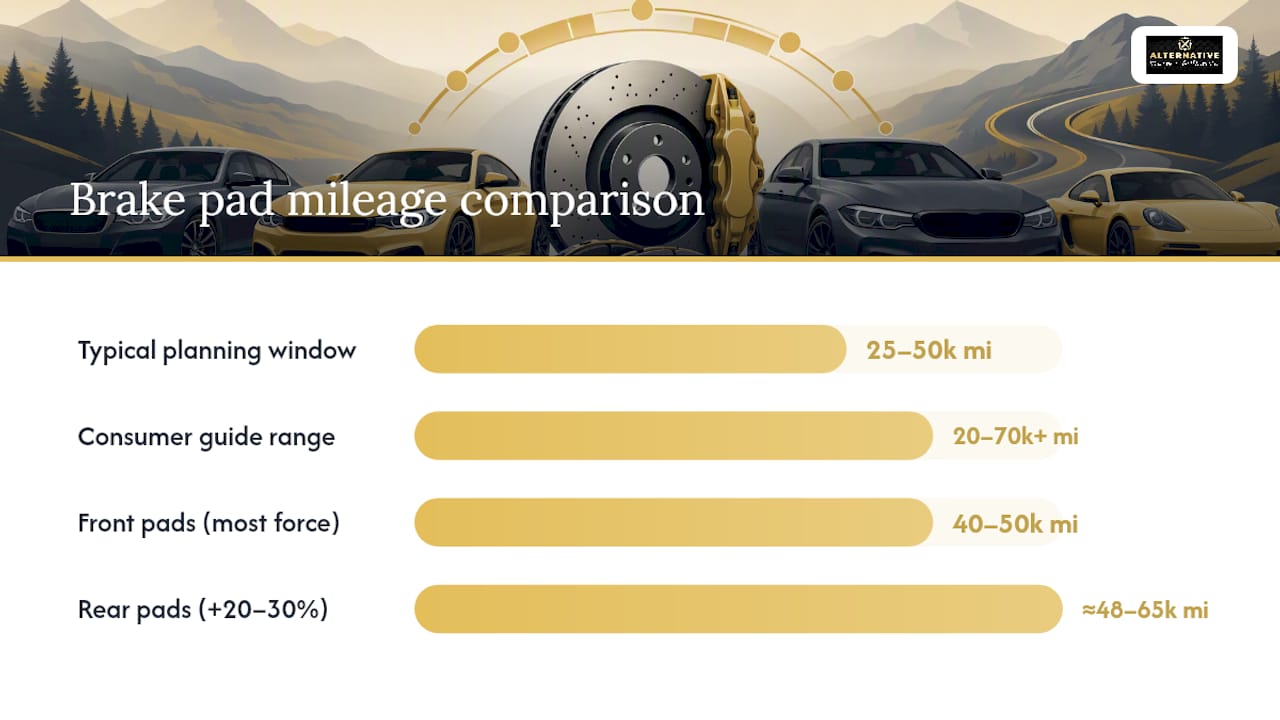
Reputable sources put the planning window at 25,000 to 50,000 miles for many vehicles, while other consumer guides stretch that range to 20,000 up through 70,000 miles or more depending on the car and the driver. Both numbers are correct. They’re just describing different driving conditions.
Front pads almost always wear out first. When you brake, weight shifts forward and the front brakes handle a disproportionate share of the stopping force, so front pads typically last around 40,000 to 50,000 miles while rear pads often go 20 to 30 percent longer. That’s why replacing all four pads on the same schedule usually wastes good material on the rear axle.
Several factors can reduce pad lifespan significantly, including frequent stop-and-go city driving, towing or hauling heavy loads, hilly or mountainous terrain, aggressive braking styles, and driving heavier vehicles like SUVs or trucks.
Because mileage alone can’t account for all of that, plan a visual brake inspection every time you rotate your tires, or every 10,000 to 15,000 miles at minimum.
What Are the Warning Signs That Brake Pads Need Replacing?
Pads rarely fail without warning, though early signs may be missed by drivers until more serious damage occurs.
- A high-pitched squeal. Many pads include a metal wear indicator that chirps against the rotor once the friction material gets thin. Once you hear it, plan to get pads checked within a couple of weeks, not a couple of months.
- Grinding metal-on-metal noise. This means the pad’s friction material is gone and metal backing is scraping the rotor. Treat this as urgent and stop driving on it any longer than necessary.
- A soft or sinking pedal. This can point to worn pads, air in the lines, or a fluid problem, and any of those deserve prompt attention.
- Vibration or pulling to one side under braking. Often a sign of uneven wear or a warped rotor working against the pad.
- A dashboard brake or ABS light. Not every car has a pad-wear sensor, so a warning light isn’t the only signal worth trusting, but when one does appear, don’t dismiss it.
Statistic to know: dealer-level pad replacement commonly runs around $300 per axle as a rough planning figure, which is worth keeping in mind before a small squeal turns into rotor damage that costs more to fix.
How Do You Check Brake Pad Wear Yourself?
A basic visual check through the wheel spokes tells you a lot. Look at the pad pressed against the rotor. If the remaining friction material looks thinner than roughly a quarter inch, it’s time for a closer measurement.
The actual service limit most shops use is when pad thickness approaches a few millimeters. Once you’re near that number, the pad needs to come off before it wears down to bare metal. Beyond thickness, check for:
- Uneven wear from one pad edge to the other, which can signal a sticking caliper
- Scoring or grooves on the rotor face, visible as fine circular lines
- Vibration or a pulsing pedal, which often points to rotor warping or runout rather than the pad itself
- Whether the rotor needs machining or full replacement, a call best left to a shop with the right measuring tools
If you can’t get a clean look, or you’re not confident reading the measurement, that’s exactly the situation a professional inspection is built for.
Pro Tip: Never rely on sound alone to judge wear on all four corners. Rear pads wear slower and quieter, so a clean-sounding rear brake can still be close to its limit while you’re focused on a squealing front pad.
Do Pad Material and Driving Style Change the Replacement Schedule?
Pad material sets a baseline, but how and where you drive adjusts it substantially.
- Organic pads are softer and quieter but wear fastest, often landing at the lower end of the mileage range.
- Semi-metallic pads, common on trucks and performance vehicles, hold up longer under heat and heavy use but generate more dust and noise.
- Ceramic pads tend to last longer and run quieter, though they can lose some effectiveness under sustained, extreme heat like repeated hard track use.
Heavier vehicles, towing, and performance braking all push wear rates higher regardless of pad type. Frequent short trips that never let brakes reach normal operating temperature, steep hills, and road salt exposure add wear too. New pads also need a proper bedding-in period, and uneven or rushed bedding can cause early, uneven wear that shows up as pulsation months later. Skip the guesswork and lean on your owner’s manual alongside a measured inspection rather than a generic rule of thumb.
When Should You Have a Professional Inspect Your Brakes?
A thorough brake inspection covers more ground than a glance through the wheel. A qualified technician checks pad thickness on all four corners, rotor thickness and runout, caliper slide pins and piston movement, brake fluid condition, and any hydraulic leaks, while also pulling ABS and stability control codes if the dashboard has flagged anything.
That documentation matters. Recording exact measurements at each visit gives you a real record for warranty conversations and helps decide whether a rotor needs machining or full replacement instead of guessing. Rotors typically outlast pads, often reaching 50,000 to 100,000 miles, but scoring or warping can force an earlier decision.
Some findings mean stop now:
- Grinding noise or a pedal that sinks toward the floor
- Sudden loss of stopping power or a burning smell after braking
Others fit into a scheduled window during your next maintenance visit. Some shops use dealer-level diagnostic tools and build customized maintenance plans around what your car’s brakes actually need rather than a one-size-fits-all mileage chart.
Why European and Performance Cars Deserve Tighter Brake Inspections
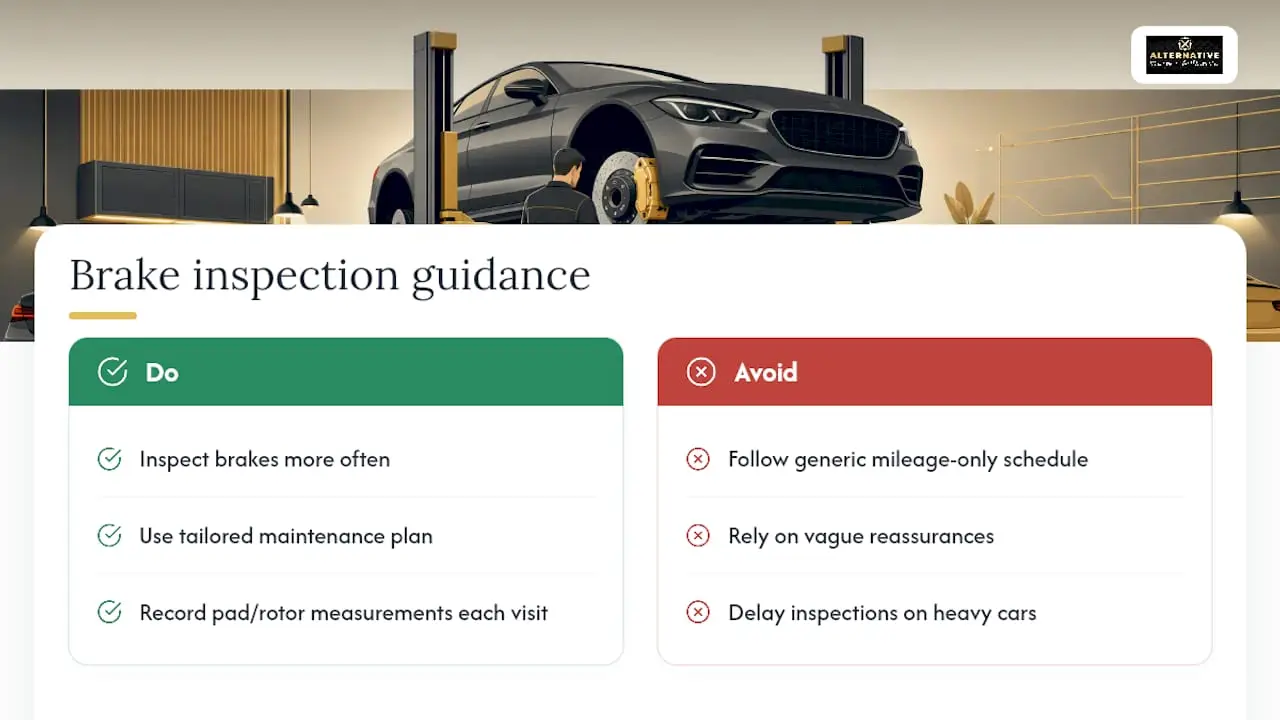
High-performance and European vehicles put more heat and load through their brakes than the average commuter car, especially with larger rotors, heavier curb weights, or spirited driving. That’s why we lean toward more frequent inspections on these platforms rather than stretching intervals to the outer edge of what’s typical.
A tailored maintenance plan, built around your specific driving pattern instead of a generic mileage chart, extends pad and rotor life more reliably than guesswork. Documented measurements at every visit, not vague reassurances, are what actually build trust between a shop and a driver.
— Alternative European & Domestic
Get Your Brakes Inspected the Right Way
A thorough brake check includes detailed diagnostics on European, domestic, and high-performance vehicles, backed by documented measurements instead of guesswork.
When you bring your car in for a brake evaluation, you get actual pad thickness readings on all four corners, a rotor condition assessment, a look at caliper and hydraulic function, and a transparent estimate that spells out your options before any work starts. No pressure to replace parts that still have life left, and no vague “you need brakes” without the numbers to back it up. If your pads are approaching their service limit or you’ve noticed any of the warning signs above, schedule a visit through our brake pad replacement and service page and get a clear answer instead of a guess. Pairing that visit with a broader maintenance service checkup is also a smart way to catch related wear before it becomes a bigger repair.
Sources
- Kelley Blue Book — Brake pad replacement
- DirectBrakes — How often replace brakes
- Motor1 — How long do brake pads last?
FAQ
What Is the 30/30/30 Rule for Brakes?
There’s no widely recognized “30/30/30 rule” backed by brake manufacturers or service standards. If you’ve seen it referenced, treat it as informal shorthand rather than an established guideline, and rely instead on measured pad thickness and the mileage ranges covered above.
How Much Should Four Brake Pads Cost?
Cost varies by vehicle and parts chosen, but dealer-level service often runs around $300 per axle, which would put a full four-wheel job around double that as a rough planning figure. Alternative European & Domestic provides a transparent, itemized estimate before any brake work begins.
Can Brake Pads Last Three Years?
Yes, three years is well within the normal range for many drivers, especially with lighter-duty highway use and quality pad material. The safer marker is measured pad thickness and symptom checks rather than the calendar alone.
Can Rotors Last 100,000 Miles?
Rotors often outlast pads and can reach 50,000 to 100,000 miles under normal conditions, but scoring, warping, or heat damage can force earlier replacement regardless of mileage. A professional inspection is the only reliable way to know which situation applies to your car.