
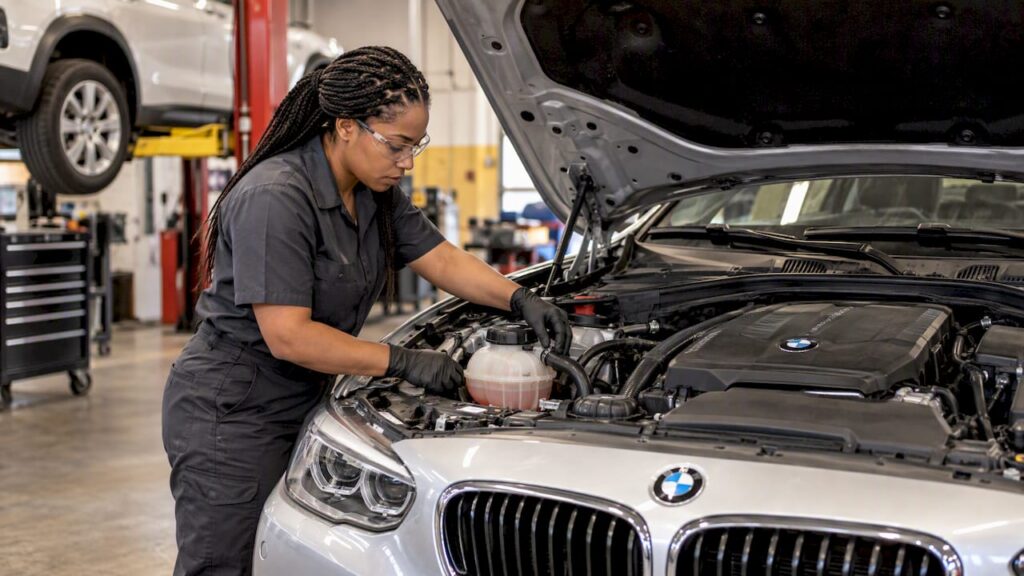
Hot weather car maintenance comes down to six systems: the cooling system, battery, tires, fluids, A/C and brakes. Heat stresses all of them at once, and Dallas summers give them very little rest. Have each one inspected before the hottest months, keep up with the manufacturer’s service schedule, and treat early symptoms such as a rising temperature gauge, slow cranking or weak A/C as reasons to book a diagnostic visit, not to wait.
This guide covers what heat does to each system, a checklist you can use before summer or a road trip, the warning signs that mean you should stop driving, and what a professional inspection involves for European, domestic and high-performance cars.
TL;DR
- Heat shortens the life of batteries, hoses, belts and fluids. Inspect the cooling system, battery, tires, fluids, A/C and brakes before summer, not after a breakdown.
- Check tire pressure cold, against the door placard, not the number on the sidewall.
- Follow the maker’s schedule for oil, filters and coolant service. Hard use in stop-and-go Dallas traffic is a reason to stay on schedule, not stretch it.
- A temperature gauge climbing into the red, steam, or a flashing battery or temperature warning means pull over safely and shut the engine off. Do not keep driving.
- A diagnostic inspection finds failing parts before they strand you. We can do it at Alternative European & Domestic.
Table of Contents
- What Heat Does to Your Car
- The Cooling System: Your First Check
- How to Keep Your Car From Overheating
- Battery: Heat Does the Damage, Cold Reveals It
- Tires in Hot Weather
- Fluids: Oil, Transmission, Differential and Brake
- Air Conditioning
- Brakes, Belts, Lights and Wipers
- Hot Weather Checklist
- When Not to Drive and When to Tow
- What a Professional Heat-Season Inspection Includes
- FAQ
- Sources
What Heat Does to Your Car
An engine already runs hot. Summer air, pavement that radiates heat, and idling in traffic on Central Expressway or the Dallas North Tollway reduce the cooling system’s margin. Engine oil, transmission fluid and coolant all degrade faster in extreme heat than the manufacturer’s average conditions assume, which is why the California Bureau of Automotive Repair lists oil, other fluids, the radiator, hoses, battery, brakes, tires and A/C among its summer checks.
Here is how it plays out system by system:
| System | What heat does | Early symptom |
|---|---|---|
| Cooling system | Coolant ages, hoses soften or crack, the water pump and thermostat work harder | Gauge creeping up in traffic, sweet smell, low coolant |
| Battery | Internal corrosion and fluid loss build up, then show up as a failure | Slow cranking, dim lights, warning light |
| Tires | Air expands, pressure rises, worn tires overheat | Uneven wear, pressure that varies day to day |
| Engine and transmission fluids | Oil thins and oxidizes, transmission fluid loses protection | Dark fluid, rough or delayed shifts |
| A/C | System runs at full load, small leaks become big ones | Air that is cool but not cold, worse at idle |
| Brakes | Brake fluid and pads take more heat in stop-and-go driving | Soft pedal, fade, noise |
The Cooling System: Your First Check
The cooling system is the one to inspect first, because overheating can do the most expensive damage, including warped cylinder heads and failed head gaskets. The BAR summer checklist includes the radiator, hoses and scheduled cooling-system service at the interval your manufacturer specifies.
A proper inspection covers:
- Coolant level and condition. Low coolant means a leak somewhere. Coolant that is discolored or contaminated has lost protection.
- Hoses and clamps. Look for swelling, soft spots, cracks and residue at connections.
- Pressure test. A cooling system pressure test reveals leaks that do not show up as puddles, such as a weeping water pump or a failing radiator seam.
- Radiator, fans and cap. A fan that does not engage at idle or a weak cap can cause overheating in traffic while the car seems fine on the highway.
- Thermostat and water pump. Many European cars use plastic housings and electric water pumps that age with heat cycles.
Hoses fail from the inside
A hose that looks fine can still be near failure. Consumer Reports notes that electro-chemical degradation can damage cooling hoses from the inside, and Gates engineers quoted there say it is hard to spot visually, which is why replacing aging hoses with ECD-resistant types is recommended. If your car has high mileage or the hoses are original, ask about replacement as part of a cooling service rather than waiting for a split on the freeway.
European cars and coolant leaks
Many European models rely on plastic coolant fittings, expansion tanks and thermostat housings. They hold up well when new and become brittle with years of heat cycling. If you drive a BMW, our guide on BMW coolant leaks and the 60,000 to 80,000 mile refresh explains what we check and why. Other brands have their own weak points, so model-specific advice should come from a diagnostic on your car, not a generic list.
How to Keep Your Car From Overheating
Prevention is mostly maintenance, plus a few habits:
- Service the cooling system on schedule. Coolant protects against corrosion as well as heat, and it wears out.
- Check coolant only when the engine is cold. Opening a hot cooling system can cause serious burns from pressurized steam and fluid.
- Watch the gauge in traffic. A car that runs normally at 70 mph but climbs at idle often points to a fan, a radiator airflow problem or a low coolant level.
- Fix small leaks early. Low coolant is a symptom. Topping off without finding the leak only delays the failure.
- Do not ignore the A/C. A weak A/C condenser fan or a clogged radiator stack affects both cooling and cabin temperature.
- Use the coolant type your manufacturer specifies. Mixing types can reduce protection, and European cars are often particular about it.
If the car does overheat
If the temperature gauge enters the red zone, or you see steam or a temperature warning, do not keep driving. Turn off the A/C, find a safe place to stop, and shut the engine off. Wait for it to cool before anyone touches the hood area or the coolant cap. Do not open the cap on a hot system. If the coolant is low or you see leaking, have the car towed. A few more miles can turn a hose repair into an engine repair.
Battery: Heat Does the Damage, Cold Reveals It
Most drivers blame winter for dead batteries. Consumer Reports explains that hot weather affects your car battery in ways that shorten its life, and its technician Paolo Fu stresses that proactive battery servicing matters as much as any routine maintenance if you want to avoid being stranded. In Texas the practical takeaway is to test the battery before summer and again before any long trip.
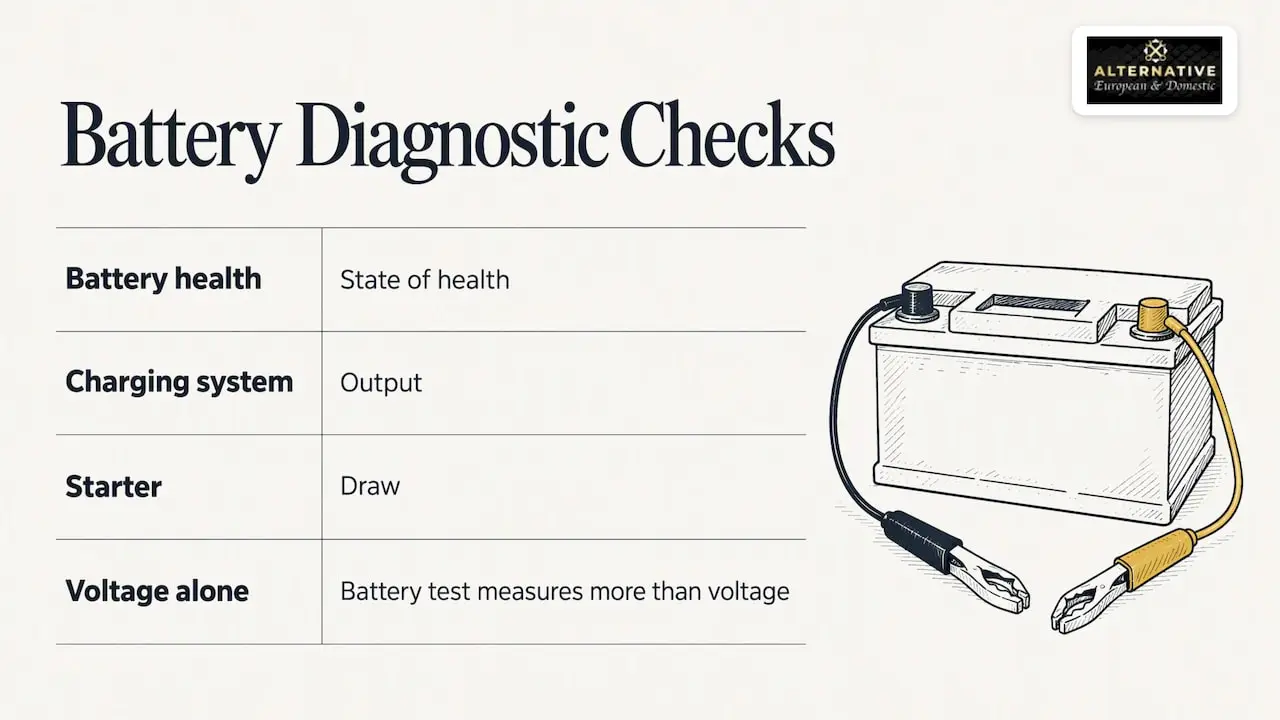
A battery test measures more than voltage. A shop should check the battery’s state of health, the charging system output and the starter draw. On newer European and performance cars, a weak battery can also cause confusing symptoms: warning lights, failed start-stop operation, infotainment resets and transmission or driver-assist faults. The battery often needs to be registered or coded to the car after replacement.
For general guidance on when testing makes sense as a battery ages, this battery testing timeline is a helpful reference. If a warning light is already on, read our battery warning light guide. If you suspect an electrical fault that a simple test does not explain, advanced electrical diagnostics are the right next step, since a failing alternator or a parasitic draw can look like a bad battery.
Pro tip: Clean, tight terminals matter, but do not jump a swollen or leaking battery, and do not work around one with open flames or sparks. Have a technician handle it.

Tires in Hot Weather
Heat raises tire pressure and puts worn or underinflated tires at higher risk. NHTSA advises checking pressure when the tires are cold, meaning the car has sat for at least three hours, and comparing it with the pressure on the vehicle placard or in the owner’s manual, not the maximum printed on the sidewall. NHTSA also recommends inspecting tires monthly and before long trips, and checking tread with the penny test.
A few practical points:
- Check the spare, too, if your car has one.
- Look for cracks in the sidewall, bulges, and uneven wear. Uneven wear can point to alignment or suspension issues.
- Do not release air from hot tires to reach the placard number. They will be underinflated once they cool.
- Consumer Reports experts say the benefits of nitrogen-filled tires are largely theoretical compared with keeping proper pressure using ordinary air, so regular checks matter more than the fill gas.
Performance cars with staggered setups or summer tires need extra care: tire compound, load rating and pressure specs are model-specific, so use the manufacturer’s numbers. If you notice vibration, pulling, or uneven wear, our team can check the tires, alignment and suspension together.
Fluids: Oil, Transmission, Differential and Brake
Heat thins and oxidizes oil. The BAR guidance tells drivers to follow the manufacturer’s recommended schedule for oil changes, air-filter changes and cooling-system service. If your driving is mostly short trips, towing, track days or heavy stop-and-go, check whether your owner’s manual lists a severe-service interval.
What to ask about before summer:
- Engine oil and filter. Use the viscosity and approval specification your car’s maker lists. Many European engines require specific oil standards, not just a viscosity grade.
- Transmission fluid. Automatics, dual-clutch units and the mechatronic units in some European cars run hotter in summer traffic. Some are labeled lifetime fill, but that does not mean the fluid never ages.
- Differential and transfer case fluid. These are easy to forget. See our differential fluid interval guide for how we think about timing.
- Brake fluid. It absorbs moisture over time, which lowers its boiling point. Spongy pedal feel after hard braking is a reason to have it tested.
- Power steering and washer fluid, where equipped.
If you see fluid under the car, identify the color and location and tell your technician. Oil is typically brown or black, coolant is often bright green, pink or blue, and brake fluid is clear to amber. A brake fluid leak is a reason not to drive the car.
Air Conditioning
In Dallas, A/C is a comfort feature and a safety one: a hot cabin tires drivers and can be dangerous for children, pets and older passengers. The BAR summer list includes A/C cooling capacity among its checks.
Signs your A/C needs attention:
- Air is cool but not cold, especially at idle or in traffic. Our guide on A/C that runs warm at idle explains the tests we run.
- The compressor cycles on and off rapidly.
- Musty smell, weak airflow or noise from the blower.
- Water or oily residue near A/C lines.
A shop should measure system pressures, check for leaks, test fan operation and inspect the condenser, not just add refrigerant. Topping off a leaking system gives short-term relief at best. If you want the full picture, read why your car’s A/C isn’t cold and what to do next.
Brakes, Belts, Lights and Wipers
Brakes take heavy heat loads in stop-and-go traffic and on mountain or highway descents. Pads, rotors and fluid should be inspected before summer travel. Our brake service covers pads, rotors and fluid, and the brake pad replacement interval guide explains timing on European luxury and performance cars. Signs that a car should not be driven include a pedal that sinks to the floor, a brake warning light with a soft pedal, or grinding metal on metal.
The BAR checklist also covers belts and hoses, lights and wipers. Serpentine belts with cracks or glazing can fail and take the water pump and alternator drive with them, which leads quickly to overheating and a dead battery. Check headlights, brake lights and turn signals, and replace wipers that streak: sun bakes the rubber, and summer storms in North Texas can arrive suddenly.
Hot Weather Checklist
Use this list before summer begins, and again before a long trip:
- Cooling system inspection and pressure test; hose and belt condition.
- Battery and charging system test.
- Tire pressure (cold), tread, sidewalls and spare.
- Oil and filter on schedule; transmission, differential and brake fluid condition.
- A/C performance and leak check.
- Brake pad, rotor and fluid inspection.
- Cabin and engine air filters.
- Wipers and exterior lights.
- Emergency kit.
For that last item, NHTSA suggests a kit with water, nonperishable food, jumper cables, a flashlight, first aid supplies and basic tools, plus a spare tire and jack kit. In Texas heat, extra drinking water is the item that matters most if you are waiting for a tow.
Also on the topic of preparation, this summer car checks guide covers many of the same checks for hot-climate drivers, along with ways to protect the interior and paint from sun exposure.
When Not to Drive and When to Tow
Some symptoms can be monitored for a day or two. These cannot:
- Temperature gauge in the red, steam, or a coolant warning. Stop, shut the engine off, and tow if coolant is low or leaking.
- Brake pedal that goes soft or to the floor, or a red brake warning. Do not drive. Tow.
- Red battery or charging warning with dimming lights. The car may stall. Drive only to a safe stop, not across town.
- Burning smell, smoke, or fluid pouring from the car. Stop, turn off the engine and get away from the vehicle if you see smoke.
- Tire bulge, exposed cord or rapid air loss. Stop and install the spare or call roadside help. Do not continue on a damaged tire.
- Transmission slipping, harsh shifts or limp mode at highway speed. Drive gently to the shop at most if it is safe, or tow.
An illuminated check engine light is not by itself a stop-driving signal, but a flashing one is: it signals an active misfire that can damage the catalytic converter. Reading a code is only a starting point. A diagnostic tests the system the code points to, which is why professional diagnostics matter, especially on modern European and performance cars where one fault can trigger several unrelated-looking codes.
What a Professional Heat-Season Inspection Includes
At Alternative European & Domestic, our ASE-certified technicians use dealer-level diagnostic equipment to inspect the cooling system, battery and charging system, brakes, fluids, tires and A/C on European, domestic and high-performance vehicles. We explain what we find, what needs attention now and what can wait, so you can make the decision. If you want to know how to evaluate any shop’s recommendations, our questions to ask a mechanic guide is a good start.
We can also build a customized maintenance plan around how you drive, whether that is commuting from Oak Lawn, parking in an Uptown garage, or highway miles across the Metroplex. Qualifying repairs may be covered by our 24-month/24,000-mile warranty, subject to applicable terms.
See our full list of maintenance, A/C, battery and electrical services, or go straight to scheduling.
If you drive in Dallas, schedule a pre-summer inspection or diagnostic evaluation with us. Book an appointment and tell us about any symptoms you have noticed.
FAQ
What is the most important hot weather car maintenance task?
Start with the cooling system, since overheating causes the most costly damage. Then test the battery, check tire pressure when cold, and have the A/C and fluids inspected. Following the manufacturer’s service schedule covers most of the rest.
How hot is too hot for a car?
There is no single outdoor temperature at which a car fails. What matters is the engine’s operating temperature on the gauge and the condition of the cooling system. If the gauge climbs toward the red or you see a warning, stop safely and shut the engine off. A car with a healthy cooling system handles Texas summers, and a weak one can overheat on a mild day.
How often should I check tire pressure in summer?
NHTSA recommends checking tires monthly and before long trips. Check them cold, using the pressure on the driver’s door placard or in the owner’s manual, not the sidewall maximum.
Does my battery need testing before summer?
Yes, especially if it is a few years old or the car has been slow to start. Heat damages batteries internally, and the failure often shows up later. A test of battery health and charging output takes little time and can prevent a roadside breakdown.
Why is my A/C weak only when I’m stopped?
At idle, airflow over the condenser depends on the cooling fans, so a failing fan, a dirty condenser or low refrigerant can show up there first. It deserves a proper diagnosis, not just a refrigerant top-off, because the cause decides the repair.
Sources
- Summer Car Care Tips, California Bureau of Automotive Repair
- Summer Driving & Road Trip Tips, NHTSA
- How to Inspect Car Belts and Hoses, Consumer Reports
- How Hot Weather Affects Your Car Battery, Consumer Reports
- Tire Safety Checklist, Consumer Reports
- Car battery testing timeline
- Summer car checks for hot-climate drivers