
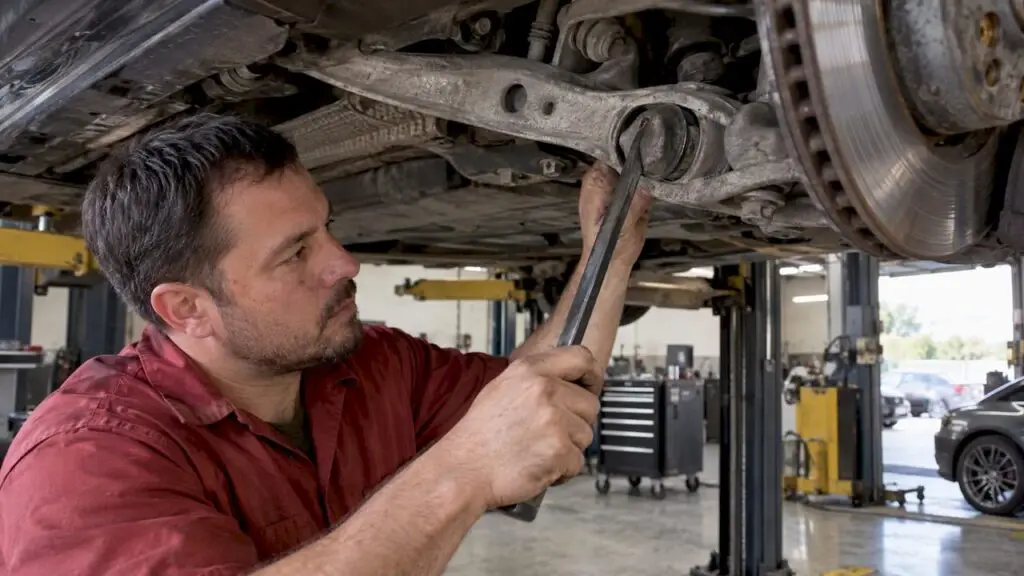
The most reliable signs of a worn control arm bushing are squeaking or creaking over bumps, a knocking or clunking noise, and steering that wanders or pulls to one side. A squeak alone usually means you can drive to a shop safely, but clunking, sudden pulling, or a loose steering feel call for prompt attention. A test drive, bounce test, and alignment check confirm the diagnosis.
TL;DR:
- Squeaking over bumps often results from rubber drying or cracking, especially after driving in wet conditions, and usually permits safe driving until it worsens.
- Deep knocking sounds and sudden steering pull indicate advanced wear of control arm bushings and require immediate inspection or towing.
- A proper diagnosis includes test drive, bounce test, pry checks, and alignment, as bushing wear can mimic other suspension issues like ball joint failure or tire wear.
- Worn bushings can cause uneven tire wear, reduced steering precision, and misaligned camber or toe angles, which can accelerate component damage if untreated.
- Regular visual inspections, avoiding oil contamination, and immediate checks after potholes or impacts help extend bushing lifespan and prevent costly repairs.
Table of Contents
- What each control arm bushing symptom actually means
- How technicians diagnose control arm bushing problems
- Telling bushing wear apart from similar suspension problems
- Is it safe to keep driving with these symptoms?
- Why control arm bushings fail and how symptoms progress
- Simple checks and habits that extend bushing life
- What to expect during a professional diagnostic and repair visit
- Why catching bushing wear early matters
- Get your suspension checked by a professional team
- FAQ
- Sources
What each control arm bushing symptom actually means
Control arm bushings are rubber or polyurethane sleeves that let the arm pivot while absorbing road vibration. When they wear, the symptoms tend to show up in a predictable order, starting with noise and ending with handling changes you can feel through the wheel.
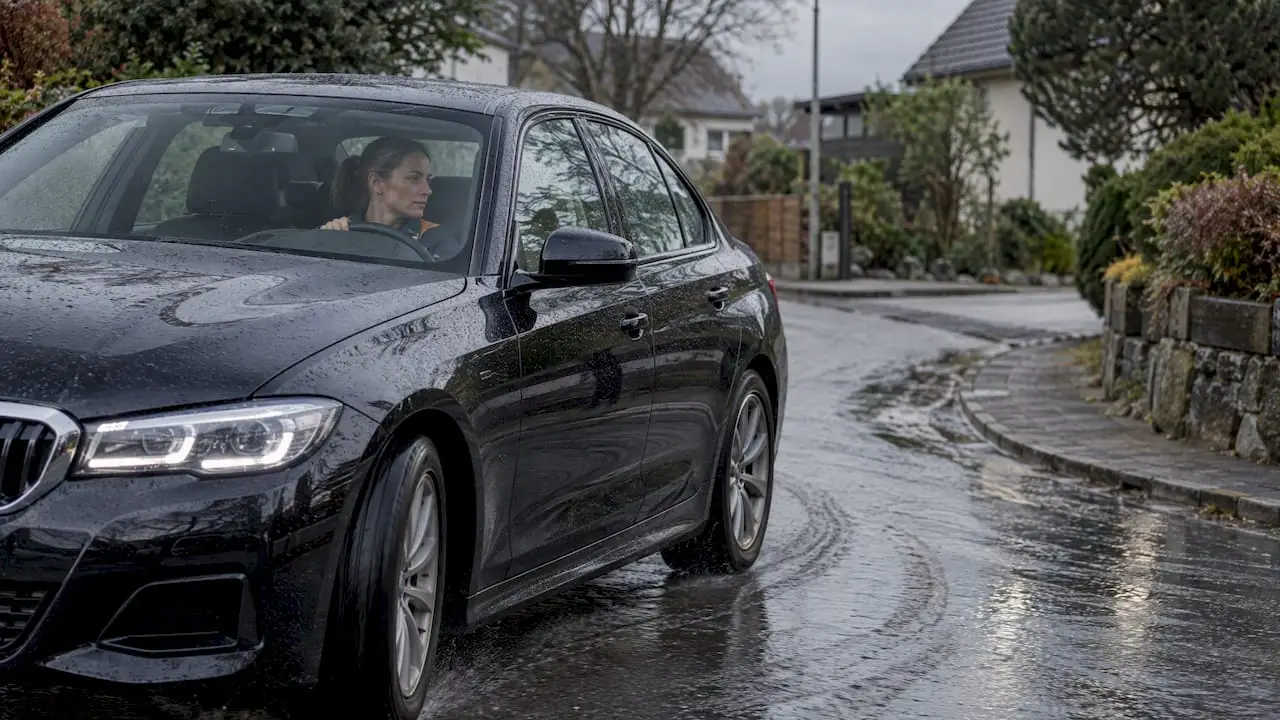
- Squeaking or creaking over bumps: this often comes from rubber rubbing against metal as the bushing dries out or cracks, and some OEM service bulletins specifically describe a front lower control arm creak that appears between roughly 12 and 25 mph after the car has been driven in wet conditions or just washed.
- Clunking or knocking: a deeper, metal-on-metal sound that usually means the bushing has deteriorated enough that the arm is shifting inside its mount, a sign of more advanced wear than a simple squeak.
- Steering pull or wandering: excessive play in the bushing lets the control arm move more than it should, which changes wheel geometry and makes the car drift or respond slowly when you try to correct it.
- Uneven or camber-style tire wear: as the bushing loses its grip on the arm, camber and toe angles drift out of spec, wearing one edge of the tire faster than the rest.
- Vibration or shimmy through the steering wheel: a sign the wear has progressed enough that road forces are transmitting more directly into the chassis instead of being absorbed.
According to RepairPal’s symptom and diagnostic guidance, squeaking over bumps, knocking when severely worn, uneven tire wear, and pulling or wandering are the symptoms technicians look for first, and they diagnose them with a test drive paired with a bounce test. Clunking noises and sudden, severe pulling deserve the most urgency since they point to advanced play rather than early-stage drying or cracking.
How technicians diagnose control arm bushing problems
A proper diagnosis combines a few checks, not just a visual glance, because bushing wear can mimic other suspension problems.
- Test drive: a technician reproduces the noise or handling complaint at the speeds and road conditions you described, since some creaks only appear under specific conditions, like the wet-pavement creak noted in certain OEM bulletins.
- Bounce test and visual inspection: pressing down on the corner of the car and watching for cracked rubber, oil saturation, or torn bushing material gives a quick read on condition.
- Pry or lever checks: using a pry bar to check for play between the bushing and the arm reveals movement beyond normal tolerances.
- Inspection of nearby parts: ball joints, tie rods, and shocks often wear around the same time and can produce similar symptoms, so a thorough check rules them in or out.
- Four-wheel alignment: this confirms whether camber or toe has shifted out of spec and is required after any control arm or bushing replacement, a step RepairPal and most repair guides recommend consistently.
Sometimes a technician replaces the entire control arm instead of just the bushing, usually because the bushing is pressed in too tightly to service alone or because nearby components show wear that makes a full assembly the more reliable fix.
Pro Tip: Bring up the exact speed and road condition where you hear the noise. Technicians can often recreate wet-condition creaks or low-speed clunks only when the test drive matches your description.
Telling bushing wear apart from similar suspension problems
Several suspension and drivetrain issues share symptoms with worn control arm bushings, so narrowing down the source matters before any repair.
- Clunking vs. ball joint failure: a ball joint clunk typically originates lower in the suspension and intensifies during steering input or turns, while a bushing clunk is more often tied to vertical movement over bumps.
- Vibration on acceleration vs. CV joint: vibration that worsens with speed or under acceleration load points more toward a CV joint than a bushing, since bushing-related shimmy tends to show up at a steadier range of speeds.
- Steering play from tie rods vs. control arm bushings: tie rod wear usually produces looseness felt directly at the steering wheel during small inputs, while bushing play shows up more as a delayed or vague response as the arm shifts.
- Shocks and struts: worn shocks can cause a bouncy, floaty ride that overlaps with bushing symptoms, and comparing shock and strut wear patterns can help separate the two before assuming a bushing is at fault.
When symptoms overlap like this, a trained inspection is the only way to confirm which component, or combination of components, is actually responsible.
Is it safe to keep driving with these symptoms?
Not every symptom carries the same urgency, so treating them the same way can mean either overreacting or waiting too long.
- A squeak alone is usually a nuisance rather than a safety issue, and it is generally fine to drive to a shop at your convenience.
- Clunking, a sudden pull to one side, or a loose steering feel are signs of advanced wear and warrant getting the car looked at soon, and a tow is worth considering if the pull feels severe or unpredictable.
- Left unaddressed, worn bushings tend to knock the alignment out of spec, accelerate uneven tire wear, and gradually reduce steering precision, all of which compound the longer the wear continues.
Worn bushings and wheel alignment are closely linked, since a shift in camber or toe caused by bushing play is one of the more common reasons alignment drifts out of spec between service intervals. Treat squeaks as a reason to schedule service soon, and treat clunking or severe pulling as a reason to get the car inspected before driving it any further than necessary.
Why control arm bushings fail and how symptoms progress
Control arm bushings are built from rubber or polyurethane, materials engineers describe as nonlinear and viscoelastic, meaning their stiffness changes depending on load and speed rather than staying constant. Research on vibration isolators modeled with similar bushing designs shows that as these components deteriorate, their changing stiffness can measurably affect ride quality, steering response, and how well the tires hold the road, long before a bushing fails outright.
Bushings isolate vibration transmitted from the suspension to the cabin, and their nonlinear, viscoelastic behavior means that even partial deterioration changes how forces move through the vehicle, not just how much noise you hear.
Penn State research on vibration isolators
Heat, oil or grease contamination, age, and repeated load cycles all accelerate this breakdown. Often the first sign isn’t noise at all. It is a subtle change in how the car tracks on the highway, with the squeak or clunk showing up only once wear has advanced further.
Simple checks and habits that extend bushing life
A few habits go a long way toward catching bushing wear early and keeping it from spreading to other components.
- Visually inspect bushings during routine oil changes or tire rotations, looking for cracking, splitting, or a shiny, oil-soaked appearance.
- Keep oil and grease away from bushing areas, since petroleum products break down rubber compounds faster than normal road wear would.
- Schedule a professional inspection if you notice a new noise, if the car is due for a major mileage interval, or after hitting a significant pothole or curb.
- Request an alignment check any time suspension work is performed, since bushing replacement nearly always shifts camber or toe slightly.
Pro Tip: If you rotate your own tires, take an extra minute to look at the bushings while the wheel is off. Catching a cracked bushing early is far easier than diagnosing a mystery clunk later.
What to expect during a professional diagnostic and repair visit
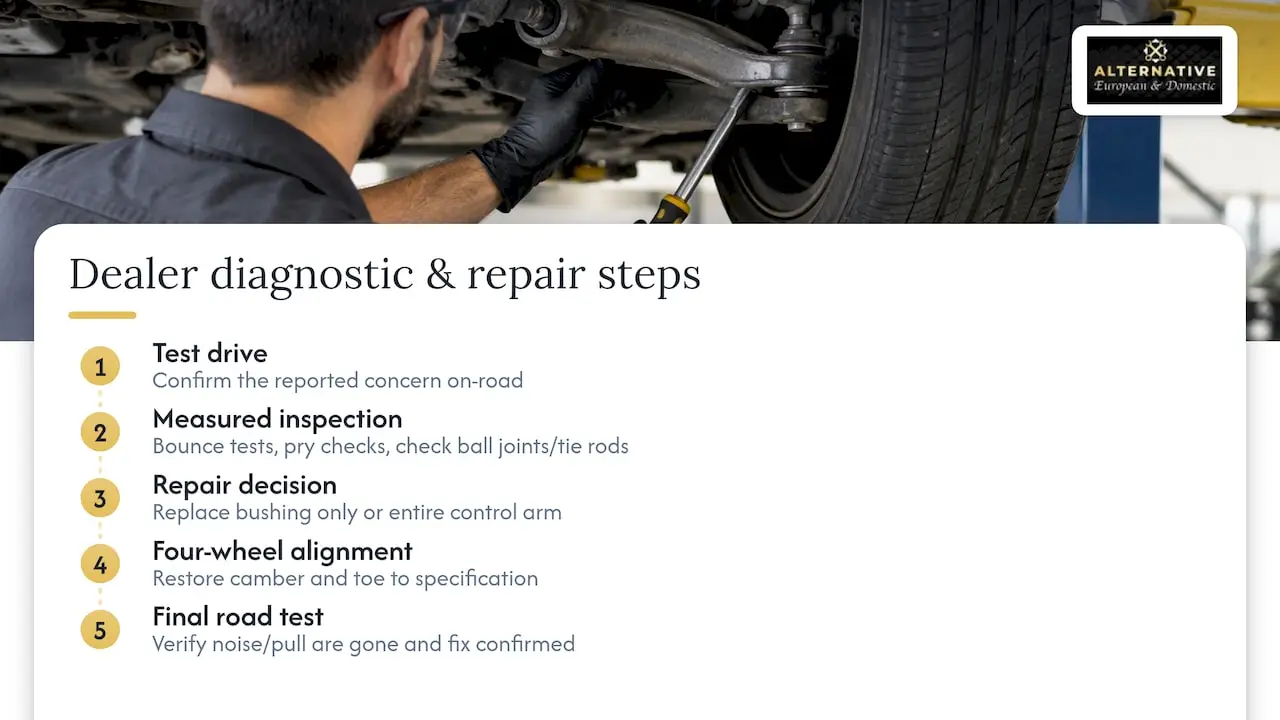
A dealer-level diagnostic starts with a test drive to confirm your concern, followed by a measured inspection using bounce tests, pry checks, and a look at nearby ball joints and tie rods. From there, a technician decides whether replacing just the bushing makes sense or whether the whole control arm is the more reliable option, a call that often comes down to access and the condition of surrounding parts.
Once the repair is done, a four-wheel alignment and a road test confirm that camber and toe are back in spec and that the noise or pull is gone. That combination, test drive, measured inspection, and post-repair alignment, is what separates a guess from a verified fix.
Why catching bushing wear early matters
A bushing that gets replaced early is a simple job. One that gets ignored can wear down ball joints, throw off alignment, and chew through tires faster than they should last. We use thorough diagnostics and quality parts to restore proper handling, not just quiet the noise. If you’re noticing two or more of these symptoms together, it’s worth getting the suspension looked at before they compound.
— Alternative European & Domestic
Get your suspension checked by a professional team
If a squeak, clunk, or pull has you second-guessing your suspension, our maintenance and diagnostic service covers the full process from test drive to alignment, so you get a clear answer instead of a guess.

Here’s what to expect when you bring your vehicle in:
- An estimate before any work begins, so you understand what you’re paying for and why.
- Replacement parts suited to your vehicle.
- A post-repair alignment and road test to confirm the fix resolved the noise or handling issue.
Book a diagnostic through our service scheduling page and get a straight answer on what your suspension actually needs.
FAQ
What happens if I drive with bad control arm bushings?
Driving with worn bushings is usually fine for short trips if the only symptom is a squeak, but clunking or a strong pull means the arm has excess play that can affect steering control. Continued driving in that condition raises the risk of uneven tire wear and a worsening alignment problem.
What happens if you don’t fix control arm bushings?
Ignoring worn bushings typically leads to accelerated tire wear, a gradual loss of alignment, and increased play in connected parts like ball joints and tie rods. Over time, steering response becomes less precise and the repair often grows to include more than the bushing alone.
How much does it cost to fix control arm bushings?
We don’t publish fixed repair prices since the cost depends on the vehicle, the extent of wear, and whether the bushing or the full control arm needs replacement. A diagnostic visit gives you a transparent, vehicle-specific estimate before any work begins.
Which control arm goes bad first?
There’s no single control arm that always fails first since it depends on driving conditions, road quality, and vehicle design, though front lower control arm bushings are commonly cited in OEM service bulletins for wet-condition creaking. A trained inspection is the most reliable way to confirm which arm is actually affected on your vehicle.