
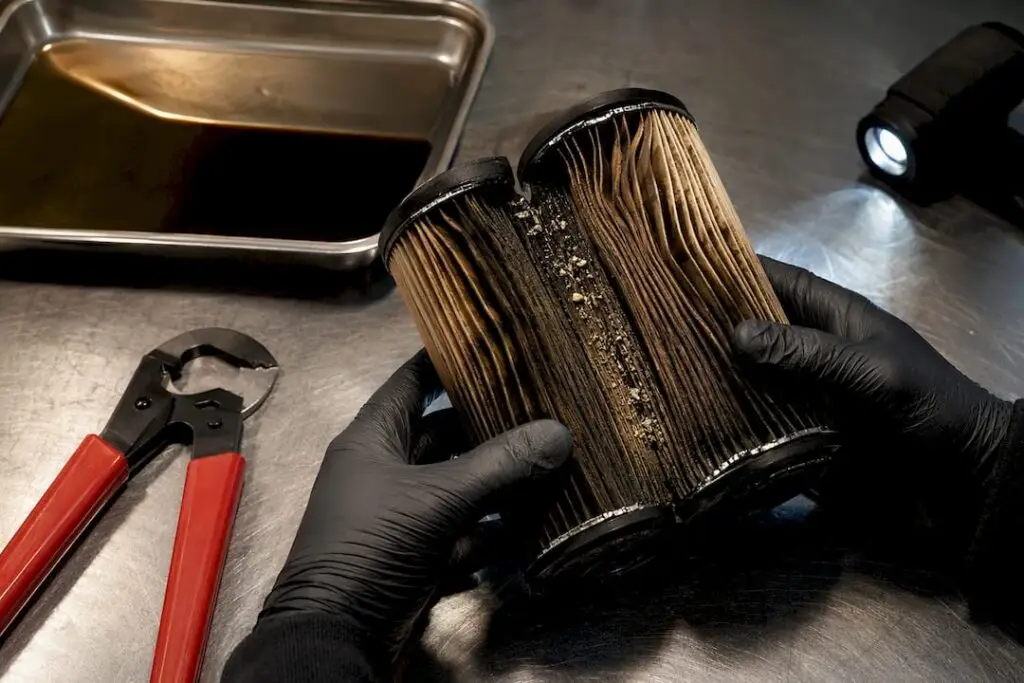
If your Porsche runs an M96 or M97 engine built between 1997 and 2005, especially a single-row bearing car from the 2000 to 2005 window, you’re in the highest-risk group for Porsche IMS failure, and the right first move is an oil filter cut-open inspection or a specialist diagnostic before you drive it much further. If you’re already scheduling clutch service on one of these cars, that’s the ideal moment to retrofit the bearing, since the transmission is already out. Cars built 2006 and later carry a different, more durable IMS design, and 2009-onward engines don’t have an IMS bearing at all.
TL;DR:
- The highest IMS failure risk occurs in 2000 to 2005 single-row bearing Porsche models built between 1997 and 2005, especially if the car has a 2000-2005 engine.
- Most IMS failures start with grease seal degradation, leading to metal flaking and possible engine damage if not caught early.
- Regular oil analysis and oil filter inspections are the most effective methods for early detection of bearing wear before catastrophic failure.
- Retrofit options are affordable but temporary, while the IMS Solution provides a more permanent fix by eliminating rolling elements that can fatigue.
- Preventive measures include shortening oil-change intervals, maintaining proper storage conditions, and avoiding long trips or high engine temperatures to prolong bearing life.
Table of Contents
- What Is Porsche IMS Bearing Failure and Which Models Are at Risk?
- Why Do IMS Bearings Fail Mechanically?
- How Do You Know If Your IMS Bearing Is Failing?
- What Are Your Repair and Retrofit Options?
- What Should You Do to Prevent IMS Failure?
- Balancing Statistics, Ownership Goals, and Real-World Risk
- Get Your Porsche’s IMS Bearing Checked the Right Way
- Where This Information Comes From
- Sources
- FAQ
What Is Porsche IMS Bearing Failure and Which Models Are at Risk?
Porsche IMS bearing failure happens when the intermediate shaft bearing, which supports the shaft that times the camshafts on M96 and M97 engines, wears out, spells, or breaks apart internally. The M96 and M97 engines powered the 996 and 997-generation 911, the Boxster, and the Cayman through most of the 2000s. The later 9A1 engine, introduced in the second-generation 997 and Cayman/Boxster around 2009, dropped the intermediate shaft design entirely, so those cars carry no IMS risk.
Not every M96/M97 car carries the same risk, and the differences matter more than most owners realize:
- 1997 to 1999 (dual-row bearing): The earliest design used a dual-row bearing with a comparatively low reported failure rate, around 1 to 2 percent under warranty claims data.
- 2000 to 2005 (single-row bearing): Porsche switched to a smaller single-row bearing to cut costs, and this generation carries the worst reputation, with a reported failure rate near 8 percent under warranty.
- 2006 to 2008 (larger non-serviceable bearing): Porsche enlarged the bearing again, improving durability, though it’s sealed in a way that makes it harder to service.
- 2009 and later (9A1 engine): No IMS bearing exists in this design.
Retrofit feasibility depends heavily on which variant you have. Dual-row and single-row bearings from 1997 to 2005 can typically be replaced without splitting the engine case, since the bearing sits accessible from outside once the transmission is removed. The 2006 to 2008 non-serviceable bearing is trickier. In many cases, the only practical partial measure is removing the factory grease seal to let the bearing run in engine oil instead of degrading grease, since full replacement on that design often requires deeper disassembly.
Why Do IMS Bearings Fail Mechanically?
Most IMS failures trace back to one of four mechanical breakdowns, and understanding them explains why some cars fail early and others run for 150,000 miles without issue.
The dominant failure path starts with the bearing’s grease seal washing out. Once that seal degrades, the grease responsible for lubrication gets diluted or displaced by engine oil, and the bearing starts running dry or contaminated. That leads to spalling, where tiny metal flakes shear off the bearing’s rolling surfaces and circulate through the engine. The single-row 6204 bearing used from 2000 to 2005 has a lower load capacity, which contributes to a higher risk of fatigue under normal driving stress compared to the dual-row design. In the worst cases, the center bolt that holds the bearing assembly together fatigues or snaps outright, letting the shaft float out of position. That’s the failure mode that kills engines, since a floating shaft throws off cam timing instantly.
Several ownership habits accelerate all of this:
- Long oil-change intervals that let acids and moisture build up in the crankcase
- Short trips that never get the oil hot enough to boil off condensation
- Extended storage without prep, which lets the grease seal dry out and crack
- Chronic high oil temperatures from track use or towing
- Foreign particle contamination from delayed filter changes
Pro Tip: If your Porsche sits for weeks at a time between drives, start it and let it run to full operating temperature at least monthly. Bearings that sit dry and cold degrade faster than ones that see regular, complete warm-up cycles.
How Do You Know If Your IMS Bearing Is Failing?
Symptom-based detection has real limits with Porsche IMS failure, because the bearing often gives little or no warning before it breaks. That’s why a physical inspection beats guessing from noises alone. Here’s the diagnostic order a specialist shop should follow:
- Cut open the oil filter. This is the single most reliable early-warning test. Ferrous metal flakes trapped in the filter media indicate the bearing is already shedding material, even before any noise appears.
- Run oil analysis. Sending a sample to a lab like Blackstone Labs tracks iron content over time. A single high reading matters less than a rising trend across two or three consecutive changes.
- Listen for rear-engine noise. A metallic rattle or knock from behind the engine, especially at idle or low RPM, can signal bearing wear that’s progressed past the early stage. A sudden loud pop or bang usually means the bearing has already let go.
- Check for oil leaks and visible play. Oil seeping from the area near the flywheel, or a center shaft that feels loose during clutch service, both point toward bearing degradation worth acting on immediately.
- Inspect the magnetic drain plug. Metallic sludge clinging to the plug during an oil change is a low-effort check that can catch problems early.
None of these tests alone is definitive, but combined, they give a shop enough information to tell you whether you’re looking at years of safe driving or a bearing on borrowed time.
What Are Your Repair and Retrofit Options?
Once you know your car is at risk, you’ve got three real paths: monitor with oil analysis, install an IMS Retrofit kit, or move to the IMS Solution.
IMS Retrofit kits replace the factory ball bearing with an upgraded serviceable bearing, usually in either a “classic” or “pro” configuration depending on the shaft design. These kits are a meaningful upgrade over the original part, but they’re still a rolling-element bearing subject to wear over time, so they aren’t a permanent fix so much as a longer-lasting one.
The IMS Solution takes a different approach entirely, replacing the bearing with an oil-fed plain bearing design that has no rolling elements to fatigue. Because it draws lubrication directly from the engine’s oil system, it eliminates the grease-seal washout problem that causes most original failures. It costs more to install but is generally regarded as the more permanent answer.
Cost ranges vary by which kit you choose and whether the job gets bundled with other work already underway:
- Retrofit kits installed on their own commonly run in the $2,000 to $5,000 range, depending on labor and parts.
- The IMS Solution typically costs more than a standard retrofit given its more involved installation.
- Bundling the retrofit with a clutch replacement and rear main seal service is common practice, since the transmission removal needed for clutch work also exposes the IMS bearing, sharply cutting the incremental labor for the retrofit itself.
Bearings that have already failed and shed debris into the oil system are a different story. Once metal contamination circulates through the engine, a full teardown or engine replacement is typically the only real option, since cleaning contamination out of every oil passage and bearing surface after the fact isn’t practical. That’s the entire argument for catching this early rather than waiting for symptoms.
Which model years can be retrofitted without splitting the case depends on your specific bearing variant, and a shop that’s actually inspected your engine is a far better source of that answer than a general rule.
What Should You Do to Prevent IMS Failure?
A short, consistent maintenance routine does more to protect your engine than any single repair.
Shorten your oil-change interval below the standard factory recommendation, and use a high-quality filter every time. More frequent oil changes flush out the moisture and acids that degrade the IMS grease seal before they get a chance to do damage. If you’re due for a clutch job anyway, that’s the moment to retrofit the bearing, since the labor overlap makes it far cheaper than a standalone job later. If an oil filter cut-open already shows ferrous material, don’t wait for a noise to develop. Schedule the retrofit or diagnostic immediately.
A few ownership habits round out the list:
- Avoid long-term storage without proper prep; a car sitting for months without occasional startup dries out seals faster.
- Drive the car regularly enough to reach full operating temperature, not just short trips around town.
- Keep engine bay cleaning gentle and avoid pressure-washing near seals and electrical connectors, since aggressive engine bay cleaning practices can push water into places it doesn’t belong.
Pro Tip: Ask your shop to keep your oil analysis results on file across multiple changes. A single report tells you where you stand today; three or four reports over a year tell you which direction you’re heading.
On inspection, Alternative European & Domestic runs dealer-level diagnostics that include filter cut-open checks and oil analysis referrals, then walks you through exactly what was found before recommending a retrofit, a monitoring plan, or nothing at all.
Balancing Statistics, Ownership Goals, and Real-World Risk
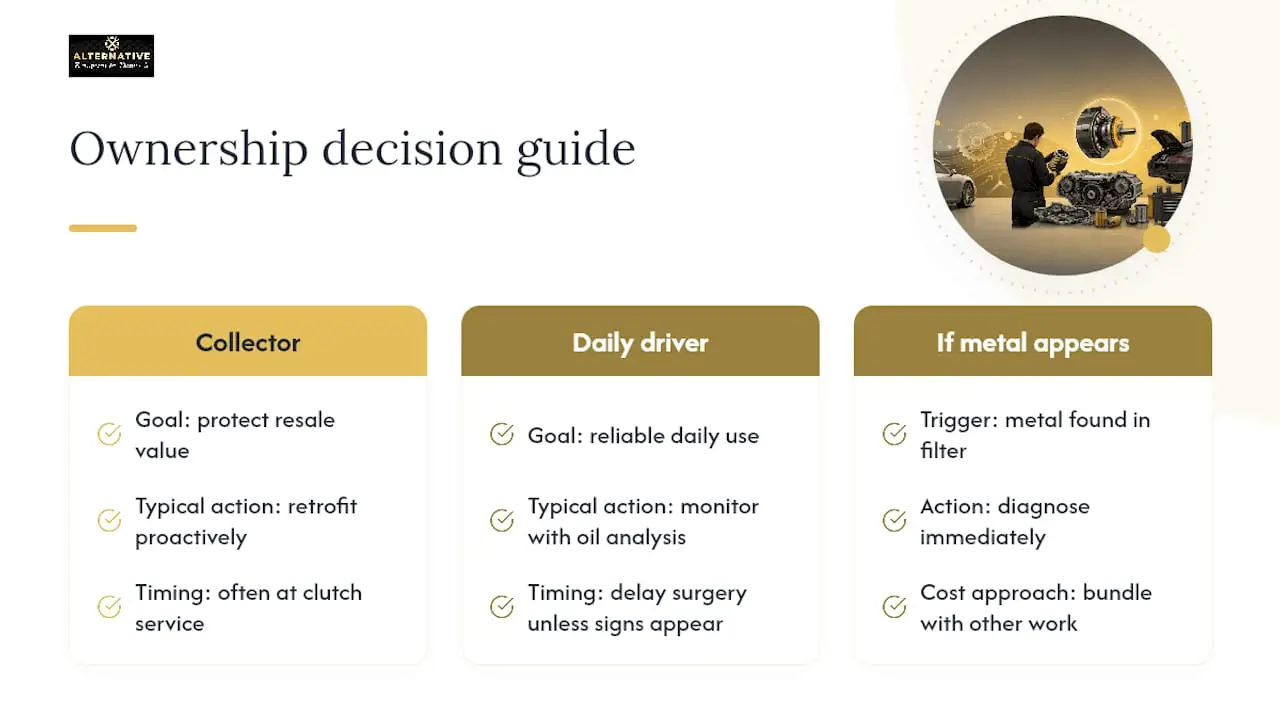
Statistics don’t drive individual decisions. A car with a dual-row bearing sits in a low-risk category, but a collector protecting resale value often retrofits anyway, while a daily driver on a single-row engine might reasonably monitor with oil analysis instead of committing to surgery. Our rule of thumb: retrofit at clutch service, diagnose immediately if metal shows up in the filter, and monitor everything else. Bundling work and being upfront about what we find keeps costs predictable instead of surprising you later.
Get Your Porsche’s IMS Bearing Checked the Right Way
Alternative European & Domestic gives Porsche owners something most quick-lube chains and dealership service departments don’t offer at the same price point: dealer-level diagnostic depth combined with straight answers about what your car actually needs, not a menu of upsells.
When you bring your M96 or M97 Porsche in for an IMS concern, our process starts with a filter cut-open inspection and, when warranted, oil analysis to check for ferrous trends before we recommend anything. If you’re already booked for clutch replacement or a rear main seal job, we’ll walk you through whether bundling an IMS retrofit into that same visit makes sense for your car and your budget. You leave with the filter inspection results, the oil analysis findings if we ran one, and a clear, documented recommendation, not a guess. If you’re ready to find out where your Porsche stands, schedule a diagnostic appointment and get a straight answer instead of wondering.
Where This Information Comes From
For deeper technical detail beyond this guide, the Porsche Club of America’s IMS spotlight breaks down failure progression stage by stage. LN Engineering’s technical FAQ covers bearing variants and failure-rate data in depth, while FCP Euro’s explainer and Rennlist’s diagnostic guide offer community-tested detection methods. A VIN-specific inspection from a specialist shop still beats any general guide for confirming your exact bearing variant.
Sources
- LN Engineering — The definitive guide and FAQ for Porsche IMS bearings
- FCP Euro — Porsche IMS bearings explained
- Renndriver — Porsche IMS bearing guide
- Rennlist — Signs of IMS bearing failure
FAQ
What Year Porsche Has an IMS Problem?
Porsche models with M96 and M97 engines built from 1997 through 2008 carry IMS bearing risk, with 2000 to 2005 single-row bearing cars representing the highest-risk group. Models from 2009 onward use the 9A1 engine, which has no IMS bearing.
How Common Is Porsche IMS Failure?
Reported warranty failure rates run around 1 to 2 percent for early dual-row bearings (1997 to 1999) and roughly 8 percent for single-row bearings from 2000 to 2005, meaning most bearings never fail, but the single-row generation carries meaningfully higher risk.
How Much Does It Cost to Replace an IMS Bearing in a Porsche?
Installed retrofit costs commonly fall in the $2,000 to $5,000 range, with the oil-fed IMS Solution typically costing more than a standard retrofit kit; bundling the job with clutch or rear main seal service reduces total labor. Alternative European & Domestic provides specific estimates after a diagnostic inspection of your vehicle.
What Are the Symptoms of a Failing IMS Bearing in a Porsche?
The most reliable early signs are ferrous metal found in an oil filter cut-open inspection and rising iron levels across serial oil analyses. Metallic rattling from the rear engine, oil leaks near the flywheel, and a loose center shaft during clutch service are additional warning signs worth investigating promptly.