
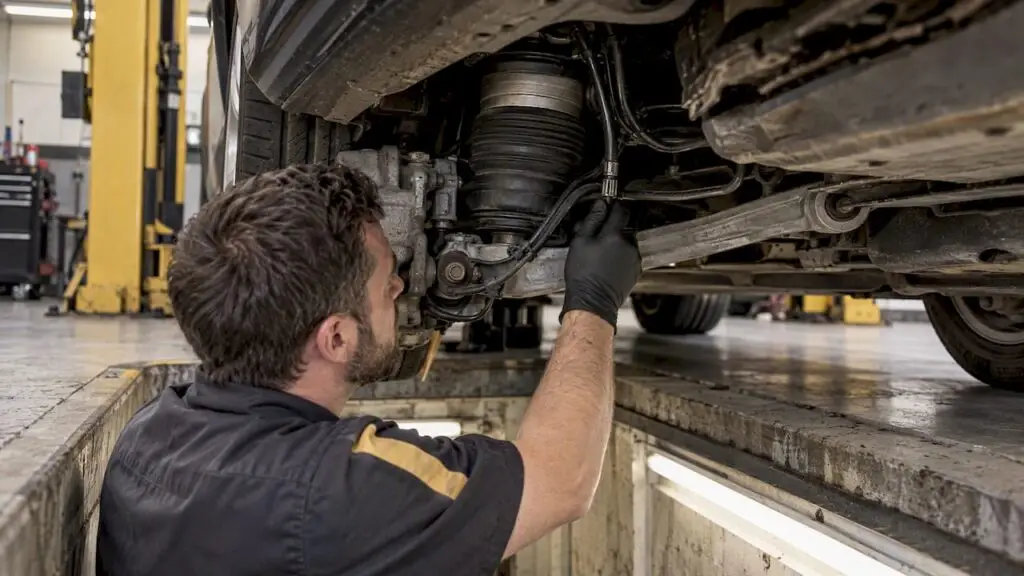
Most Mercedes AIRMATIC failures trace back to leaks or a sticking compressor vent valve, not a bad compressor on its own, so the correct first step is scanning stored fault codes and checking for leaks before replacing parts. Short trips at low speed are usually fine if the car still lifts, but avoid highway speeds or heavy loads until a shop confirms what is wrong. Book a diagnostic scan or leak check as soon as you notice a low corner or a warning message.
TL;DR:
- Most AIRMATIC failures are caused by leaks or sticking vent valves, not the compressor itself, making leak diagnosis the priority.
- Early warning signs include a lower corner after parking, slow lift on start, and unusual noises or riding harshness, which should prompt immediate checks.
- Proper diagnosis involves inspecting for oil residue, performing short test drives, leak detection spray, and analyzing fault codes before considering part replacement.
- Repair steps should start with locating and fixing leaks or damaged lines, cleaning or replacing the valve block, and only then replacing the compressor if necessary.
- Avoid premature compressor replacement without confirming leaks, and always follow Mercedes-specific procedures to prevent recurring failures and optimize repair costs.
Table of Contents
- Common symptoms of AIRMATIC trouble
- What actually fails inside an AIRMATIC system
- How to diagnose AIRMATIC before replacing anything
- Repair options: what gets fixed and in what order
- What drives cost and how long repairs take
- Preventive checks that reduce AIRMATIC failure risk
- When to bring your Mercedes to a specialist
- How we approach AIRMATIC diagnostics
- Get your AIRMATIC system checked the right way
- Sources
- FAQ
Common symptoms of AIRMATIC trouble
AIRMATIC problems tend to announce themselves gradually before they become a full warning light. Recognizing the early signs lets you catch a leak before it burns out a compressor that was never actually defective.
- One corner sits visibly lower than the others, especially noticeable after the car has been parked overnight.
- The vehicle settles low after parking and is slow to rise, or does not rise at all on startup.
- The ride feels harsh, bouncy, or uneven from side to side compared with how the car normally drives.
- You hear a hiss near a wheel well or notice the compressor running more often than usual, sometimes even with the engine off.
- The dashboard displays a suspension warning or a message to visit a workshop.
Not every low reading is a fault. Mercedes-Benz notes that AIRMATIC behavior and permitted level settings vary by model, so what looks like sagging on one platform can be normal operation on another. Checking your specific owner manual before assuming a failure saves a wasted trip.
What actually fails inside an AIRMATIC system
AIRMATIC is a network of air springs, lines, a valve block, and a compressor working together, and each component fails in its own way. Understanding which part is the likely culprit is what keeps a repair bill from spiraling.
- Air-spring or strut bellows crack or dry out with age, letting air escape slowly or suddenly.
- Pneumatic lines and fittings loosen or corrode, and the valve block itself can develop internal leakage from contamination inside the system.
- The compressor can develop a hardware fault, but more often a sticking vent valve inside the compressor assembly causes trouble after the unit has been forced to run overtime chasing an existing leak.
- Pressure sensors drift, wiring corrodes, or a relay goes bad, producing symptoms that look like a suspension fault but are actually electrical.
A Mercedes technical bulletin addressing AIRMATIC suspension malfunctions and leak diagnosis makes the point directly: many failures are leaks, and swapping the compressor before confirming that can cause the replacement unit to fail early too. That is the core reason a measured, leak-first diagnostic order matters more than jumping straight to parts.
How to diagnose AIRMATIC before replacing anything
A disciplined diagnostic order protects you from paying for a compressor when the real problem is a $40 line fitting. Start with what you can check yourself, then let a shop take over once codes and leak evidence point somewhere specific.
- Look for oil residue on the air-spring boots and listen for hissing near the wheels with the engine off.
- Drive the car a short distance, park it, and watch whether it holds ride height over the next 15 to 20 minutes.
- Apply leak-detection spray at valve-block connections, pressure-line fittings, and strut boots, then wait roughly 10 to 15 minutes, since small leaks take time to bubble up under the service manual’s leak-check procedure.
- Have a shop pull AIRMATIC DTCs: C155E points to extended compressor operation, C1562 indicates a system leak, C1556 and C1572 relate to pressure or correction-time problems, and C156C flags a compressed-air distribution leak.
- A shop performs STAR diagnostic actuation, runs rodeo and bleed cycles, cleans or replaces the filter and reservoir per Mercedes procedures, and services or replaces the valve block, only moving to compressor replacement once every other cause has been ruled out.
Pro Tip: Ask the shop to show you the printed DTC list and the leak-detection results before approving any parts order, not just a verbal summary.
Repair options: what gets fixed and in what order
The repair sequence matters as much as the parts themselves. Jumping straight to a compressor swap when a strut is leaking just means paying twice.
- Find and fix the leak first: a worn air spring or strut gets replaced, or a damaged line gets repaired or swapped.
- If the valve block shows internal leakage or contamination, it gets cleaned following the filtering and bleed procedure or replaced if cleaning does not resolve it.
- Compressor replacement comes last, and only when diagnostics confirm the unit itself, often the vent valve, is actually defective.
- OEM parts and a proper bench or bleed procedure matter here because AIRMATIC is a sealed, pressurized system. Skipping the bleed cycle or reusing contaminated fluid in the process invites the same failure to return.
- A thorough filter cleaning, rodeo test, and multiple bleed cycles can resolve what looks like a compressor problem without replacing the compressor at all.
A separate Mercedes bulletin on AIRMATIC suspension drop issues identifies a sticking compressor vent valve as the cause of sudden single-corner drops on certain model ranges, and recommends replacing the compressor assembly specifically because the vent valve is not serviceable on its own in those cases. That is a narrow, code-confirmed exception to the leak-first rule, not a reason to default to compressor replacement.
What drives cost and how long repairs take
A diagnostic fee covers the scan, leak check, and code interpretation, separate from the labor and parts needed once the cause is confirmed. Leak hunting adds time up front but usually saves money by avoiding an unnecessary compressor purchase.
- OEM versus aftermarket parts affects both price and expected service life, particularly for air springs and valve blocks.
- Whether the fix is a valve-block service, a strut replacement, or a full compressor swap changes the labor hours significantly, since compressor work often requires a full bleed and rodeo cycle.
- A simple leak seal or single air-strut swap can often be done same-day; a valve-block or compressor job that requires ordering parts and bench bleeding takes longer.
Owners can get a general sense of strut and air-suspension labor factors from independent guides like this strut replacement cost breakdown, though your actual quote depends on the specific parts and labor your vehicle needs.
Preventive checks that reduce AIRMATIC failure risk
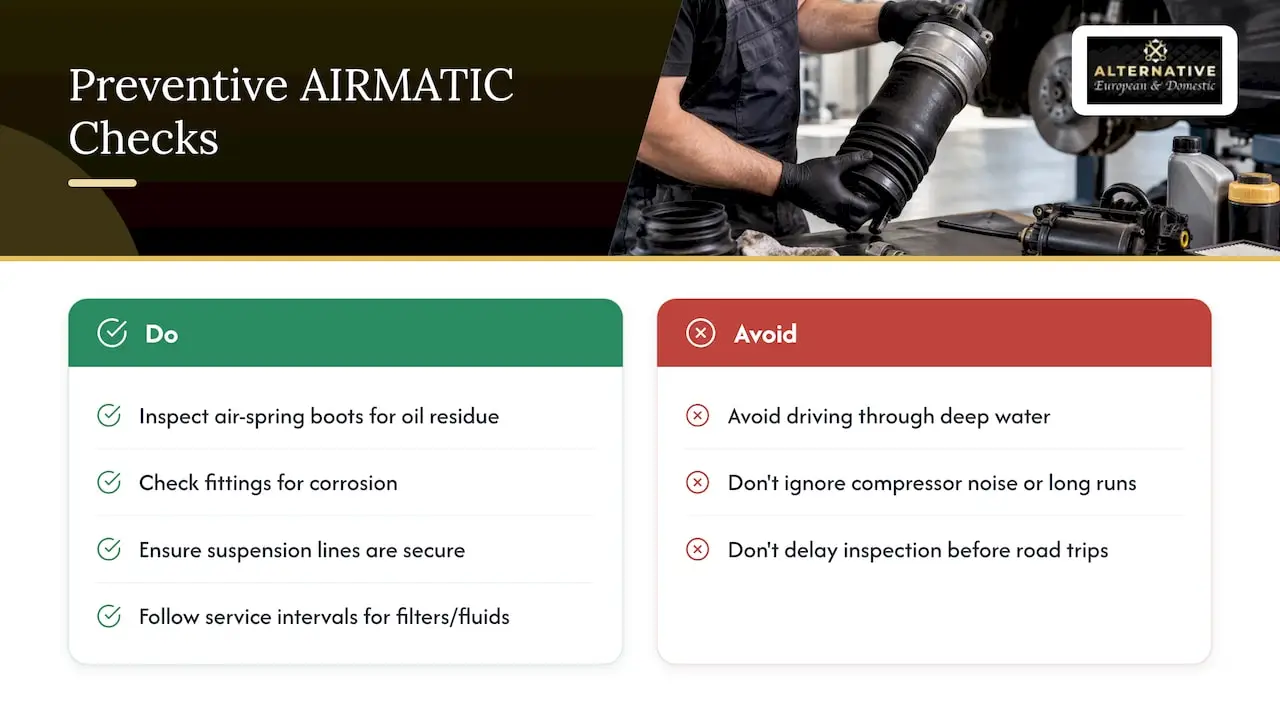
A few minutes of regular inspection catches problems while they are still cheap to fix. Look at the air-spring boots for oily residue, check fittings for corrosion, and make sure no lines have worked loose.
Avoid driving through deep water where possible, since it stresses seals and electrical connectors near the suspension components. Following your recommended service intervals for related filters and fluids keeps contamination out of the valve block in the first place.
Pro Tip: If the compressor seems to run longer than it used to, or you notice a new noise or uneven corner height, schedule an inspection before the next road trip rather than after.
For a practical owner-side checklist on where to look and what to document, see this guide to catching air suspension leaks before your appointment.
When to bring your Mercedes to a specialist
Persistent ride-height faults, a compressor that seems to run constantly, or visible oil on the air-spring boots are all signs it is time for a shop visit rather than more home troubleshooting.
- Ask for a printed OBD code report so you know exactly which DTCs were stored.
- Request the leak-detection notes or photos showing where the spray reacted.
- Ask whether STAR actuation was performed and what it showed.
- Get a recommended repair sequence in writing, starting with leak repair, along with OEM versus aftermarket options.
Following manufacturer-based WIS steps and rodeo or bleed cycles, rather than skipping straight to part swaps, is what prevents the same fault from coming back in a few months.
How we approach AIRMATIC diagnostics
The service relies on dealer-level diagnostics and follows Mercedes-specific procedures, ensuring that leak diagnosis comes before any discussion of replacing a compressor. Customers receive documented codes, clear explanations of their meanings, available options, and realistic timelines before work begins.

Get your AIRMATIC system checked the right way
A sagging Mercedes does not have to mean an expensive guess. Dealer-level diagnostics identify whether the issue involves an air-spring leak, a valve-block problem, or a faulty compressor before recommending any repair, following procedures used by Mercedes technicians.

When you book with us, you get a documented code readout, leak-detection results, a clear explanation of your repair options including OEM parts, and a timeline before any work starts. Schedule your maintenance service appointment and get a straight answer on what your AIRMATIC system actually needs.
Sources
- Mercedes-Benz USA — Owners manuals: AIRMATIC function
- Mercedes-Benz AIRMATIC Suspension Malfunction and Leak Diagnosis (LI32-22-P-051722)
- Check Airmatic For Leaks. – AR32.22-P-8100LW — Mercedes service manual extract
FAQ
How much does it cost to fix an AIRMATIC suspension on a Mercedes?
Cost depends entirely on what is actually wrong, since a fitting leak, an air-spring replacement, and a compressor job carry very different parts and labor requirements. Suspension repair pricing varies depending on the diagnosis; contact the service provider for a quote once the leak check and diagnostic codes identify the specific failure.
Which Mercedes to stay away from?
There is no published list of Mercedes models to avoid, and reliability depends on maintenance history and how the vehicle was driven, not just the model year. A pre-purchase inspection with dealer-level diagnostics is the more reliable way to evaluate any specific used Mercedes.
How do I reset the AIRMATIC suspension on my Mercedes?
Reset procedures vary by model and are outlined in the vehicle-specific owner manual, since AIRMATIC function and level settings differ across platforms according to Mercedes-Benz’s own documentation. If a reset does not clear a suspension warning, the system likely has an active fault that needs code-based diagnosis rather than a manual reset.
Can I drive with a bad air ride suspension?
Short, low-speed trips may be possible if the car still lifts to normal height, but a sagging or unresponsive corner affects handling and ride control, so avoid highway speeds or carrying heavy loads. Have it diagnosed promptly, since a leak that is ignored often forces the compressor to run constantly and can shorten its life.