
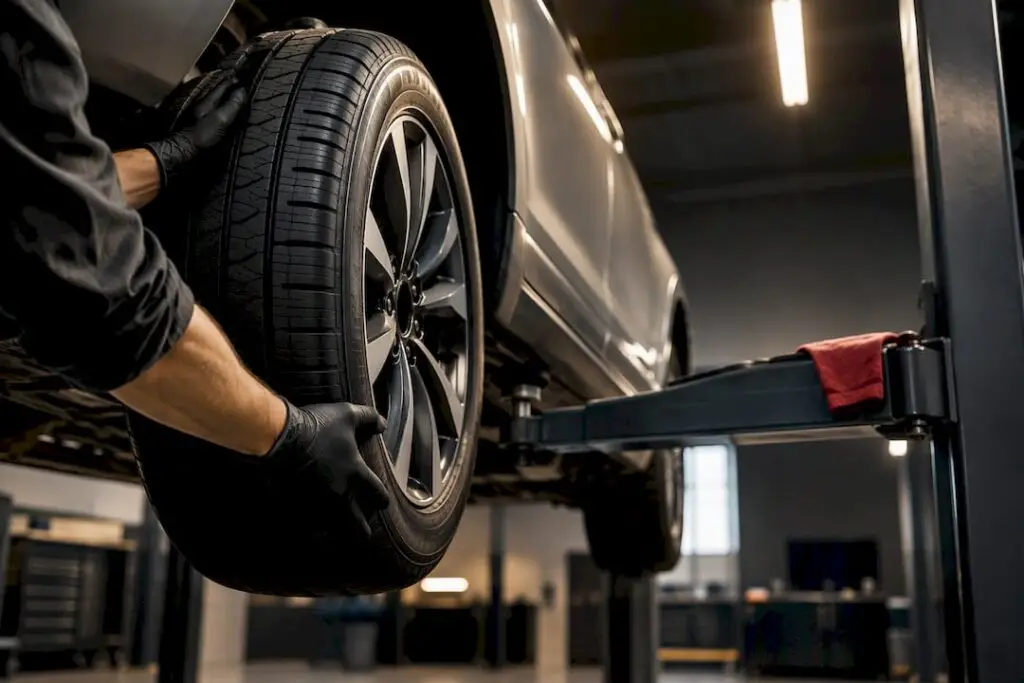
Follow your owner’s manual first. If it does not specify an interval, rotate every 5,000 to 8,000 miles, leaning toward the lower end for most all-wheel-drive vehicles, and rotate immediately if you notice uneven wear rather than waiting for the next scheduled visit. AWD systems depend on matched tread depth across all four tires, and both USTMA and Michelin treat this as a drivetrain protection issue, not just a tire longevity one. A diagnostic-first shop like Alternative European & Domestic checks alignment and wear causes before rotating, which keeps small problems from becoming expensive ones.
TL;DR:
- Strict adherence to the manufacturer’s recommended rotation interval is crucial, especially for AWD vehicles, which often need rotation every 5,000 to 6,000 miles.
- Rotations should include a full inspection of the tires and suspension components, not just a simple tire swap, to catch early signs of uneven wear or mechanical issues.
- Most AWD vehicles use a crisscross rotation pattern, but directional, asymmetric, or staggered tires require tailored methods and limited moves within the same axle.
- Immediate rotation is necessary if uneven wear patterns such as cupping, inner or outer edge wear, or center wear are detected, to prevent drivetrain stress.
- When replacing tires on AWD vehicles, matching tread depth and circumference across all four tires is essential, with many manufacturers recommending a full set replacement.
Table of Contents
- Recommended rotation interval and when to depart from it
- AWD rotation patterns: crisscross, directional, and staggered-size exceptions
- What a proper AWD tire rotation visit should include
- When to rotate sooner and common wear problems that require diagnosis
- AWD replacement and mixing rules: matching circumference matters
- How Alternative European & Domestic performs AWD rotations
- What we see most often in AWD tire wear
- Book an AWD rotation and diagnostic visit
- Sources
- FAQ
Recommended rotation interval and when to depart from it
Every AWD vehicle has a manufacturer-specified rotation interval printed in the owner’s manual, and that number should always take priority over general advice. Manufacturers provide specific rotation intervals based on drivetrain design, tire size, and staggered fitment, reflecting detailed vehicle considerations.
When no manual interval is given, the Tire Industry Association points to a range of 5,000 to 7,000 miles depending on the vehicle and how it is driven, while Michelin commonly recommends rotating closer to 6,000 to 8,000 miles, with AWD vehicles often needing the shorter end of that window. The first rotation matters more than later ones. Catching uneven wear early, before it becomes permanent, is often the difference between a routine visit and a full tire replacement, and skipping that first service can also affect tread wear warranty claims on new tires.
A few practical habits keep AWD owners on schedule without much extra effort:
- Pair rotations with oil changes, since most drivers already have that visit on a calendar.
- Set a mileage reminder in your phone or dashboard system rather than relying on memory.
- Ask your shop to record tread depth at every visit so wear trends show up early.
AWD rotation patterns: crisscross, directional, and staggered-size exceptions
Most AWD vehicles use a crisscross, or double-X, pattern when the manufacturer does not specify otherwise. Michelin recommends this pattern for AWD and 4WD vehicles because it moves each tire diagonally, which evens out tread wear across positions that experience different loads and steering forces.
That pattern is not universal, though. Directional tires, which have a one-way tread design, can only move from front to back on the same side. Asymmetric tires face similar restrictions depending on their sidewall markings. Staggered fitments, common on many performance and European models, use different tire sizes front and rear, which makes cross-axle rotation impossible. In those cases, a technician can only swap tires front to back within the same axle.
A typical crisscross rotation on a non-staggered AWD vehicle follows a straightforward sequence:
- Remove all four wheels and note each tire’s current position.
- Move the front left tire to the rear right, and the front right tire to the rear left.
- Move the rear left tire to the front left, and the rear right tire to the front right.
- Reinstall each wheel and torque to the manufacturer’s specification.
Pro Tip: Check your tire sidewalls for directional arrows or “asymmetric” markings before assuming a crisscross pattern is allowed.
What a proper AWD tire rotation visit should include
A rotation that only swaps tire positions without inspection skips most of the value of the service. USTMA guidance stresses that a proper visit involves a full inspection along with the physical swap.
A thorough AWD rotation visit should cover:
- Removing and inspecting each tire for tread depth, sidewall damage, and embedded objects like nails or glass.
- Measuring tread depth or circumference across all four tires when wear looks uneven.
- Adjusting inflation pressure for each tire’s new position to match the vehicle’s placard values.
- Checking balance and alignment when wear patterns or steering feel suggest a problem.
- Verifying that a full-size spare, if used in rotation, matches the tread depth and specification of the other four tires.
Rotation alone will not fix an alignment or suspension problem. When those checks reveal an issue, the shop should recommend the specific service needed rather than simply completing the rotation and sending the car out the door.
When to rotate sooner and common wear problems that require diagnosis
Scheduled mileage intervals are a baseline, not a rule that overrides what your tires are telling you. If you notice uneven wear at any point, Michelin recommends rotating immediately and diagnosing the cause rather than waiting for your next appointment.
Different wear patterns point to different problems:
- Cupping or scalloped wear usually points to a balance issue or worn suspension components.
- Wear concentrated on the inner or outer edge often signals an alignment problem or chronic under-inflation.
- Wear centered in the middle of the tread typically means the tire has been overinflated.
Uneven wear detected early often means a simple alignment or balance correction; Michelin advises rotating right away and identifying the cause rather than letting it continue.
Rotating a tire without correcting the root cause just relocates the symptom to a new position, and on an AWD vehicle, that uneven wear can put added strain on the drivetrain components that rely on consistent tire diameter. If wear patterns suggest a mechanical cause, request an alignment check, a balance service, or an inspection of suspension and steering components before your next rotation.
AWD replacement and mixing rules: matching circumference matters
AWD systems are far less forgiving of mismatched tires than two-wheel-drive vehicles. Michelin notes that AWD systems typically require matching outside diameter, or circumference, across all four tires, because a mismatch forces the drivetrain to compensate for tires rotating at different speeds. That mismatch can stress the transfer case and differential over time.
This is why many manufacturers recommend replacing all four tires together on AWD vehicles rather than replacing just one or two.
- If you must replace fewer than four tires, match tread depth as closely as possible to the tires already on the vehicle.
- Install new tires on the axle your manufacturer recommends, which is often the rear.
- Check with your dealer or service shop before fitting tires with a different circumference than what is already installed.
How Alternative European & Domestic performs AWD rotations
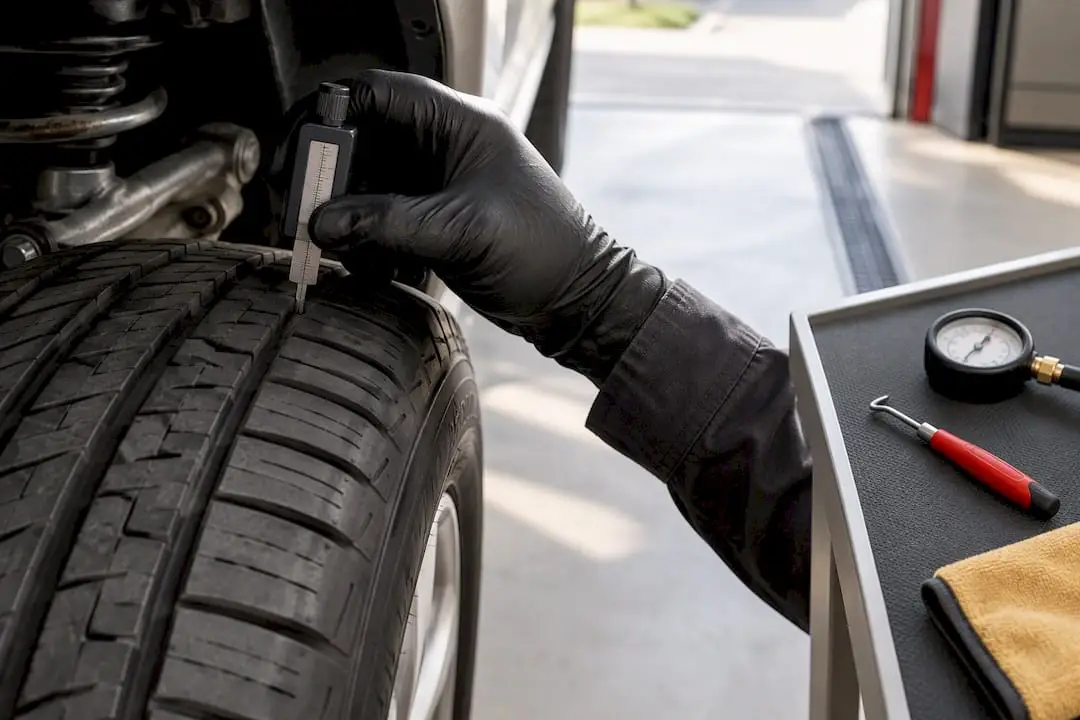
Every AWD rotation at the shop starts with measuring and recording tread depth at each wheel position, then inspecting tires and suspension components before anything is moved. Pressures are set to the vehicle’s placard specification, and if wear patterns point to an alignment or balance issue, that gets flagged and addressed rather than masked. When tread depth or circumference has drifted too far between tires, the recommendation shifts from rotation alone to replacement, always explained clearly before any work begins.
What we see most often in AWD tire wear
AWD vehicles that come in with the most uneven wear are often the ones that skipped a rotation or two after a light winter of driving. A good habit is pairing rotation with your oil change, or setting a six-month reminder if you drive fewer miles than average. When you are not sure whether your tires need attention now, book a diagnostic visit and let a professional look before guessing.
Book an AWD rotation and diagnostic visit
A rotation that skips inspection is just moving tires around. Our Maintenance Service visits pair the physical rotation with tread depth checks, pressure adjustments, and alignment or balancing recommendations when the wear pattern calls for it, so you leave with a clear picture of your tires instead of a guess.

Before your visit, it helps to bring:
- Your owner’s manual or a note of its recommended rotation interval.
- The tire placard from your driver’s door jamb, listing your vehicle’s specified pressures.
- Any recent tire purchase or service receipts, especially if you have replaced fewer than four tires.
For owners maintaining ceramic-coated wheels, this wheel maintenance guidance can help keep wheels presentable between visits without interfering with inspection. Schedule your AWD rotation and diagnostic through our maintenance page and get a straight answer on what your tires actually need.
Sources
- Tire Care Essentials | USTMA
- Tire Rotation Guide: Vehicle Types & Care – Michelin USA
- Tire Rotation | Tire Industry Association
FAQ
Do AWD cars need tire rotation?
Yes, AWD vehicles need regular tire rotation, often more consistently than two-wheel-drive vehicles, because the drivetrain depends on matched tread depth across all four tires. Skipping rotations can lead to uneven wear that stresses the transfer case and differential over time.
Should I rotate my tires every 5,000 or 10,000 miles?
Check your owner’s manual first, since it gives the interval built for your specific vehicle. If no interval is listed, USTMA recommends rotating every 5,000 to 8,000 miles, with AWD vehicles typically doing better at the shorter end of that range.
What is the best tire rotation pattern for AWD vehicles?
Most AWD vehicles use a crisscross, or double-X, pattern unless the tires are directional, asymmetric, or staggered in size, which restrict how they can move. Michelin recommends checking your tire sidewalls and manufacturer guidance before choosing a pattern.
Why do some AWD vehicles need all four tires replaced at once?
AWD systems typically require matching tire circumference across all four positions, and mismatched diameters can put extra strain on the drivetrain. Michelin notes this is why many manufacturers recommend replacing all four tires together rather than just one or two.