

The battery warning light almost always points to a charging-system problem, not a dead battery, and it means your car is running on borrowed time. The alternator, voltage regulator, or wiring feeding your battery has likely stopped doing its job. Cut unnecessary electrical use, get to a safe stop or repair shop quickly, and don’t shut the engine off if there’s a chance it won’t restart.
TL;DR:
- The battery warning light almost always indicates a failing alternator, voltage regulator, or wiring issue rather than a dead battery itself.
- Most causes are due to alternator failure or a slipping serpentine belt, which comprise 60 to 80 percent of such complaints, not battery problems.
- If the warning light appears, drivers should immediately cut nonessential electrical use, monitor for symptoms, and reach a safe stop quickly.
- Basic checks include inspecting terminals, belts, and voltage readings, but a professional diagnostic with load testing is necessary for accurate failure identification.
- Preventative measures such as routine terminal cleaning, belt inspection, and regular charging voltage checks can help avoid roadside breakdowns.
Table of Contents
- What Does the Battery Warning Light Actually Monitor?
- What Causes the Battery Light to Come On?
- What Should You Do When the Battery Light Comes On?
- What Quick Checks Can You Do Yourself?
- What Happens During a Professional Charging-System Diagnostic?
- How Can You Prevent Future Charging-System Failures?
- Why Dealer-Level Diagnostics Matter for European and Performance Vehicles
- Schedule a Charging-System Diagnostic With Alternative European & Domestic
- Sources
- FAQ
What Does the Battery Warning Light Actually Monitor?
The battery-shaped light on your dash isn’t really watching the battery. It’s watching the charging system, which is the alternator, the voltage regulator, and the wiring that connects them to the battery and every electrical component in the car. With the engine running, a healthy system should hold voltage between 13.8 and 14.4 volts. Drop below that and the light comes on because the battery has started supplying power the alternator should be generating.
That’s a key difference from a simple dead battery. A dead battery usually shows up as a no-start with the engine off. The charging-system warning light comes on while you’re driving, which tells you the system can’t keep up in real time. Your car’s computer backs this up with diagnostic trouble codes. P0562 and P0563 flag low or high system voltage, and they’re the first things a technician checks when the light appears.
What Causes the Battery Light to Come On?
A handful of components are responsible for nearly every charging-system complaint, and one of them dominates the list.
- Alternator failure: worn brushes, a failing internal regulator, or bad bearings are the most common cause of a lit battery light.
- Broken or slipping serpentine belt: no belt spinning the alternator means no charging voltage, regardless of how healthy the alternator itself is.
- Loose or corroded battery terminals: a poor connection at the terminals can mimic a charging failure even when the alternator is fine.
- Damaged wiring or blown fusible links: a break anywhere between the alternator and battery interrupts the charging path.
- Aged or internally shorted battery: less common as the root cause, but a weak battery can drag system voltage down enough to trip the light.
Technicians estimate that roughly 60 to 80 percent of battery-light complaints trace back to the alternator or the belt driving it, not the battery. That’s worth remembering before anyone reaches for a new battery as the default fix.
What Should You Do When the Battery Light Comes On?
Treat it as an active warning, not a maybe. Here’s the order of operations that keeps you off the shoulder of a highway.
- Cut nonessential electrical load immediately. Turn off the A/C, radio, seat heaters, and unplug phone chargers. Every device pulls current your struggling charging system can’t replace.
- Keep driving toward a safe destination or a repair shop. Don’t panic and don’t shut the engine off somewhere risky. If the engine dies with a dead charging system, restarting may not be possible.
- Watch for dimming headlights, flickering gauges, or a rough-running engine. These are signs the battery is nearly depleted. Pull over safely and call for roadside assistance rather than pushing further.
- Get off the road at the first safe opportunity once you reach a gas station, parking lot, or shop, even if the car still seems to be running fine.
Pro Tip: How long you have depends almost entirely on what’s drawing power. With headlights and A/C running at night, you might have as little as 15 minutes. With minimal load in daylight, that window can stretch closer to 90 minutes. Either way, it’s a countdown, not a guarantee.
What Quick Checks Can You Do Yourself?
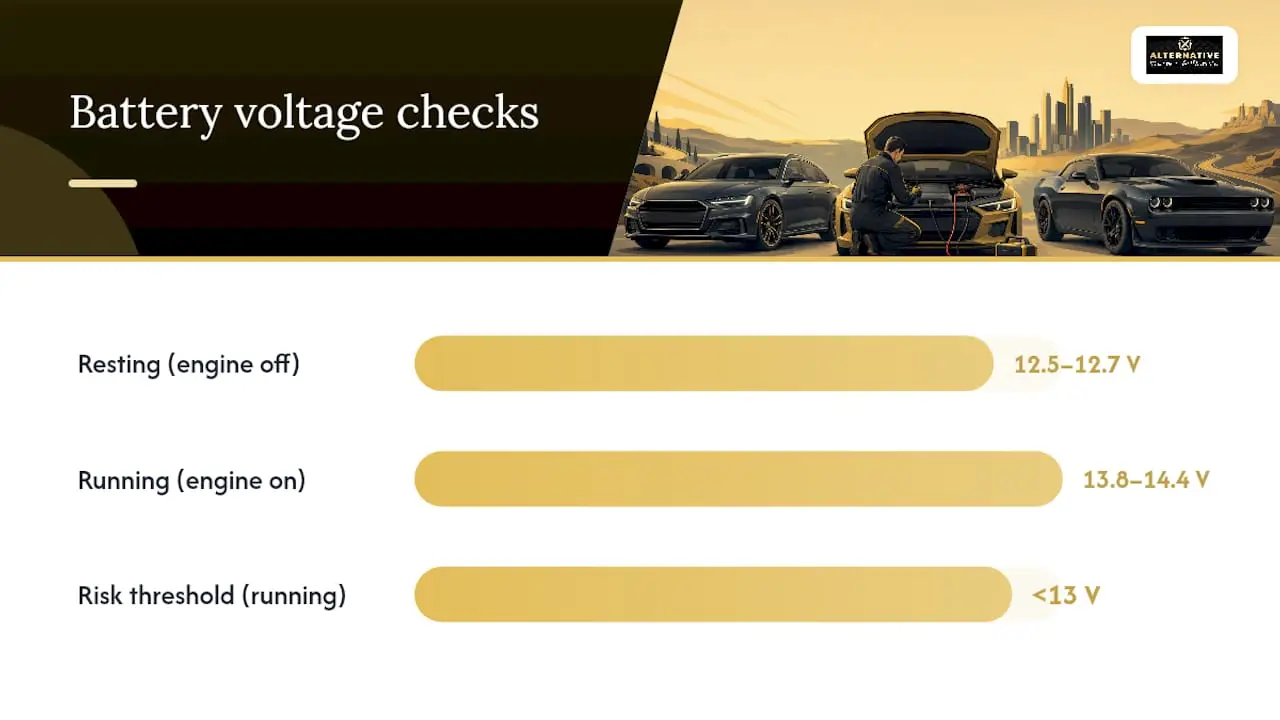
Before you assume the worst, a few minutes with the hood open can tell you a lot. Look at the battery terminals for white or greenish corrosion buildup and make sure the cable clamps are tight. Check the serpentine belt for cracking, glazing, or visible slack, since a loose belt often causes the light to flicker on and off rather than stay solidly lit. Scan the engine bay for obvious wiring damage or a fuse box with a blown link.
If you own a multimeter, resting battery voltage should read around 12.5 to 12.7 volts with the engine off. Start the engine and that number should climb to 13.8 to 14.4 volts. Anything well outside that range points to the alternator or regulator, not the battery itself.
- Corroded or loose terminals: tighten or clean before assuming a bigger failure.
- Cracked or slack belt: visible wear is often the whole story.
- Multimeter reading under 13 volts running: charging system isn’t keeping up.
Home checks have real limits. Basic OBD-II scanners often don’t display live charging voltage, which means an intermittent alternator fault can hide from a driveway diagnosis entirely. If your readings are inconclusive or the light keeps flickering with no obvious visual cause, that’s the point to stop guessing and call a shop.
What Happens During a Professional Charging-System Diagnostic?
A proper shop visit starts with a visual inspection of terminals, cables, and the belt, then moves to instrumented testing. A charging-system voltage test confirms what the alternator is producing under real load, and a separate alternator output test and battery load test isolate which component is actually failing. Technicians also inspect wiring and fuses, and pull OBD-II codes like P0562 or P0563 to confirm whether the system is undercharging or overcharging.
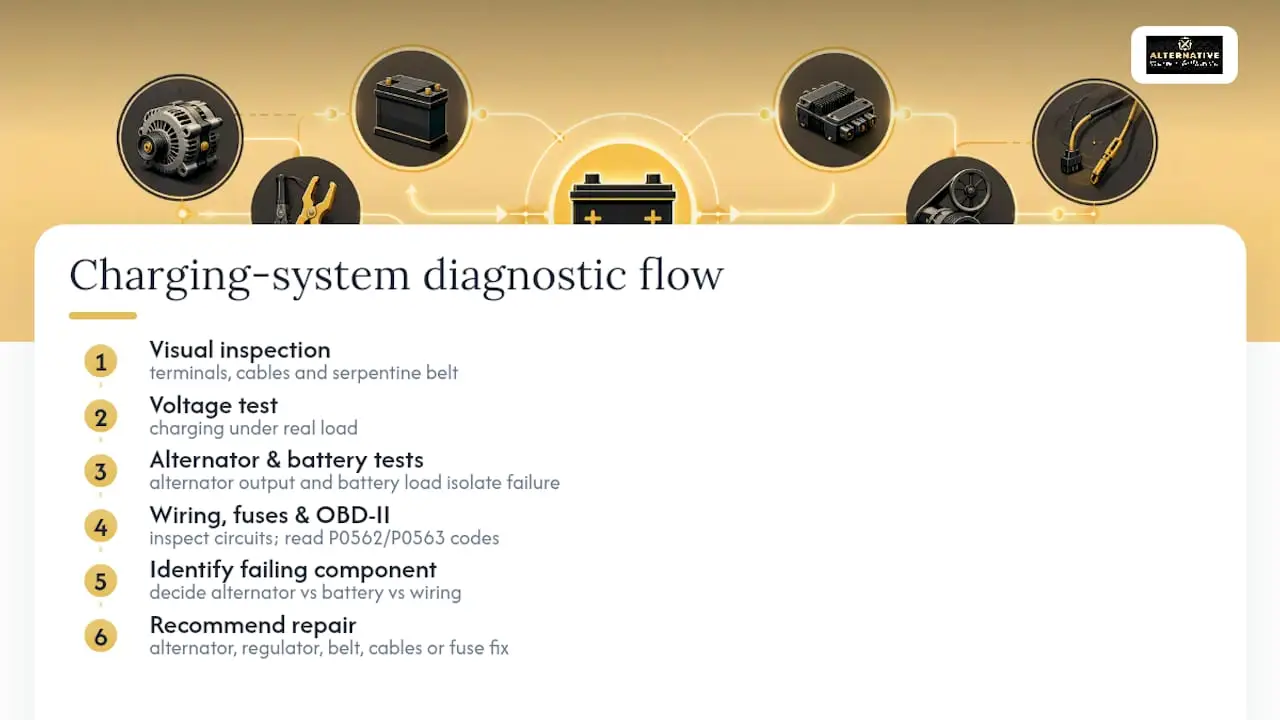
That load test step matters more than most drivers realize. Plenty of people swap in a new battery at the first sign of trouble, only to have the same warning light return within days because the actual problem was a dying alternator. A shop that tests both components before recommending a repair saves you from paying twice.
Depending on what the tests show, the fix might be an alternator replacement or repair, a new serpentine belt, cleaned or replaced terminals and cables, a voltage regulator swap, or a wiring and fuse repair. A transparent diagnostic report should walk you through exactly which test flagged which failure, so you’re not just told “you need a new alternator” without knowing why.
How Can You Prevent Future Charging-System Failures?
Most batteries last three to five years, though Texas heat tends to shorten that window compared to milder climates. Building a few habits into your routine catches problems before they strand you.
- Clean battery terminals periodically to prevent corrosion buildup.
- Inspect the serpentine belt for cracking or glazing at every oil change.
- Ask your shop to check charging voltage during routine maintenance visits, not just when the light comes on.
- If you drive a high-mileage or performance vehicle, consider a preemptive charging-system check rather than waiting for a warning light.
Catching worn alternator bearings or early regulator drift during a scheduled visit is far cheaper than a roadside breakdown.
Why Dealer-Level Diagnostics Matter for European and Performance Vehicles
European and high-performance charging systems often run tighter voltage tolerances and more integrated electronics than a basic domestic sedan, which makes guesswork expensive. A shop running dealer-level diagnostics can isolate whether a fault sits in the alternator, the regulator, or the wiring harness before any part gets replaced. That distinction between “likely the alternator” and “confirmed the alternator” is exactly what separates a one-visit fix from a repeat comeback. Choosing a shop that documents its findings clearly gives you a repair record you can actually trust.
— Alternative European & Domestic
Schedule a Charging-System Diagnostic With Alternative European & Domestic
If your battery warning light just came on, guessing is the expensive option. Alternative European & Domestic runs full charging-system diagnostics, including alternator output and load testing, battery testing, and wiring inspection, so you replace only the part that’s actually failed instead of paying for a battery you didn’t need.

Our technicians work on European, domestic, and high-performance vehicles daily, and every diagnostic comes with a clear explanation of what was tested and why a repair is recommended. Shops also rely on specialized equipment, similar in spirit to the ACT ATGM14 diagnostic tool used across the industry, to catch faults a basic scan tool misses. A stalled charging system rarely fixes itself, and putting off a diagnostic only raises the odds of getting stranded somewhere inconvenient.
Visit our maintenance and diagnostic services page to schedule an appointment before that flickering light becomes a tow truck call.
Sources
- Carparts
- Car battery & charging system: diagnostic guide — Steer
- Charging system warning light — RepairPal
FAQ
Can You Drive With the Battery Warning Light On?
You can drive a short distance, but you’re on a countdown, not a green light. Cut electrical loads immediately and head straight to a safe location or repair shop rather than continuing your normal route.
How Do You Know if You Need a New Battery or a New Alternator?
You can’t reliably tell by symptoms alone since both produce similar warning signs. A shop load test on the battery and an output test on the alternator are the only way to confirm which one is actually failing, and skipping that step is how drivers end up replacing a battery that wasn’t the problem.
What Can Cause the Battery Light to Come On?
The most frequent causes are alternator wear, a slipping or broken serpentine belt, corroded or loose terminals, damaged wiring, or an aged battery. Alternator and belt issues account for the large majority of cases, though a full inspection is the only way to confirm the exact cause.
Does the Battery Light Always Mean a Bad Alternator?
Not always, but it’s the most common answer. Terminal corrosion, a slipping belt, or damaged wiring can all trigger the same light without the alternator itself being at fault, which is exactly why visual and load testing come before any parts get replaced.
What Do the P0562 and P0563 Codes Mean?
P0562 indicates system voltage has dropped too low, generally under about 10 volts with the engine running, while P0563 flags voltage climbing too high, generally above about 16 volts. Both point to a charging-system fault that needs professional testing rather than a simple battery swap.