
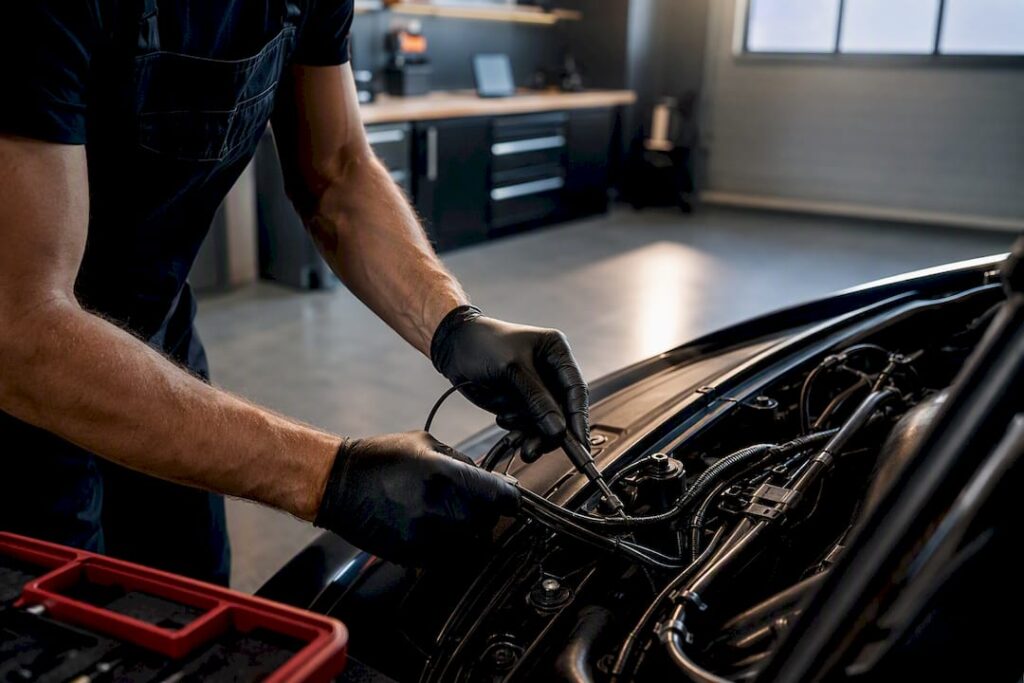
A diagnostic fee is the charge a shop bills for the technician time and equipment needed to pinpoint what’s wrong with your vehicle, not to fix it. Expect somewhere between $50 and $200 for a standard diagnostic, with dealerships often running higher for brand-specific systems. Many shops waive or credit that fee if you move forward with the repair, but that’s a shop policy choice, not a legal obligation.
TL;DR:
- Diagnostic fees generally range from $50 to $150 at independent shops and $100 to $400 at dealerships, depending on vehicle complexity and fault type.
- A comprehensive diagnostic process includes intake, code scan, live data review, pinpoint testing, road testing, and a written report to ensure accurate fault identification.
- Brand-specific software and specialized tools are the main reasons dealership diagnostics cost more, especially for hybrid, electric, European, or luxury vehicles.
- Always obtain written authorization before diagnostics and verify if fees are credited toward repairs, especially for teardown work or extended testing.
- Consider skipping paid diagnostics for simple, well-defined codes linked to inexpensive fixes, and opt for professional diagnosis when symptoms are vague or systems are costly to repair.
Table of Contents
- Diagnostic Fee Car Pricing: What You’ll Actually Pay
- What Does a Paid Diagnostic Actually Include?
- Dealer vs. Independent Shop: Which One Actually Makes Sense?
- Do You Have to Sign Off Before They Charge You?
- How to Keep Your Diagnostic Cost Reasonable
- Is a Professional Diagnostic Worth the Money?
- How Alternative European & Domestic Handles Diagnostics
- Book a Diagnostic With a Shop That Shows Its Work
- Sources
- FAQ
Diagnostic Fee Car Pricing: What You’ll Actually Pay
Free code reads at auto parts stores exist for a reason: they’re a loss leader to sell you a part. They’ll tell you a code, not what’s actually failing. A real diagnostic, where a technician interprets that code against live data and confirms the actual failure, costs money because it takes real time.
Independent shops typically charge $50 to $150 for a standard diagnostic, while dealerships commonly land between $100 and $400 depending on the vehicle and depth of testing required. A simple check-engine light with one stored code sits at the low end. A no-start with an intermittent electrical fault, or anything requiring teardown, pushes toward the high end fast.
What pushes a diagnostic from cheap to expensive:
- Shop labor rate (varies widely by region and specialization)
- Whether the fault is intermittent or hard to reproduce
- Electrical gremlins versus a straightforward sensor failure
- Hybrid and EV systems, which need specialized training and tools
- European and luxury models with proprietary modules that require brand-specific software
A full diagnostic session typically runs 60 to 90 minutes. Anything beyond that, especially teardown work to physically access a component, adds hourly charges on top of the base fee.
What Does a Paid Diagnostic Actually Include?
You’re not paying for a beep from a scanner. You’re paying for a process that rules out the wrong answers before committing to the right repair.
A thorough diagnostic generally follows this sequence:
- Intake and history. The technician asks about symptoms, when they happen, and any prior repair attempts.
- Code scan. A professional scan tool pulls stored and pending codes across every module, not just the engine.
- Live data review. The technician watches real-time sensor readings to see if values match expected ranges.
- Pinpoint testing. Multimeters, oscilloscopes, and smoke machines confirm the actual failed component instead of guessing.
- Road test. Many faults only show up under load or at specific speeds.
- Written report. You get a documented explanation of the cause and the recommended fix.
Professional-grade scanners and the software subscriptions that keep them updated cost shops thousands of dollars a year. That expense shows up in your bill, whether you notice it or not.
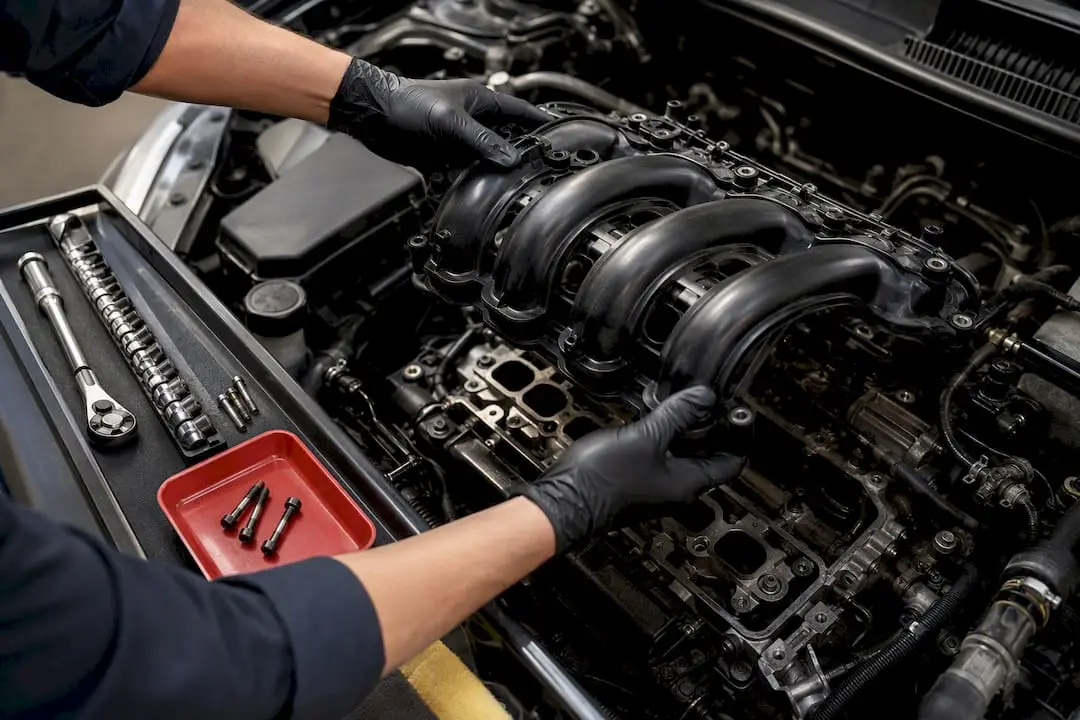
Pro Tip: Ask upfront whether your issue might require teardown diagnostics. Disassembling a transmission or an intake manifold to inspect internals is a separate cost tier, and a transparent shop will quote that scope and its maximum cost before touching a bolt.
Dealer vs. Independent Shop: Which One Actually Makes Sense?
Dealerships charge more, and there’s a real reason: proprietary diagnostic software, brand-specific training, and access to manufacturer technical bulletins that independents sometimes can’t get. For warranty work, recalls, or a hybrid drivetrain fault on a car still under factory coverage, the dealer’s tools aren’t optional.
But for the vast majority of common mechanical and electrical faults, independent shops can deliver the same accurate diagnosis at a noticeably lower cost, since dealership overhead runs higher and their labor rates reflect it.
When each option makes sense:
- Independent shop: routine check-engine codes, brake or suspension noises, standard sensor failures, general electrical troubleshooting
- Dealership or specialist: open recalls, active warranty claims, proprietary module resets, and hybrid or EV battery management systems
- European and high-performance vehicles: a specialist with dealer-level diagnostic equipment often bridges the gap, offering brand-specific accuracy without full dealer markup
The fault type matters more than the badge on your hood. A worn wheel bearing is a worn wheel bearing regardless of who diagnoses it.
Do You Have to Sign Off Before They Charge You?
Yes, and this is where a lot of disputes start. A legitimate shop gets your authorization before running a diagnostic, and that authorization should come with a written estimate or a signed work order.
Consumer-protection guidance is clear on this point: undisclosed diagnostic charges are often disputable, and several states treat a lack of disclosure as a violation of repair-shop transparency rules. Electronic authorization, a text message, an email, or a documented phone call, generally counts as valid consent in most states, so keep those records.
If you’re billed for a diagnostic you never approved:
- Ask for the signed work order or written authorization on file
- Refuse payment until the shop produces documentation
- Dispute the charge with your card issuer if it was already paid
- File a complaint with your state’s consumer protection office or attorney general
- Consider small-claims court for amounts too small to justify a lawyer but too large to ignore
A signed work order is the strongest evidence either side can produce if a charge gets contested later. Keep a copy, always.
How to Keep Your Diagnostic Cost Reasonable
A few questions at the counter save real money.
- Ask the flat diagnostic fee upfront, and whether it’s credited toward the repair if you proceed.
- Ask for a maximum price before authorizing anything open-ended.
- Ask directly whether teardown work is a possibility for your symptom, and what that adds.
- If you already have a code from a previous shop or a parts-store scan, bring it. Many shops offer a reduced-rate verification scan instead of billing a full diagnostic again.
- For a single clear code and an obvious low-cost fix, a consumer OBD-II scanner ($20 to $150) may be all you need.
Pro Tip: Some shops waive the diagnostic fee entirely if you authorize the recommended repair on the spot. It’s a courtesy, not a legal requirement, so ask about it before you agree to anything.
Is a Professional Diagnostic Worth the Money?
Sometimes a $20 scanner tells you everything. Sometimes it tells you nothing useful at all.
Pay for a professional diagnostic when you’re dealing with an intermittent electrical fault, a repair that could run into thousands of dollars if misdiagnosed, a hybrid or EV system, or a European vehicle with proprietary control modules that consumer tools can’t fully access.
Skip the paid diagnostic when you’ve got a single, clear trouble code tied to an inexpensive, well-known fix, like a loose gas cap code or a known sensor replacement you’re comfortable handling.
- Pay for it: vague symptoms, multiple codes, expensive components at risk, EV/hybrid or European drivetrains
- Skip it: one obvious code, cheap part, symptom you can verify yourself
At the counter, ask one question: does the potential repair cost enough that a wrong guess would cost more than the diagnostic itself? If yes, pay for the diagnosis.
How Alternative European & Domestic Handles Diagnostics
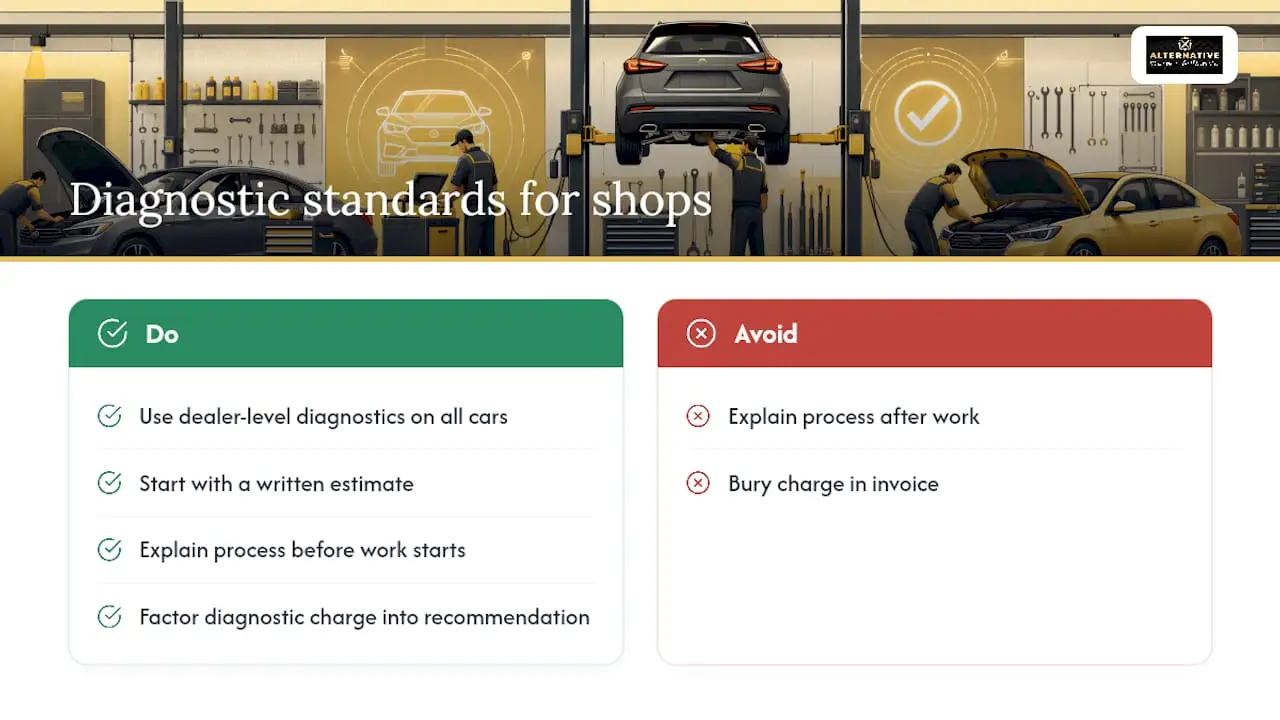
Alternative European & Domestic runs dealer-level diagnostic equipment on every vehicle that comes through the bay, European, domestic, or high-performance. Every diagnostic starts with a written estimate, and the process is explained before any work begins, not after. When a repair moves forward, the diagnostic charge factors into the overall recommendation transparently rather than getting buried in the invoice. That’s the standard a shop should hold itself to.
Book a Diagnostic With a Shop That Shows Its Work
Alternative European & Domestic gives you dealer-level diagnostic accuracy without the dealership runaround, a real advantage if you’ve ever waited weeks for a service appointment or gotten a vague explanation for a four-figure repair. Every diagnostic comes with a clear, written estimate before any work starts, and the hourly labor rate is disclosed upfront, not buried in fine print.

When you book a diagnostic appointment, bring any prior codes, repair history, or symptoms you’ve noticed, when they happen, how often, and under what conditions. That detail speeds up the intake process and can shorten the time your car spends on the lift. For mobile verification needs between visits, resources like Trackside’s mobile mechanic service show how on-site diagnostic checks can complement a full shop visit.
Ready to get a straight answer about what’s wrong with your vehicle? Schedule your diagnostic appointment with Alternative European & Domestic and get a written estimate before any work begins.
Sources
- Diagnostic fees in auto repair: your rights and disclosures — LegalClarity
- How Much Does Car Diagnostic Test Cost? (2026 Guide) | CostWhale
- Diagnostic Fees Explained: Why Mechanics Charge | TrustedLocalAuto
FAQ
What Is a Reasonable Diagnostic Fee for a Car?
A reasonable diagnostic fee typically falls between $50 and $150 at an independent shop and $100 to $400 at a dealership, depending on the complexity of the vehicle and issue.
Is a $200 Diagnostic Fee Normal?
Yes, $200 is within the normal range, especially at a dealership or for a vehicle requiring specialized software, like a European model or a hybrid system.
Is a Car Diagnostic Worth It?
It’s worth it when symptoms are vague, intermittent, or tied to an expensive system like a hybrid battery or transmission, since a wrong guess often costs far more than the diagnostic itself.
Do All Dealerships Charge a Diagnostic Fee?
Most dealerships charge a diagnostic fee for their technician time and testing, though some waive it if you’re under warranty or authorize the recommended repair on the spot.
How Long Does a Car Diagnostic Take?
A standard diagnostic typically takes 60 to 90 minutes, though intermittent faults or teardown work can extend that significantly.