
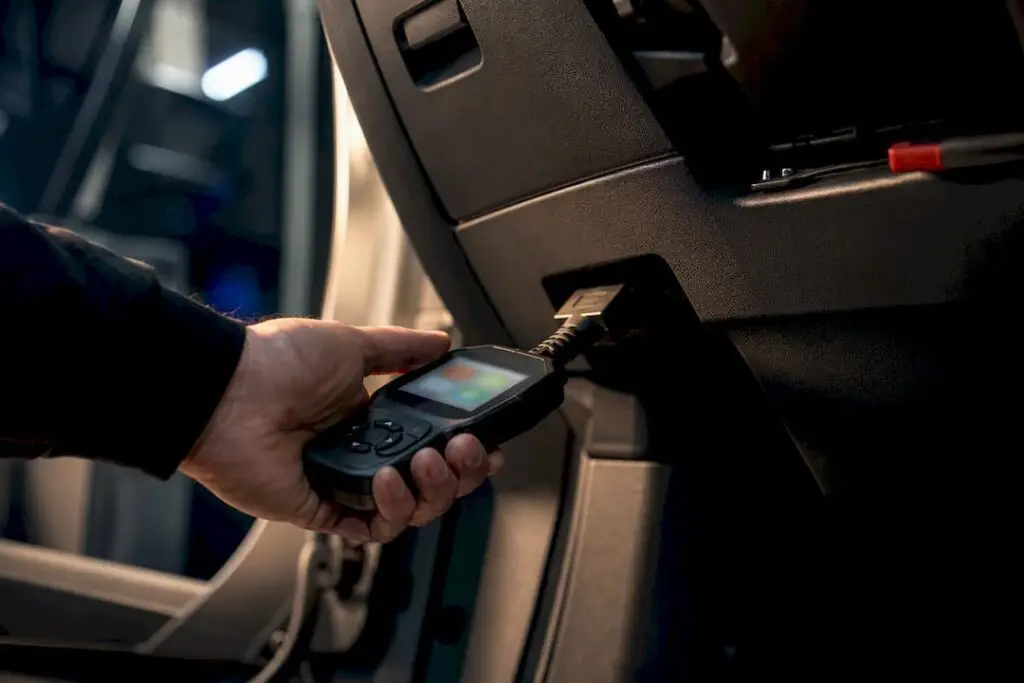
The check engine light means your car’s OBD-II computer logged a fault code, and how it behaves tells you what to do next. A steady light means drive carefully and get the codes read soon. A flashing light means stop or reduce driving immediately, because an active misfire is likely damaging the catalytic converter. Either way, read and record the codes and freeze-frame data before anyone clears them.
TL;DR:
- Most check engine codes are caused by simple issues like loose gas caps or low oil, which can often be fixed in minutes before scanning.
- A flashing check engine light indicates severe problems like active misfires that require immediate stopping and a diagnostic scan.
- Confirming with live data such as fuel trims and misfire counters is essential for accurate diagnosis, especially on European or high-performance vehicles.
- Clearing codes before recording them risks losing valuable diagnostic information and can lead to misdiagnosis or repeated repairs.
- Ignoring a check engine light, especially with pending or stored codes, may result in costly damage and emissions violations if left unaddressed.
Table of Contents
- How to Triage a Check Engine Light Right Now
- Free Checks Worth Trying Before You Scan
- How to Read Check Engine Codes the Right Way
- What the Most Common Check Engine Codes Actually Mean
- The Technician-Style Workflow That Prevents Wasted Repairs
- When to Stop Driving and Call a Professional
- Emissions and Legal Considerations of a Check Engine Light
- Pending Codes vs. Stored Codes: What Your Scanner Is Actually Telling You
- Common Mistakes That Derail DIY Diagnosis
- Our Approach to Diagnosing Check Engine Lights
- Get Your Check Engine Light Diagnosed the Right Way
- Sources
- FAQ
How to Triage a Check Engine Light Right Now
A steady light usually means the fault is present but not immediately destructive. Short trips are generally fine, but don’t put off a code read for weeks. A flashing check engine light typically signals an active misfire severe enough to dump unburned fuel into the exhaust, which can overheat and destroy the catalytic converter within minutes of continued driving.
Before you do anything else, glance at the gauge cluster for these red flags:
- Smoke from the exhaust or under the hood
- Temperature gauge climbing into the red or a coolant warning light
- Sudden, severe loss of power or rough idle
- Oil pressure warning light illuminated alongside the check engine light
If any of those show up with a flashing light, pull over safely and stop driving. If it’s just a steady light with none of those symptoms, you can drive to a parts store or your shop for a scan.
Free Checks Worth Trying Before You Scan
A surprising number of check engine light cases trace back to something you can fix in your driveway in five minutes. Work through these before assuming you need a diagnostic appointment.
- Check the gas cap. Remove it, inspect the seal for cracks or debris, and reseat it until it clicks. A loose or damaged cap is one of the most common triggers for EVAP-related fault codes, but the light won’t turn off instantly. It typically takes two to three complete drive cycles to clear once the leak is fixed.
- Check oil and coolant levels. Low oil can trigger pressure-related warnings, and low coolant points toward a leak that needs attention before it becomes an overheating problem.
- Look at visible hoses and wiring. Cracked vacuum lines, a loose air intake boot, or a chewed wiring harness near the engine bay are common, visible culprits.
Pro Tip: Snap a photo of the gas cap and hose routing before you touch anything. If the light stays on after your fix, a technician will want to know exactly what you already checked.
If the light clears after a fix and stays off through a few drive cycles, you’re done. If it comes back, or if you didn’t find anything obvious, it’s time to pull the actual codes.
How to Read Check Engine Codes the Right Way
The OBD-II port sits under the dashboard, usually within reach of the driver’s seat, and every gasoline vehicle sold in the United States since 1996 uses the same connector shape. Turn the ignition to the “on” position (engine off is fine for most readers), plug in the scanner, and pull every code the system has logged, not just the first one that pops up.
OBD-II systems store diagnostic trouble codes along with freeze-frame data, a snapshot of engine conditions the moment the fault occurred. That snapshot is often more useful than the code itself, because a code tells you which system tripped, not necessarily which part failed. Save or photograph the full report before anyone clears anything.
Codes come in three flavors, and knowing the difference changes how urgently you act:
| Code type | What it means | What to do |
|---|---|---|
| Pending | Fault detected once, not yet confirmed | Monitor, recheck in a few drive cycles |
| Stored (confirmed) | Fault repeated enough to trigger the light | Diagnose now |
| Permanent | Confirmed and tied to emissions monitors | Requires a verified repair and drive cycle to clear |
Tool choice matters here. A basic code reader only reads and clears codes. A Bluetooth adapter paired with a phone app adds some live-data viewing. A mid-range handheld like the XTOOL X100 Pro2 adds bi-directional tests and programming functions that go well beyond a basic reader. A shop-grade scanner adds full bi-directional control and manufacturer-specific data streams. Many parts stores offer free code reads or loaner scan tools, which give you a fast, no-cost starting point, though they typically lack the live-data depth needed to confirm a root cause.
What the Most Common Check Engine Codes Actually Mean
Codes name a system, not always a part, and jumping straight to a replacement based on the code alone is how owners end up paying for parts that don’t fix the problem. Here’s how the most frequent ones break down:
- P0300 and cylinder-specific misfire codes (P0301, P0302, etc.): The engine logged missed combustion events. Common causes are worn spark plugs, failing ignition coils, or leaking injectors. Misfires are also the trigger behind most flashing-light emergencies, so treat them with urgency.
- P0171 / P0174 (system too lean): The engine is getting too much air relative to fuel. Vacuum leaks, a dirty mass airflow sensor, or weak fuel delivery are the usual suspects, and fuel trim data helps separate them.
- P0420 (catalyst efficiency below threshold): This code often shows up after a misfire or a failing oxygen sensor has already been damaging the converter for a while. Replacing the catalytic converter first, without fixing the upstream cause, is one of the costliest mistakes owners make.
- P044x series (EVAP system faults): Usually a loose gas cap, a stuck purge valve, or a cracked EVAP hose. Least urgent of the common codes, but still worth confirming.
The Technician-Style Workflow That Prevents Wasted Repairs
Shops don’t diagnose off a single code, and you shouldn’t either. This sequence catches the real cause instead of the symptom.
- Read and record everything. Pull all stored, pending, and permanent codes, and save the freeze-frame data before clearing anything.
- Confirm with live data. Watch fuel trims (STFT/LTFT), oxygen sensor switching, and misfire counters per cylinder to see which system is actually misbehaving.
- Run a low-cost confirmation test. A smoke test finds vacuum leaks, a coil-swap test isolates a bad ignition coil from a bad spark plug, and a fuel pressure check rules out delivery problems, all before you order parts.
- Repair the confirmed cause, not just the part the code named.
- Clear the codes and complete a drive cycle. A verified repair should always end with a drive cycle to confirm the readiness monitors pass and the code doesn’t return.
Pro Tip: If a shop quotes a repair based on a code alone, without mentioning live data or a confirmation test, ask what they checked to rule out other causes. A code is a starting point, not a diagnosis.
When to Stop Driving and Call a Professional
Some situations aren’t DIY territory, no matter how good your scanner is.
- A flashing light, visible smoke, an overheating gauge, or a sudden loss of power means stop driving and arrange a tow.
- Intermittent faults, manufacturer-specific codes, or permanent codes tied to emissions monitors often require dealer-level tools and expertise to resolve correctly.
- If your free checks and basic scan don’t turn up an obvious cause, further DIY testing risks wasted time and misdiagnosed parts.
Bring your printed or photographed code report, freeze-frame data, notes on when the symptom happens, and a list of any recent repairs. That information saves diagnostic time and gets you a more accurate estimate.
Emissions and Legal Considerations of a Check Engine Light
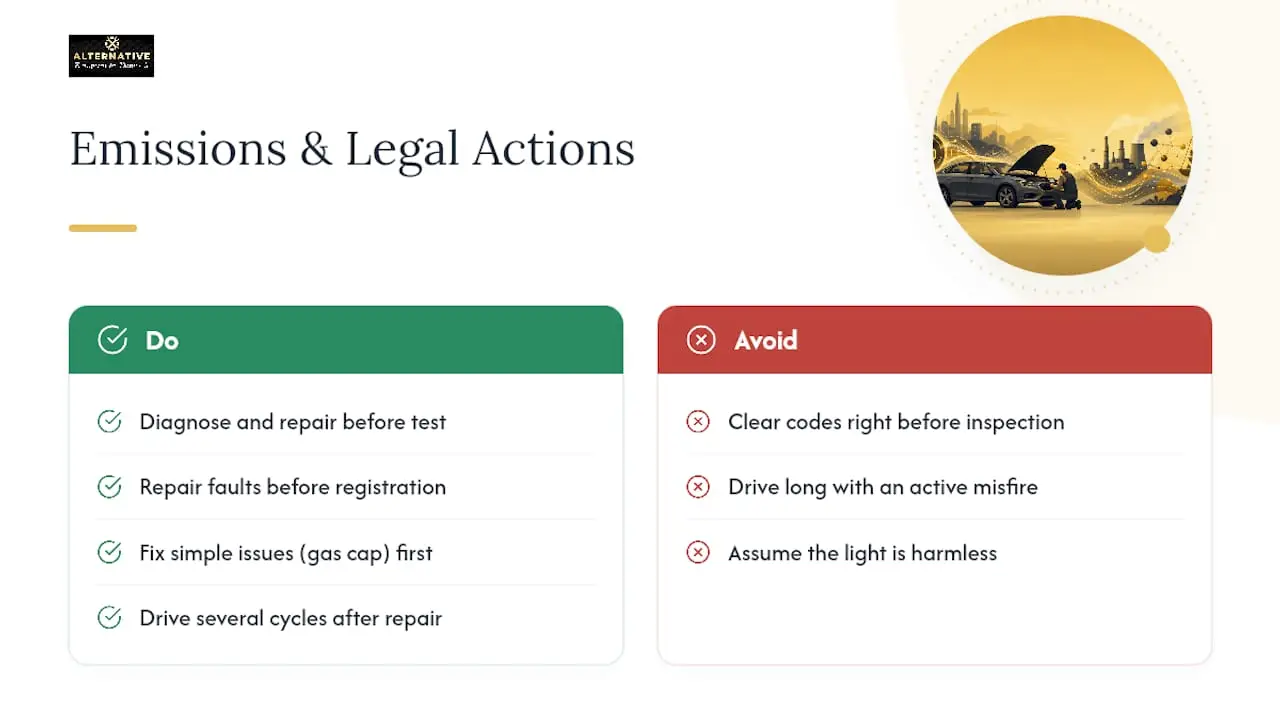
The check engine light exists because federal emissions regulations require OBD-II systems to monitor pollution-control components in real time. When the light is on, especially with a stored or permanent code, your vehicle’s emissions output may already exceed legal limits, even if it drives normally.
Most states with vehicle emissions testing programs will fail an inspection outright if the check engine light is illuminated at the time of the test, regardless of what caused it. Some inspection programs also check that the readiness monitors have completed enough drive cycles since the last code was cleared, which is why clearing a code right before an inspection can backfire: the monitors reset to “not ready” and the vehicle can fail for that reason alone.
Driving for extended periods with an active misfire code doesn’t just risk catalytic converter damage. It also means the vehicle is likely emitting hydrocarbons and other pollutants above the levels its emissions system was designed to control. In most states, that’s not just a mechanical problem, it’s a compliance issue that can affect registration renewal.
If your check engine light is on and you’re due for an emissions test or registration renewal, get the fault diagnosed and repaired first. A quick, cheap fix like a gas cap almost never causes an inspection failure once it’s resolved and given a few drive cycles to clear the monitors. A misfire or catalyst code left unaddressed almost always will.
Pending Codes vs. Stored Codes: What Your Scanner Is Actually Telling You
A pending code means the computer detected a fault once but hasn’t confirmed it yet. Most systems require the same fault to repeat across one or two drive cycles before it graduates to a stored code and triggers the check engine light. If your scanner shows a pending code with the light still off, you’re catching a problem early, and it’s worth monitoring rather than panicking.
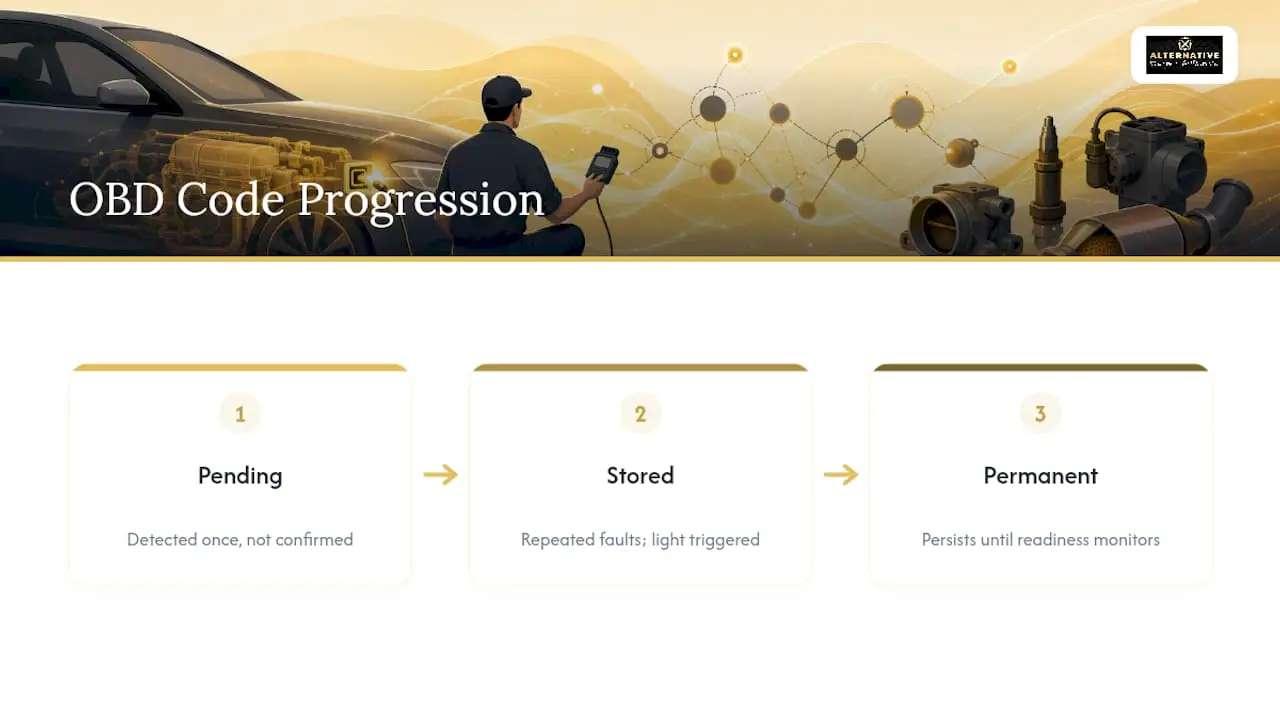
A stored code, sometimes called a confirmed or “hard” code, means the fault has repeated enough times to trip the light. This is the code that matters most for diagnosis, since it represents a pattern rather than a one-time glitch.
Permanent codes are a third category specific to emissions-related faults. Once a stored code triggers, and a repair is made, the code doesn’t fully disappear right away, even after you clear it with a scanner. It converts to a permanent status that only clears itself once the vehicle completes the required drive cycle and the readiness monitors confirm the fix actually worked. This exists specifically to prevent owners from clearing a code, passing an inspection, and having the problem resurface days later.
Reading all three categories, not just whatever code triggered the light, gives you the full picture of what your engine control module has actually seen.
Common Mistakes That Derail DIY Diagnosis
The single biggest mistake is clearing codes before recording them. Once you clear a code, you lose the freeze-frame data and the fault history that made diagnosis possible in the first place, and intermittent problems can become nearly impossible to trace.
The second most common error is replacing a part because a code named its system, without confirming the part actually failed. A P0420 catalyst code doesn’t mean the catalytic converter is bad; it often means something upstream damaged it. Swapping the converter without fixing the real cause means you’ll be back where you started within weeks.
Other frequent missteps include ignoring pending codes until they become stored ones, skipping the drive cycle verification after a repair, and assuming a free parts-store scan gives the same depth as a live-data session. A basic code reader only reads and clears codes; it won’t show you the fuel trims or sensor data that actually confirm a diagnosis. Owners also sometimes chase a code that’s actually a secondary symptom of a completely different, unlogged fault, which is why live-data confirmation matters more than the code number itself.
Our Approach to Diagnosing Check Engine Lights
At Alternative European & Domestic, we treat a check engine light the same way the workflow in this article describes: read every code, save the freeze-frame, then confirm with live data before touching a single part. European and high-performance platforms often throw codes that point in misleading directions, so we lean on dealer-level diagnostic equipment to see fuel trims, sensor switching, and misfire counters the way the engineers who built the car intended.
Every estimate we hand a customer is backed by documented evidence, not a guess based on a code number.
Get Your Check Engine Light Diagnosed the Right Way
Free parts-store scans and driveway checks solve plenty of cases, but a live-data confirmation is the only way to know a repair will actually hold, especially on European and high-performance platforms where one code rarely tells the whole story. Alternative European & Domestic runs dealer-level diagnostics on every check engine light, confirming the root cause with fuel trims, sensor data, and misfire counters before recommending a single part.

Bring your printed or photographed code report, freeze-frame data, and notes on when the symptom shows up. It shortens the diagnostic time and sharpens the estimate. Ready to get it sorted? Schedule your diagnostic appointment and get a documented, evidence-based answer instead of a guess.
Sources
- What does the check engine light mean? — Consumer Reports
- Fix Finder by AutoZone – Free Car Diagnostic Tool
- What is OBD2? — OBD Advisor
- OBD diagnostic service mode — X-Engineer
- Diagnose & Fix Check Engine Light Problems — OBDGuides
FAQ
How Can I Diagnose a Check Engine Light Myself?
Start with free checks like the gas cap, oil, and coolant levels, then read the stored codes with a scan tool and save the freeze-frame data before clearing anything. Confirm the cause with live data if your tool supports it, rather than replacing parts based on the code alone.
How Much Does a Check Engine Light Diagnosis Cost?
Costs vary by shop and by how complex the underlying fault turns out to be, so Alternative European & Domestic recommends calling ahead to discuss your symptoms and get an accurate estimate for your specific vehicle.
Can AutoZone Diagnose a Check Engine Light?
AutoZone’s Fix Finder tool offers a free code read that returns a basic report and suggested next steps, but it typically doesn’t provide the live-data depth needed to confirm a root cause on more complex faults.
Why Is My Check Engine Light On but the Car Seems Fine?
The light can trigger from a fault that hasn’t caused a noticeable symptom yet, like a failing sensor or an EVAP leak, or from a pending code that’s still confirming itself over several drive cycles. It’s worth scanning soon even if nothing feels wrong, since some causes, like early catalyst damage, get more expensive the longer they’re ignored.